
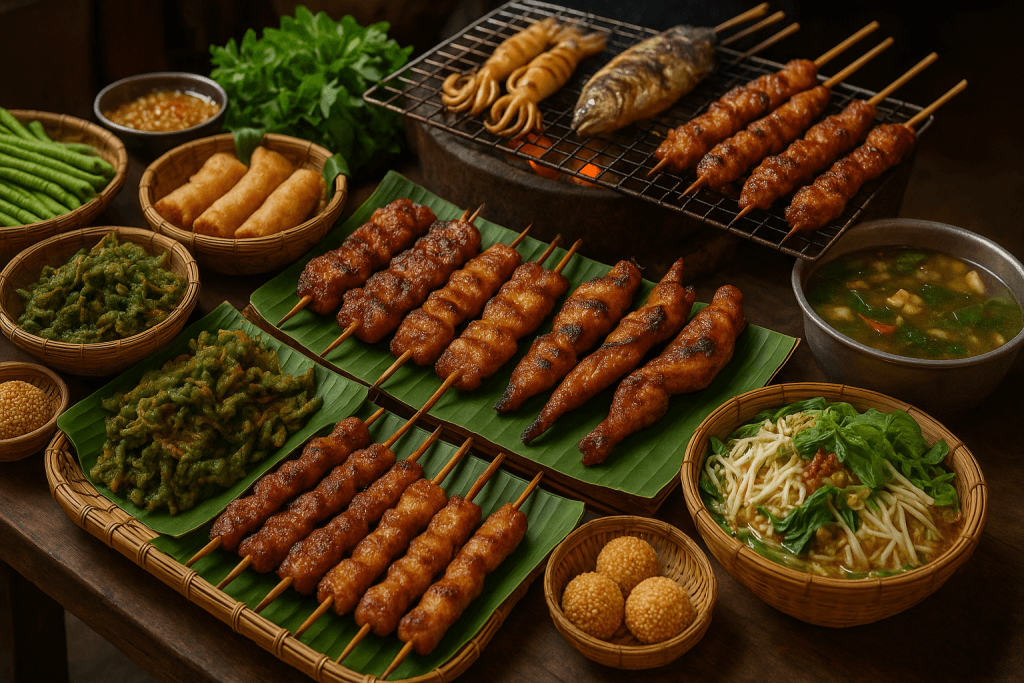
Cambodian street food represents one of the most diverse and culturally rich culinary expressions in Southeast Asia. Rooted in the traditions of Campuchia cuisine and shaped by centuries of Khmer heritage, these dishes reflect a unique balance of freshness, aromatic herbs, natural ingredients and bold flavors.
The world of Cambodian street food showcases traditional preparation methods blended with local creativity, offering an unforgettable experience for anyone exploring the streets of Phnom Penh, Siem Reap, Battambang or coastal regions such as Kampot and Kep.
The rise of global interest in Cambodia’s culinary scene has pushed Cambodian street food into the spotlight, attracting travelers, food enthusiasts and researchers focusing on Khmer dishes and Southeast Asian food culture. This article presents a full introduction to the essential characteristics, flavor profiles, preparation techniques and cultural meaning behind Cambodian street food, along with its connection to Campuchia cuisine, Khmer culinary heritage and Cambodian local food traditions.
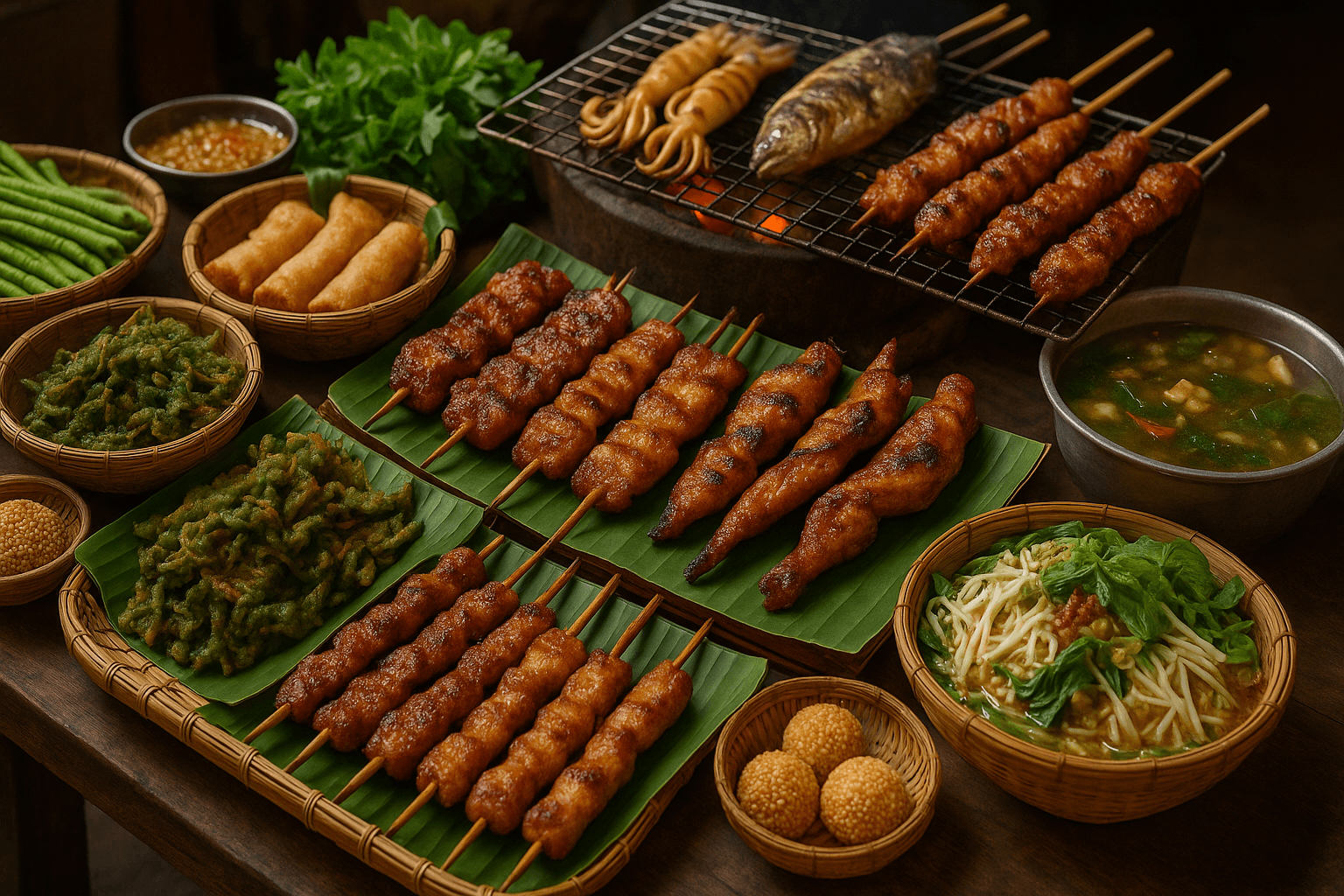
The Cultural Foundation of Cambodian street food
Cambodian street food is deeply tied to Khmer culinary identity. Throughout Cambodia, local vendors prepare foods based on family traditions passed down through generations. These dishes are influenced by natural resources, seasonal ingredients and regional characteristics. The variety of flavors in Cambodian street food reflects the harmony of fresh herbs, light seasonings and natural sweetness found in many Campuchia cuisine favorites.
1. Khmer culinary heritage and its influence on Cambodian street food
Khmer culinary heritage forms the backbone of Cambodian street food. Khmer cooking techniques focus on balanced flavors and natural aroma. Dishes often incorporate lemongrass, kaffir lime leaves, galangal, turmeric, basil, mint and freshwater fish. This heritage shapes modern Cambodian roadside dishes and Cambodian night market dishes, ensuring authenticity in flavor and technique.
See more: Cambodian culinary culture
2. Local markets as the heart of Cambodian food culture
Traditional Cambodian markets are the primary environment where Cambodian street food thrives. Wet markets and night markets offer access to fresh vegetables, local fish, rice noodles, tropical fruits and spices. These markets contribute to preserving the uniqueness of Cambodian culinary experience while supporting Khmer food culture and sustaining traditional craftsmanship.
3. Everyday accessibility and cultural symbolism
For many Cambodians, Cambodian street food represents nourishment, convenience and cultural identity. Vendors prepare food for workers, students and families at all hours. The accessibility of Cambodian street food makes it an important part of Cambodia’s social fabric, reflecting both tradition and modern lifestyle shifts.
Flavor Characteristics of Cambodian street food
The appeal of Cambodian street food comes from its harmonious blend of freshness and boldness. It emphasizes herbal complexity, natural flavors and simple yet refined techniques. The following core flavor categories define the identity of Cambodian street food within the broader landscape of Campuchia cuisine.
1. Herbal freshness
Many dishes in Cambodian street food revolve around aromatic herbs. Lemongrass adds citrus notes, kaffir lime enhances fragrance and sweet basil contributes mild sweetness. These elements appear in countless Khmer dishes and Cambodian local flavors.
2. Rich umami from fermented ingredients
Fermented ingredients play a vital role in Cambodian street food. Prahok, kapi and fermented rice noodles contribute deep savory notes. This umami profile differentiates Cambodian culinary culture from neighboring cuisines.
3. Natural sweetness and light seasoning
Unlike heavily seasoned cuisines, Cambodian street food often uses mild seasoning that allows the natural sweetness of vegetables, coconut, palm sugar and fresh seafood to shine. This balance creates a smooth flavor that attracts fans of Southeast Asian food.
4. Charcoal aroma and rustic preparation
Vendors commonly use charcoal grills, clay stoves and bamboo steamers. Foods prepared on charcoal gain distinctive smokiness found in popular Cambodian roadside dishes.
Popular Cambodian street food Categories
The diversity of Cambodian street food can be categorized according to preparation style and food type. Each category reflects a piece of Campuchia cuisine and Khmer culinary heritage.
1. Grilled and roasted dishes
Grilling is one of the most iconic methods in Cambodian street food. Vendors prepare skewers, seafood, chicken wings and marinated meats over glowing charcoal. The process highlights natural flavors and creates a strong smoky aroma.
Features of grilled Cambodian street food:
Fresh herbs mixed with marinade
Minimal seasoning to preserve natural taste
Charred edges creating texture contrast
Widely available in Phnom Penh night markets
Popular examples include grilled fish served with herbs, grilled squid, marinated chicken skewers and grilled ribs found across Cambodia’s coastal areas. These foods represent essential Khmer dishes served daily.
2. Cambodian noodle dishes
Noodles are a major component of Cambodian street food. Rice noodles dominate Khmer dishes and are paired with clear broths, herbal toppings and fermented condiments.
Key Cambodian noodle styles:
Nom banh chok
Kuy teav
Cambodian rice noodle salad
Stir fried rice noodles with vegetables
These noodle dishes embody the essence of Cambodian local food by highlighting herbal broth, crisp vegetables and aromatic spices.
3. Cambodian soups and broths
Cambodian soups offer herbal clarity and deep umami. As a crucial component of Cambodian street food, soups combine lemongrass, galangal, mushrooms, fish and leafy greens.
Characteristics:
Light yet flavorful broth
Strong herbal aroma
Fresh vegetables added before serving
Khmer sour soups and coconut based soups frequently appear in street stalls, reinforcing Campuchia cuisine traditions.
4. Cambodian fried dishes
Frying brings crisp texture to Cambodian street food. Vendors commonly prepare fried spring rolls, fried noodles, fried fish cakes and crunchy vegetables.
Common fried street foods:
Fried morning glory with garlic
Fried taro cakes
Fried dumplings with herbs
Fried dishes provide texture diversity within Cambodian culinary experience and appeal to both locals and tourists.
5. Sweet Cambodian street food and traditional desserts
Traditional Cambodian snacks and sweets hold an important place in Cambodian street food. They include coconut desserts, sticky rice cakes, tropical fruit treats and sesame based sweets.
Notable dessert characteristics:
Coconut richness
Rice flour texture
Palm sugar aroma
These sweets highlight the gentle and naturally sweet identity of Campuchia cuisine.
6. Cambodian beverages and refreshing drinks
Street food culture includes a wide range of beverages such as sugarcane juice, coconut water, iced teas and fruit smoothies. These drinks complement Cambodian street food and enhance the full Cambodian culinary experience.
Regional Variations of Cambodian street food
Cambodian street food varies across regions, demonstrating the cultural diversity of Cambodia.
1. Phnom Penh
Phnom Penh is the center of modern Cambodian food culture. Its street food scene blends traditional Khmer dishes with contemporary snacks. Vendors along riverside areas and central markets offer grilled foods, noodle soups and Cambodian snacks influenced by urban lifestyle.
2. Siem Reap
Siem Reap offers unique Cambodian night market dishes with vibrant presentation. Street vendors prepare rice noodle salads, herbal soups and colorful desserts. This city showcases the connection between tourism and Khmer culinary heritage.
3. Battambang
Battambang reflects rustic Cambodian local flavors. Many dishes rely on farm grown vegetables, freshwater fish and handmade seasonings. Batter based snacks and Cambodian fried dishes are especially common in its street food culture.
4. Coastal regions: Kampot and Kep
Coastal areas are famous for fresh seafood based Cambodian street food. Grilled squid, steamed crab with herbs and fish based soups highlight the rich maritime resources of Cambodia. Kampot pepper contributes a signature aroma highly appreciated in regional cuisine.
The Role of Ingredients in Cambodian street food
Ingredients shape the taste and authenticity of Cambodian street food.
1. Herbs and spices
Lemongrass, kaffir lime, galangal, turmeric and local basil form the aromatic foundation of Khmer dishes. These herbs differentiate Campuchia cuisine from neighboring regions.
2. Rice and noodles
Rice is central to Cambodian food culture. Rice noodles appear in countless Cambodian roadside dishes and Cambodian local dishes served daily across the country.
3. Freshwater fish and seafood
Cambodia’s rivers and coastal waters supply abundant fish and seafood. These ingredients appear in soups, grilled dishes and snacks across Cambodian street food markets.
4. Vegetables and wild greens
Local vegetables, wild greens and edible flowers contribute unique aroma and color. They enhance the freshness associated with Cambodian culinary experience.
Cooking Techniques in Cambodian street food
Traditional techniques define the identity of Cambodian street food.
1. Grilling on charcoal
Charcoal grilling enhances aroma and flavor depth. This method is essential in many Cambodian night market dishes.
2. Slow simmering and broth preparation
Khmer broths rely on slow cooking to extract natural flavors. This technique produces clear but aromatic soup bases.
3. Stir frying with minimal oil
Stir frying quickly cooks vegetables and noodles while retaining texture and color.
4. Steaming in bamboo or banana leaves
Steaming preserves nutrients and aroma. Many Cambodian snacks and rice cakes use this traditional method.
The Modern Influence on Cambodian street food
Urban development and tourism bring new interpretations of Cambodian street food.
1. Fusion influences
Younger chefs experiment with global ingredients while maintaining Khmer culinary heritage. This fusion enhances the appeal of Cambodian local flavors.
2. Health oriented preferences
Modern consumers prefer dishes with fresh vegetables, light seasoning and natural ingredients. Cambodian street food aligns well with these preferences due to its emphasis on herbal freshness.
3. Presentation enhancements
Vendors in Siem Reap and Phnom Penh increasingly adopt modern presentation styles, creating visually appealing Cambodian local food options.
Cambodian street food and its global appeal
The growing popularity of Cambodian street food on international platforms highlights the rising interest in Campuchia cuisine. Food travelers appreciate the balance of freshness, simplicity and complexity in Khmer dishes.
Key factors driving global attention:
Unique balance of sweet, sour, herbal and umami flavors
Deep cultural roots in Khmer traditions
Diverse street food categories
Strong identity within Southeast Asian culinary culture
This global exposure has positioned Cambodian street food as an emerging culinary trend.
How Cambodian street food connects to daily life
Cambodian street food plays an essential role in daily life across Cambodia. It offers convenience for workers, nourishment for families and cultural pride for communities. Vendors maintain traditions while adapting to modern tastes, ensuring continuity of Khmer culinary identity.
Cultural reflections:
Preservation of traditional recipes
Support of local markets and producers
Representation of regional diversity
Strengthening of community bonds
The widespread availability of Cambodian street food symbolizes Cambodia’s hospitality and culinary richness.
Conclusion
Cambodian street food stands as a vibrant expression of Campuchia cuisine and Khmer culinary heritage. Its diversity, freshness, aromatic complexity and cultural depth define the unique Cambodian culinary experience.
From grilled seafood to herbal noodle soups, from coconut desserts to sizzling fried snacks, Cambodian street food captures the essence of Cambodian local flavors and showcases the creativity of Khmer food culture. As global recognition continues to grow, Cambodian street food will remain an influential representation of Cambodia’s cultural identity and culinary excellence.
