
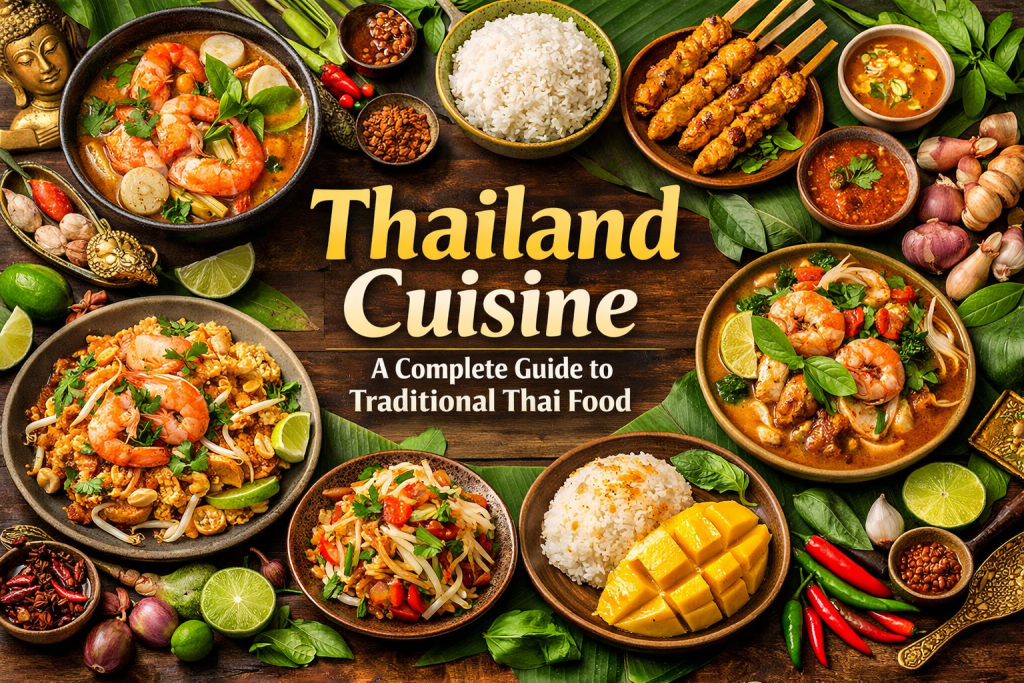
Thailand Cuisine: A Complete Guide to Traditional Thai Food represents one of the most sophisticated culinary traditions in Southeast Asia. Thai food culture is deeply rooted in geography climate agriculture and centuries of cultural exchange. The flavors of Thailand cuisine are instantly recognizable yet endlessly complex combining balance aroma texture and visual appeal. This complete guide explores the foundations techniques ingredients regional diversity and cultural significance that define traditional Thai food.
Thailand cuisine emphasizes harmony rather than dominance. Each dish reflects a careful balance of sweet sour salty bitter and spicy elements. Traditional Thai food is not only about taste but also about rhythm freshness and intention. Understanding Thailand cuisine requires an appreciation of its philosophy ingredients and cooking methods that have evolved across generations.
Foundations of Thailand Cuisine
At the core of Thailand Cuisine: A Complete Guide to Traditional Thai Food lies balance. Thai culinary philosophy prioritizes contrast and equilibrium. No single flavor overwhelms another. Instead sweetness supports spice acidity cuts richness and salt enhances aroma.
Rice is the cornerstone of Thai food culture. Jasmine rice dominates central Thailand while sticky rice defines northern and northeastern regions. Rice accompanies nearly every traditional Thai meal serving as both sustenance and cultural symbol.
Herbs and aromatics form the backbone of Thai cuisine. Lemongrass galangal kaffir lime leaves Thai basil coriander roots and chilies are essential to the identity of traditional Thai food. These ingredients provide freshness depth and fragrance rather than heaviness.
Fish sauce plays a critical role in Thailand cuisine. It delivers umami saltiness and complexity that cannot be replicated. Shrimp paste dried fish and fermented ingredients further enhance flavor layers across traditional Thai recipes.
Flavor Profile of Traditional Thai Food
Thailand Cuisine: A Complete Guide to Traditional Thai Food must emphasize flavor harmony. Thai dishes aim to stimulate all senses simultaneously. Sweetness often comes from palm sugar or ripe fruits. Sourness is achieved through lime juice tamarind or green mango. Saltiness derives from fish sauce fermented soy or sea salt. Bitterness may appear through herbs vegetables or peel. Heat comes primarily from fresh Thai chilies.
Unlike cuisines that isolate flavors Thai food blends them into a unified experience. A single bite of traditional Thai food may deliver heat followed by sweetness then acidity then herbal freshness. This layered approach is central to Thailand cuisine identity.
Essential Ingredients in Thailand Cuisine
Understanding Thailand Cuisine: A Complete Guide to Traditional Thai Food requires familiarity with key ingredients used daily across Thai kitchens.
Fresh herbs define Thai cooking. Thai basil offers a spicy anise note distinct from sweet basil. Kaffir lime leaves add citrus aroma without acidity. Lemongrass provides brightness and depth. Galangal contributes sharp peppery warmth different from ginger.
Chilies vary widely in heat and flavor. Bird eye chilies are intensely spicy while long red chilies offer milder warmth and color. Dried chilies introduce smokiness and complexity.
Coconut milk plays a central role in traditional Thai curries and desserts. It provides richness without heaviness and balances spice and acidity. Coconut cream is often separated and cooked until aromatic to build flavor foundations.
Vegetables in Thailand cuisine are chosen for texture as much as taste. Eggplant bamboo shoots long beans banana blossoms and water spinach appear frequently in traditional Thai food.
Cooking Techniques in Traditional Thai Food
Thailand Cuisine: A Complete Guide to Traditional Thai Food includes distinct cooking techniques that shape flavor and texture.
Stir frying is fast precise and aromatic. Ingredients are cooked quickly over high heat preserving freshness and color. Garlic chilies and herbs release fragrance immediately upon contact with hot oil.
Pounding and grinding are essential Thai methods. Curry pastes are traditionally made using mortar and pestle to extract oils from herbs and spices. This technique creates deeper more integrated flavors than mechanical blending.
Simmering allows flavors to meld gradually. Thai soups and curries develop complexity through gentle cooking rather than aggressive boiling.
Grilling introduces smokiness and char. Traditional Thai grilled meats seafood and vegetables are often marinated lightly to highlight natural flavors rather than mask them.
Steaming preserves purity. Many traditional Thai dishes use steaming to maintain softness moisture and subtle aroma.
Regional Diversity of Thailand Cuisine
Thailand Cuisine: A Complete Guide to Traditional Thai Food must recognize regional variation. Thai cuisine is not monolithic. Each region reflects its climate history and agricultural resources.
Central Thailand cuisine is balanced refined and aromatic. It features coconut based curries stir fried dishes and elegant presentation. Jasmine rice dominates meals and flavors are harmonized carefully.
Northern Thailand cuisine emphasizes herbs mild spice and earthy flavors. Sticky rice is the staple and dishes often feature pork vegetables and fermented elements. Northern Thai food is influenced by mountainous geography and cooler climate.
Northeastern Thai cuisine known as Isan cuisine is bold spicy and sour. Sticky rice chili lime and fermented fish sauce dominate. Grilled meats fresh herbs and salads are common in traditional Thai food from this region.
Southern Thailand cuisine is intensely spicy and aromatic. Coconut turmeric and seafood play major roles. Southern Thai food reflects proximity to the sea and strong spice tolerance.
Role of Street Food in Thailand Cuisine
Street food is inseparable from Thailand Cuisine: A Complete Guide to Traditional Thai Food. Thai street food represents accessibility creativity and daily life. Vendors prepare dishes fresh often specializing in one or two items perfected over years.
Traditional Thai street food showcases stir fried noodles grilled meats spicy salads soups and snacks. Street food preserves authentic flavors while adapting to fast paced urban lifestyles.
Street food culture contributes to the global recognition of Thailand cuisine. It demonstrates that traditional Thai food can be both sophisticated and everyday nourishment.
Thai Curries and Their Cultural Meaning
Curries are a defining element of Thailand Cuisine: A Complete Guide to Traditional Thai Food. Thai curries differ from Indian curries in composition and technique. They rely heavily on fresh herbs rather than dried spices.
Red green and yellow curries each express distinct flavor profiles. Red curry emphasizes dried chilies. Green curry is vibrant herbal and intensely aromatic. Yellow curry incorporates turmeric and warming spices.
Curries are not merely spicy dishes but expressions of regional identity seasonal ingredients and family tradition within Thai food culture.
Thai Soups and Broths
Traditional Thai soups reflect clarity balance and aroma. They often combine herbs spices protein and vegetables into light yet flavorful broths.
Soups in Thailand cuisine highlight contrast. Sourness and spice are balanced by sweetness and umami. Herbs are added at the final stage to preserve fragrance.
Broths are not heavy or creamy unless coconut milk is intentionally included. This approach reinforces freshness and digestibility central to traditional Thai food.
Salads in Traditional Thai Food
Salads play a crucial role in Thailand Cuisine: A Complete Guide to Traditional Thai Food. Thai salads are not leafy bowls but dynamic combinations of herbs vegetables protein and dressing.
Thai salad dressings balance lime juice fish sauce chilies and palm sugar. The result is vibrant refreshing and intensely flavorful.
Salads contribute texture contrast within Thai meals. They often accompany grilled dishes or rich curries to provide freshness and acidity.
Noodles and Rice Dishes in Thailand Cuisine
Rice and noodles anchor Thai food culture. Noodles come in many forms including rice noodles egg noodles and glass noodles. Each serves a specific purpose within traditional Thai food.
Stir fried noodles soups and noodle salads showcase versatility and adaptability. Rice dishes reflect regional identity and daily routines.
Rice is treated with respect and symbolism in Thailand cuisine. Waste is discouraged and rice is considered a gift from nature.
Desserts and Sweet Elements in Traditional Thai Food
Desserts complete Thailand Cuisine: A Complete Guide to Traditional Thai Food by highlighting sweetness texture and aroma. Thai desserts often use coconut milk palm sugar rice flour and tropical fruits.
Sweet dishes balance richness with fragrance. Jasmine pandan and coconut enhance aroma without overpowering sweetness.
Desserts are typically lighter and less sugary than Western counterparts emphasizing natural ingredients and subtlety.
Cultural Significance of Thailand Cuisine
Thailand cuisine reflects Thai values of harmony respect and mindfulness. Meals are shared and communal. Food is placed at the center of social interaction.
Traditional Thai food is tied to festivals religious practices and seasonal cycles. Ingredients reflect agricultural rhythms and regional availability.
Cooking knowledge is often passed through generations preserving techniques and flavors unique to Thai households.
Global Influence of Thailand Cuisine
Thailand Cuisine: A Complete Guide to Traditional Thai Food extends beyond national borders. Thai food has gained global recognition for its bold flavors balance and freshness.
International interest has increased appreciation for authentic traditional Thai food rather than simplified versions. This has encouraged preservation of culinary heritage.
Thailand cuisine continues to evolve while maintaining core principles rooted in balance and respect for ingredients.
Health and Nutritional Aspects of Traditional Thai Food
Traditional Thai food emphasizes fresh herbs vegetables lean proteins and minimal processing. Many dishes rely on steaming grilling or quick stir frying.
Herbs used in Thailand cuisine provide aromatic and nutritional benefits. The balance of flavors supports moderation and satisfaction.
Meals often include vegetables herbs and proteins in balanced portions reflecting holistic dietary principles.
Modern Adaptations of Thailand Cuisine
While grounded in tradition Thailand cuisine adapts to modern lifestyles. Contemporary chefs reinterpret traditional Thai food while respecting its foundations.
Fusion cuisine introduces new techniques but core ingredients and flavor balance remain central. This adaptability ensures continued relevance of Thai food culture.
Preserving Authentic Thailand Cuisine
Preservation is a key theme in Thailand Cuisine: A Complete Guide to Traditional Thai Food. Authentic recipes techniques and ingredients require protection amid globalization.
Education culinary documentation and local practice support preservation efforts. Traditional Thai food remains vibrant when communities maintain cultural pride.
Conclusion
Thailand Cuisine: A Complete Guide to Traditional Thai Food reveals a culinary tradition built on balance harmony and respect for nature. Thai food is not defined solely by spice or aroma but by thoughtful integration of flavors textures and cultural values.
Traditional Thai food continues to inspire chefs home cooks and food enthusiasts worldwide. Its complexity accessibility and adaptability ensure its place among the worlds most celebrated cuisines.
Thailand cuisine is more than sustenance. It is identity history and expression served on a plate through generations of knowledge care and creativity.
