
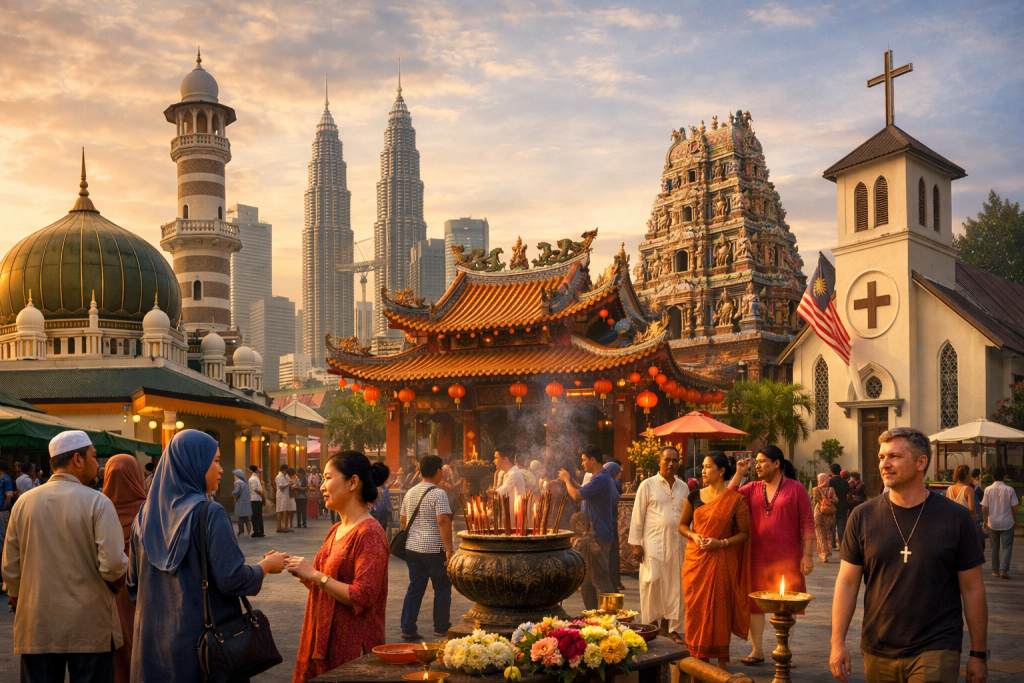
Religion in Malaysia and Its Role in Daily Life is a defining element of the country social structure cultural identity and everyday behavior. Malaysia is internationally recognized as a multi religious nation where faith is not only a private belief but also a public framework that shapes law customs education festivals and social harmony. Understanding Religion in Malaysia and Its Role in Daily Life helps explain how Malaysians interact celebrate work eat dress and coexist within a diverse society.
Malaysia unique religious landscape is the result of centuries of cultural exchange migration and governance. Islam Buddhism Christianity Hinduism Taoism and indigenous belief systems coexist within a structured yet flexible environment. Religion in Malaysia and Its Role in Daily Life reflects a balance between tradition constitutional law and modern social values. Religion influences daily routines moral standards public holidays and community relationships across the nation.
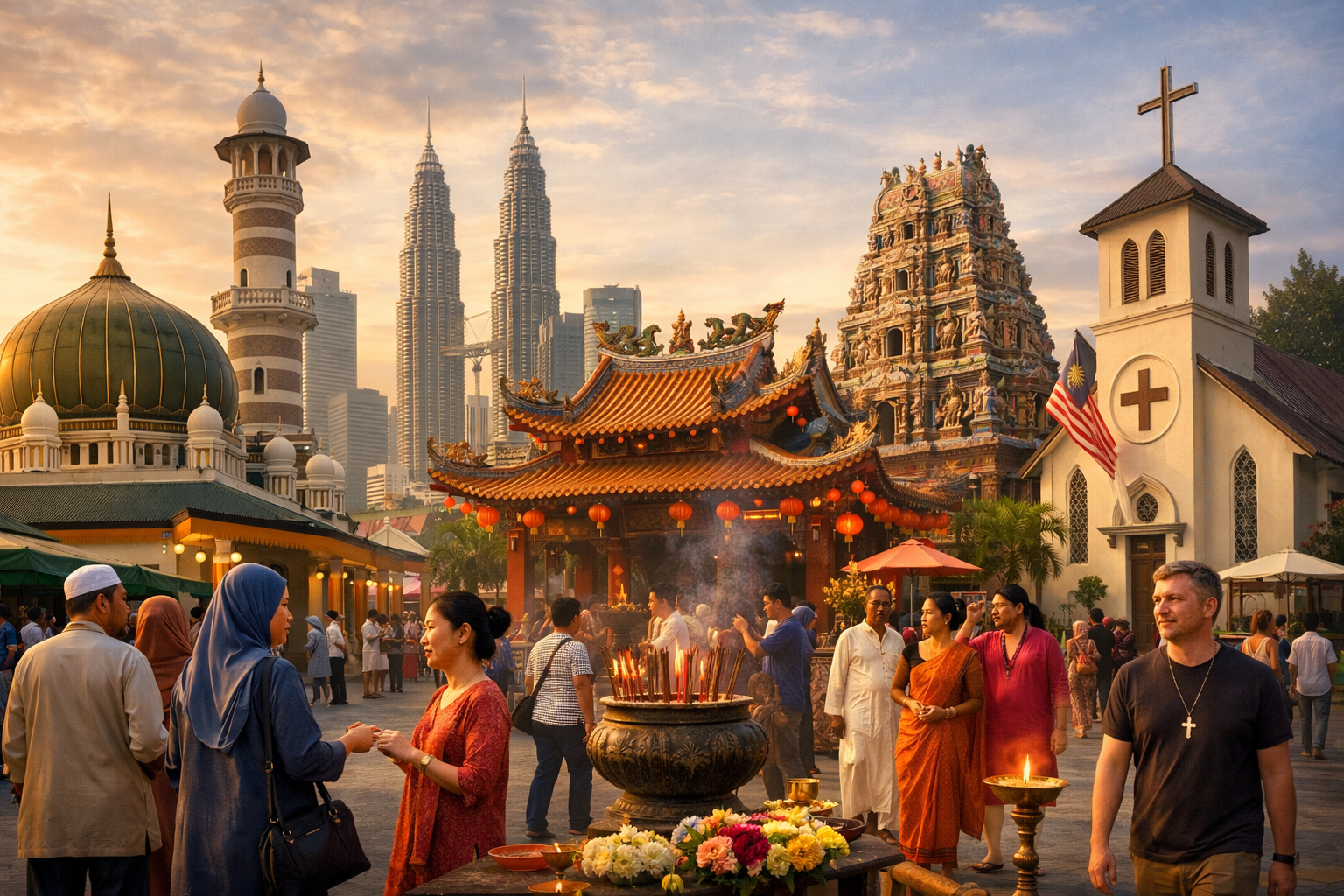
Overview of Religion in Malaysia
To understand Religion in Malaysia and Its Role in Daily Life it is essential to explore the religious composition of the population. Islam is the official religion of Malaysia and is practiced mainly by the Malay ethnic group. Buddhism and Taoism are widely followed among the Chinese Malaysian community. Hinduism is closely associated with Indian Malaysians. Christianity is practiced by various ethnic groups including indigenous communities in East Malaysia. Traditional animist beliefs still exist especially in rural and indigenous societies.
The Malaysian constitution guarantees freedom of religion while also granting Islam a special position. This legal framework allows Religion in Malaysia and Its Role in Daily Life to operate within both state and community systems. Religious identity is closely linked to ethnicity culture and language making faith an integrated part of everyday life rather than a separate spiritual activity.
See More: Malaysian Traditions and Customs You Should Know
Islam and Daily Life in Malaysia
Islam plays a central role in Religion in Malaysia and Its Role in Daily Life particularly for the Malay population. Daily routines often align with Islamic practices such as prayer fasting and dietary guidelines. Mosques function not only as places of worship but also as community centers for education charity and social engagement.
Islamic values influence public policy family law and education. Halal certification shapes food production retail and tourism. Modest dress codes are common in public institutions. Islamic holidays such as Hari Raya Aidilfitri and Hari Raya Haji are national celebrations observed by people of all backgrounds. Through these practices Religion in Malaysia and Its Role in Daily Life becomes visible in both personal conduct and public spaces.
Buddhism and Taoism in Everyday Malaysian Society
Buddhism and Taoism significantly contribute to Religion in Malaysia and Its Role in Daily Life among Chinese Malaysians. Temples serve as spiritual centers while also hosting cultural events and charitable activities. Ancestral worship meditation and ritual offerings are part of daily and seasonal practices.
Festivals such as Wesak Day and the Hungry Ghost Festival influence social rhythms family gatherings and public observances. Ethical teachings related to harmony compassion and balance shape interpersonal behavior and business ethics. Through these traditions Religion in Malaysia and Its Role in Daily Life promotes moral awareness and community responsibility.
Hinduism and Cultural Identity
Hinduism plays an essential role in Religion in Malaysia and Its Role in Daily Life for Indian Malaysians. Temples are central spaces for worship education and social bonding. Daily rituals prayer offerings and fasting are common practices that influence lifestyle and family structure.
Major festivals such as Deepavali and Thaipusam are public events that attract national attention. These celebrations reinforce religious identity cultural heritage and communal unity. Hindu values related to duty respect and spiritual discipline contribute to Malaysia broader ethical framework reinforcing Religion in Malaysia and Its Role in Daily Life within a multicultural setting.
Christianity and Community Life
Christianity contributes to Religion in Malaysia and Its Role in Daily Life particularly in East Malaysia and urban areas. Churches often function as community hubs offering education social services and moral guidance. Christian values such as compassion charity and service influence volunteerism and social engagement.
Christmas and Easter are widely recognized and celebrated in both religious and secular contexts. Christian schools and organizations play a role in education and healthcare reinforcing the importance of faith based contributions to society. Through these institutions Religion in Malaysia and Its Role in Daily Life extends beyond worship into social development.
Indigenous Beliefs and Spiritual Traditions
Indigenous belief systems are a foundational aspect of Religion in Malaysia and Its Role in Daily Life especially among native communities in Sabah and Sarawak. These belief systems emphasize harmony with nature ancestral spirits and community rituals. Spiritual practices are often tied to agriculture healing and environmental stewardship.
Although modernization has influenced indigenous traditions many practices remain active and respected. These belief systems highlight the diversity within Religion in Malaysia and Its Role in Daily Life and demonstrate how spirituality adapts to local environments and cultural contexts.
Religion and Education
Education is a key area where Religion in Malaysia and Its Role in Daily Life becomes institutionalized. Religious studies are included in school curricula and faith based schools operate alongside national education systems. Islamic education is mandatory for Muslim students while moral and religious studies are offered to non Muslim students.
Universities and colleges also provide spaces for religious expression and dialogue. Prayer rooms religious societies and interfaith programs support spiritual development. Through education Religion in Malaysia and Its Role in Daily Life shapes values critical thinking and social responsibility.
Religion and Law
The legal system reflects Religion in Malaysia and Its Role in Daily Life through a dual structure. Civil law applies to all citizens while Islamic law governs personal matters for Muslims including marriage inheritance and family affairs. This system allows religious principles to coexist with national governance.
Religious courts operate alongside civil courts reinforcing the importance of faith in legal identity. This structure demonstrates how Religion in Malaysia and Its Role in Daily Life influences rights responsibilities and social order within a constitutional framework.
Religion and Food Culture
Food culture offers a clear example of Religion in Malaysia and Its Role in Daily Life. Halal guidelines influence food preparation distribution and consumption. Restaurants markets and food manufacturers adapt to religious requirements to serve diverse populations.
Vegetarian practices during religious observances Buddhist and Hindu dietary customs and Christian fasting traditions all contribute to Malaysia food diversity. Shared food experiences during festivals strengthen interfaith understanding reinforcing Religion in Malaysia and Its Role in Daily Life at the most practical level.
Religion and Festivals
Religious festivals are central to Religion in Malaysia and Its Role in Daily Life. Public holidays reflect the nation religious diversity allowing all communities to celebrate their faith openly. These events encourage cultural exchange tourism and social cohesion.
Homes workplaces and public spaces transform during religious celebrations. Decorations greetings and communal activities foster mutual respect. Through festivals Religion in Malaysia and Its Role in Daily Life becomes a shared national experience rather than a divisive element.
Interfaith Harmony and Social Interaction
Interfaith harmony is a defining feature of Religion in Malaysia and Its Role in Daily Life. Malaysians regularly participate in each other celebrations respect religious customs and engage in dialogue. Government initiatives and community organizations promote religious tolerance and understanding.
Daily interactions at work school and public spaces reflect this coexistence. Respect for prayer times dietary needs and religious attire demonstrates how Religion in Malaysia and Its Role in Daily Life shapes social etiquette and mutual respect.
Religion and Modern Malaysian Identity
Modernization has reshaped Religion in Malaysia and Its Role in Daily Life without diminishing its importance. Technology media and urbanization influence how people practice and express faith. Online religious education digital sermons and social media discussions expand access to religious knowledge.
Young Malaysians balance tradition with contemporary lifestyles creating new forms of religious expression. This evolution shows that Religion in Malaysia and Its Role in Daily Life remains dynamic adaptable and relevant in a changing world.
Conclusion
Religion in Malaysia and Its Role in Daily Life is deeply embedded in the nation identity social structure and cultural rhythm. Religion influences values behavior law education food and community interaction across all ethnic and social groups. Rather than existing as separate belief systems Malaysian religions intersect creating a unique model of coexistence.
Understanding Religion in Malaysia and Its Role in Daily Life provides insight into how faith shapes harmony diversity and national unity. Religion in Malaysia is not confined to places of worship but lives within daily routines public institutions and social relationships. This integration makes Malaysia a compelling example of how religion and multiculturalism can function together in everyday life.
