
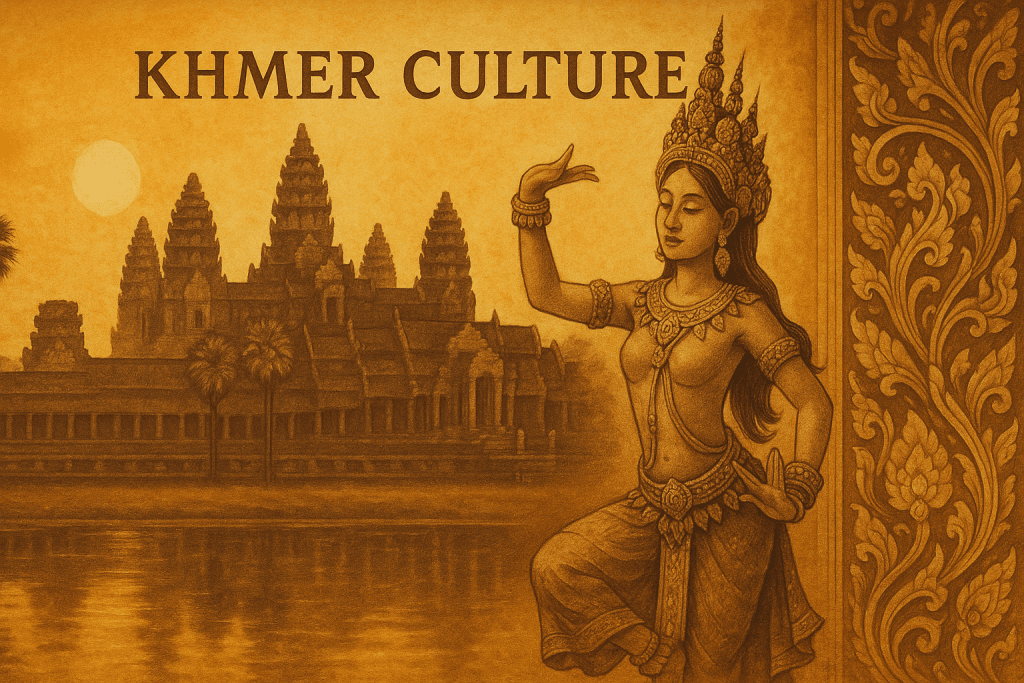
Khmer culture represents one of the most influential civilizational identities in Southeast Asia. Rooted in centuries of social development, spiritual symbolism, artistic refinement, and agrarian heritage, Khmer culture illustrates the deep connection between people, belief systems, land, and collective memory.
The evolution of Khmer culture reflects an interwoven fabric of history, architecture, customs, arts, cuisine, rituals, and intangible forms of expression. Across Cambodia and Khmer communities worldwide, Khmer culture remains a living archive of creativity, resilience, and cultural continuity.
The Historical Foundations of Khmer Culture
Khmer culture emerged from early civilizations situated along the Mekong basin. The Angkorian period became the pinnacle of artistic and political development, shaping the identity that continues today. Influences from Indic religions blended with local cosmologies, producing a unique Khmer worldview. Historical layers within Khmer culture reveal a model of sophisticated irrigation systems, temple construction, sculpture traditions, and ceremonial practices that have survived for centuries.
The architectural complexity of Angkor Wat, Angkor Thom, and the broader Angkor complex demonstrates the mastery embedded in Khmer culture. Through inscriptions, bas relief artworks, and symbolic alignments, researchers uncover significant insights into the evolution of Khmer identity. These cultural achievements illustrate how Khmer culture integrates spirituality with functionality, aesthetics with philosophy, and symbolism with societal organization.
See more: Cambodia culture
The Spiritual Universe in Khmer Culture
Spirituality remains one of the most defining elements of Khmer culture. Theravada Buddhism occupies a central role, influencing ethical standards, artistic motifs, daily rituals, and community life. It harmonizes with older animist traditions and remnants of Hindu cosmology, producing a multilayered spiritual ecosystem.
Monasteries, pagodas, and sacred sites function not only as places of worship but also as cultural centers preserving the values of Khmer culture. Meditation practices, merit making, ancestral respect, and seasonal ceremonies all contribute to the spiritual identity of Khmer communities. Within Khmer culture, spirituality is understood as a mechanism for social harmony, personal resilience, and moral cultivation.
Ritualistic dance, symbolic offerings, and spiritual storytelling demonstrate the depth of meaning embedded in Khmer culture. These traditions reinforce collective belonging while passing down ethical lessons through artistic expression.
Traditional Arts and Crafts in Khmer Culture
Artistic expression is a pillar of Khmer culture. Classical dance, sculpture, weaving, silverwork, pottery, and lacquerware represent the technical skill and aesthetic philosophy transmitted across generations. Khmer classical dance, often associated with royal heritage, features intricate hand gestures, symbolic postures, and refined movements that express mythological narratives central to Khmer culture.
Textile weaving, especially silk ikat or hol, demonstrates the mastery of color, technique, and pattern. The motifs embedded in Khmer textiles carry symbolic meanings related to nature, harmony, protection, and prosperity. Sculptural traditions connected to temples also show the artistic sophistication within Khmer culture. Craftspeople preserve traditional production methods, ensuring that cultural memory continues through material creation.
Khmer Language and Literary Tradition
The Khmer language plays a central role in expressing the depth of Khmer culture. As one of the oldest written languages in Southeast Asia, Khmer preserves terminology related to nature, society, belief systems, and art. Its script, derived from ancient Brahmic writing, showcases the historical continuity embedded in Khmer culture.
Literature in Khmer includes moral teachings, epic poetry, folk narratives, ceremonial texts, and philosophical writings. These literary forms serve as educational tools and cultural repositories. Through language, the values of Khmer culture are transmitted with clarity and emotional resonance.
Social Structure and Community Life in Khmer Culture
Traditional community structures emphasize cooperation, respect for elders, and the importance of family. Villages operate as collective units where festivals, farming activities, and social gatherings reinforce the social fabric of Khmer culture. Each member of the community contributes to maintaining cultural harmony, whether through participation in rituals, preservation of traditions, or teaching younger generations.
Interpersonal behavior within Khmer culture reflects gentleness, hospitality, and moral discipline. Social norms encourage humility, generosity, and emotional balance. These values serve as guiding principles that strengthen community cohesion.
Ceremonial Life and Festivals
Festivals illustrate the vibrancy of Khmer culture. Events such as the Water Festival, Pchum Ben, Khmer New Year, and Royal Ploughing Ceremony demonstrate the strong connection between spirituality, agriculture, and social unity.
Each festival carries symbolic meaning:
Khmer New Year highlights renewal and gratitude
Pchum Ben emphasizes ancestral respect
The Water Festival represents harmony between humanity and natural forces
Through these celebrations, Khmer culture reinforces collective memory, strengthens identity, and maintains the continuity of ancient traditions.
Khmer Gastronomy and Culinary Symbolism
The cuisine of Khmer communities reflects the agrarian base of Khmer culture. Rice, freshwater fish, herbs, and fermented ingredients form the core of traditional dishes. Food preparation techniques demonstrate a balance of aromas, textures, and symbolic meaning.
Culinary identity is deeply interconnected with:
Agricultural cycles
Ritual offerings
Ancestral customs
Village social gatherings
Traditional recipes serve as cultural markers, illustrating how gastronomy contributes to the preservation of Khmer culture.
Architecture and Spatial Symbolism in Khmer Culture
Khmer architecture is recognized for its monumental scale, harmonious geometry, and cosmic symbolism. Temples serve as spiritual centers and cultural archives. The orientation, layout, and decorative elements within these structures reveal the philosophical foundations of Khmer culture.
Traditional homes also reflect cultural values. Elevated floors, natural materials, and spatial organization illustrate practicality and symbolic protection. These architectural patterns contribute to the environmental adaptability and cultural identity of Khmer society.
Music and Performing Arts in Khmer Culture
Music plays an essential role in ceremonies, dance performances, and daily life. Traditional instruments such as the roneat, skor, sralai, and chhing create distinct soundscapes associated with Khmer culture.
Performing arts reinforce social and spiritual messages. Their rhythms and melodies symbolize emotional depth and cultural resilience. Through performance traditions, the expressive dimension of Khmer culture continues to grow and adapt.
Symbolism and Aesthetic Philosophy
Symbolism is a universal language within Khmer culture. Sacred patterns, floral motifs, mythological figures, and geometric structures communicate moral teachings and cosmological understanding.
Key symbolic representations include:
Naga as a protector
Garuda as strength
Lotus as purity
Apsara as beauty and grace
These symbols appear in textiles, architecture, dance, and carvings, illustrating the internal coherence of Khmer culture.
Gender Roles and Family Values
Family is the nucleus of Khmer society. Gender roles traditionally emphasize complementarity and shared responsibility. Parents transmit cultural standards to children, ensuring the survival of Khmer culture across generations.
Marriage ceremonies further express cultural continuity, integrating spiritual blessings, ancestral acknowledgment, and social unity.
Education and Knowledge Transmission
Education has historically been linked to monastic learning, village teaching, and oral traditions. Today, formal institutions and cultural preservation programs work together to safeguard Khmer culture.
Apprenticeship in arts, crafts, and performing arts ensures that traditional knowledge remains alive. Documenting oral histories also supports the longevity of cultural memory.
Khmer Cultural Identity in the Modern Era
Globalization presents both challenges and opportunities. Modern communities balance cultural preservation with technological development. Young generations continue exploring Khmer culture through digital archives, cultural festivals, heritage tourism, and creative reinterpretation of traditional arts.
Cultural revitalization efforts emphasize:
Preservation of intangible heritage
Protection of archaeological sites
Revival of traditional performing arts
Documentation of historical practices
Through these efforts, Khmer culture adapts while maintaining its core values.
Influence of Khmer Culture Across Borders
Khmer diasporic communities contribute to the global visibility of Khmer culture. Cultural centers, international performances, food festivals, and academic research all support worldwide appreciation of Khmer traditions.
Across Southeast Asia, elements of Khmer culture have shaped regional art, language evolution, architecture, and ceremonial practices. Its influence demonstrates the cultural strength and historical significance of the Khmer identity.
Environmental Relationship in Khmer Culture
Nature plays a central role in shaping daily life and belief systems. The Mekong River, Tonle Sap Lake, monsoon rhythms, and agricultural landscapes define the ecological foundation of Khmer culture.
Traditional farming techniques, water management systems, and seasonal rituals emphasize harmony with natural cycles. This environmentally rooted perspective forms a core part of cultural philosophy.
Khmer Cultural Preservation and Future Vision
Efforts to protect Khmer culture include museum development, historical site conservation, academic research, community education, and artistic revival projects. These strategies promote resilience and ensure that future generations maintain a strong cultural identity.
Artists, educators, researchers, and cultural organizations collaborate to preserve the tangible and intangible elements of Khmer culture. Their work demonstrates the ongoing relevance of Khmer cultural heritage.
Conclusion
Khmer culture embodies a refined blend of history, spirituality, creativity, and social unity. Its traditions express a deep connection between people, community, and environment. Through arts, architecture, rituals, language, cuisine, and philosophy, Khmer culture continues to shape identity and inspire cultural appreciation worldwide. As preservation efforts expand, the richness of Khmer culture will remain a defining cultural force for future generations.
