
The Philippines is a nation formed by layers of history shaped by ancient civilizations colonial encounters revolutions and the continuous pursuit of identity. Across the archipelago stand remarkable landmarks that reveal how the country evolved socially politically and culturally. These landmarks are more than preserved structures.
They are physical records of struggle resistance faith governance and national awakening. Historical Places in the Philippines That Shaped the Nation represent the foundation of Filipino identity and continue to influence how the country understands itself today.
From walled cities built during Spanish rule to churches that witnessed the birth of democracy and towns that preserved pre colonial traditions these sites define the historical journey of the Filipino people. Exploring Historical Places in the Philippines That Shaped the Nation allows a deeper understanding of how the past molded modern Philippine society.
The Role of History in Shaping the Philippines
History in the Philippines is not confined to textbooks. It is embedded in architecture streets fortresses and sacred spaces. Each historical landmark reflects a specific era and ideology. These locations document the transformation from barangay based societies to colonial provinces and eventually to a sovereign republic.
Historical Places in the Philippines That Shaped the Nation serve as cultural anchors. They connect generations by providing tangible evidence of shared experiences. Colonial administration religious influence revolutionary movements and national reforms all unfolded within these historic settings. As a result these places remain essential for understanding Filipino resilience unity and patriotism.
See More: Natural Places in the Philippines for Eco Travel
Intramuros: The Birthplace of Colonial Manila
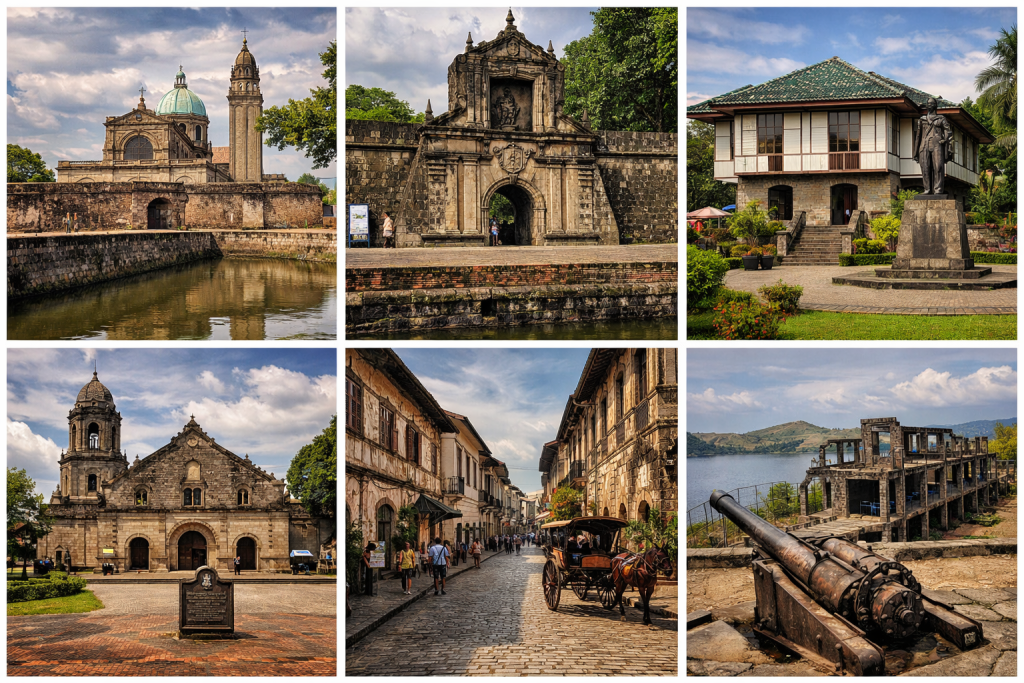
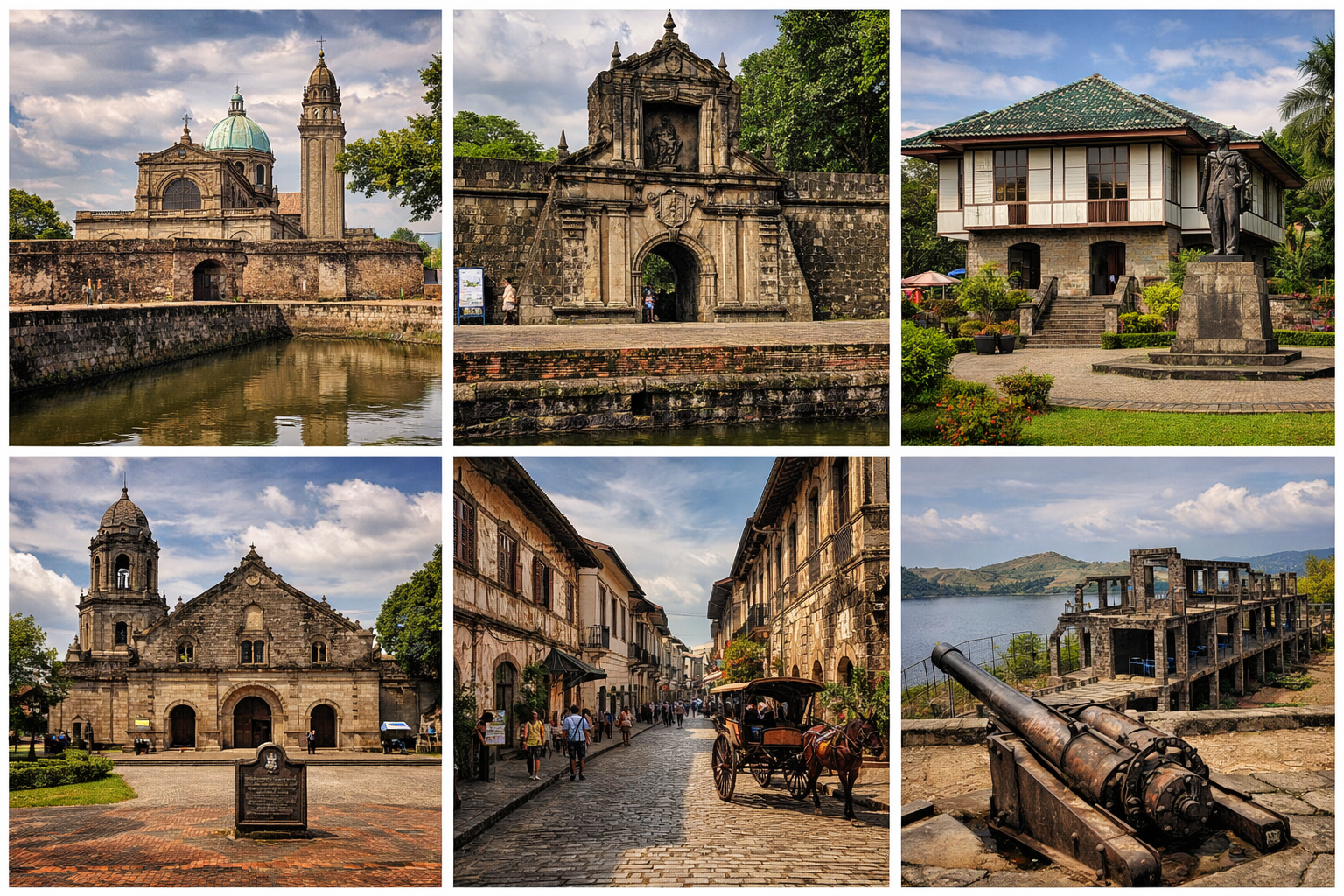
Intramuros stands as one of the most significant Historical Places in the Philippines That Shaped the Nation. Built in the late sixteenth century Intramuros became the political military and religious center of Spanish colonial rule. Encircled by massive stone walls the city symbolized authority control and power.
Within Intramuros were government offices religious institutions military barracks and elite residences. Spanish policies that shaped Philippine governance were crafted here. Educational institutions founded within the walls introduced Western learning systems that continue to influence Philippine education.
Despite destruction during World War Two Intramuros remains a powerful reminder of colonial legacy. Walking through its restored streets provides insight into how foreign rule reshaped Filipino society urban planning and social hierarchy. As one of the most prominent Historical Places in the Philippines That Shaped the Nation Intramuros illustrates how colonialism left enduring marks on national development.
Fort Santiago: Witness to Sacrifice and Resistance
Located within Intramuros Fort Santiago is a symbol of resistance suffering and courage. This fortress served as a military defense structure and later as a prison during various colonial regimes. It played a crucial role in shaping Filipino nationalism.
Fort Santiago is deeply associated with the final days of national hero Jose Rizal who was imprisoned here before his execution. His incarceration transformed the fortress into a sacred symbol of sacrifice and awakening. As part of Historical Places in the Philippines That Shaped the Nation Fort Santiago embodies the cost of freedom and the power of ideas in inspiring a nation.
The site also reflects the brutality of occupation during wartime particularly under Japanese forces. Its preserved ruins and memorials communicate the resilience of the Filipino spirit in the face of oppression.
Rizal Shrine: Home of the National Hero
The Rizal Shrine in Calamba is one of the most revered Historical Places in the Philippines That Shaped the Nation. This ancestral home of Jose Rizal provides insight into the upbringing of the man whose writings ignited a revolution.
The house showcases the environment that shaped Rizal intellectual curiosity moral values and sense of justice. It reflects the social conditions of nineteenth century Filipino families under Spanish rule. Through preserved artifacts manuscripts and personal items the Rizal Shrine allows visitors to understand how ideas of reform nationalism and identity took root.
As a cornerstone among Historical Places in the Philippines That Shaped the Nation the Rizal Shrine emphasizes the importance of education and intellectual resistance in achieving independence.
Barasoain Church: Cradle of Philippine Democracy
Barasoain Church holds a unique place among Historical Places in the Philippines That Shaped the Nation as the site where the First Philippine Republic was established. It was here that the Malolos Constitution was drafted and ratified marking Asia first constitutional democracy.
The church became a center for political discourse and reform during the revolutionary period. Filipino leaders gathered within its walls to shape a vision of self governance and sovereignty. Barasoain Church symbolizes the transition from colonial rule to independent nationhood.
This landmark reflects how faith and politics intertwined during critical moments in Philippine history. As one of the defining Historical Places in the Philippines That Shaped the Nation it represents democratic ideals that continue to guide the country.
Vigan: Preserving Pre Colonial and Colonial Identity
Vigan is renowned for its remarkably preserved heritage architecture. As one of the most complete surviving Spanish colonial towns in Asia Vigan is among the most visually distinctive Historical Places in the Philippines That Shaped the Nation.
The city demonstrates how indigenous Filipino and European influences blended to form a unique cultural identity. Its cobblestone streets ancestral houses and urban layout provide insight into colonial era life while preserving local traditions.
Vigan role as a trading hub connected local communities to global networks shaping economic and cultural exchange. As part of Historical Places in the Philippines That Shaped the Nation Vigan represents continuity heritage preservation and cultural pride.
Banaue Rice Terraces: Engineering the Nation Before Colonization
Long before foreign rule Filipino ancestors demonstrated remarkable ingenuity. The Banaue Rice Terraces stand as one of the most impressive pre colonial Historical Places in the Philippines That Shaped the Nation.
Carved into mountain slopes by the Ifugao people these terraces reflect advanced agricultural engineering community cooperation and sustainable land use. They highlight the sophistication of early Filipino societies.
As living cultural landscapes the terraces represent harmony between people and environment. Among Historical Places in the Philippines That Shaped the Nation they remind Filipinos that national identity extends beyond colonial narratives to include indigenous wisdom and resilience.
Corregidor Island: Battlefield of Valor
Corregidor Island played a decisive role during World War Two and stands as one of the most emotionally powerful Historical Places in the Philippines That Shaped the Nation. Known as the last stronghold of Allied forces Corregidor symbolizes courage sacrifice and strategic defense.
The island witnessed intense battles that shaped the outcome of war in the Pacific. Its ruins tunnels and memorials narrate stories of heroism and endurance under siege. Corregidor represents how global conflict influenced Philippine sovereignty and postwar identity.
As part of Historical Places in the Philippines That Shaped the Nation Corregidor underscores the cost of freedom and the importance of remembrance.
San Agustin Church: Faith and Continuity
San Agustin Church is the oldest surviving stone church in the Philippines and a significant member of Historical Places in the Philippines That Shaped the Nation. It has withstood earthquakes wars and political change.
The church represents the enduring influence of Catholicism in shaping Filipino values rituals and social structures. It also reflects architectural innovation adapted to local conditions. Through centuries San Agustin Church remained a place of worship education and community gathering.
As one of the foundational Historical Places in the Philippines That Shaped the Nation it demonstrates how faith became intertwined with cultural identity.
Mactan Shrine: Defining Resistance
The Mactan Shrine commemorates the victory of Lapu Lapu over foreign forces marking one of the earliest acts of resistance in Philippine history. This site belongs among Historical Places in the Philippines That Shaped the Nation because it symbolizes indigenous sovereignty and courage.
The battle demonstrated that Filipinos defended their land long before the rise of formal nationalism. The shrine honors a legacy of resistance that continues to inspire pride and independence.
The Cultural Impact of Historical Landmarks
Historical Places in the Philippines That Shaped the Nation do more than preserve structures. They influence education tourism national pride and cultural continuity. These landmarks serve as open classrooms where history becomes tangible and relevant.
They also foster unity by reminding Filipinos of shared struggles and achievements. Preserving these sites ensures that future generations understand the roots of their freedoms and responsibilities.
Preservation and National Identity
Protecting Historical Places in the Philippines That Shaped the Nation is essential for maintaining cultural integrity. Urbanization climate challenges and neglect threaten many landmarks. Preservation efforts reflect a commitment to honoring the past while educating the future.
Through conservation community engagement and responsible tourism these historical places continue to shape national consciousness. They reaffirm that history is not static but a living influence on modern Filipino life.
Conclusion
The Philippines story is written across its landscapes cities and sacred spaces. Historical Places in the Philippines That Shaped the Nation provide a powerful narrative of survival adaptation resistance and unity. From ancient terraces to revolutionary churches and wartime fortresses these landmarks define what it means to be Filipino.
Understanding and preserving Historical Places in the Philippines That Shaped the Nation is essential to sustaining national identity. These sites remind the nation where it has been what it has overcome and how history continues to shape its future.
