
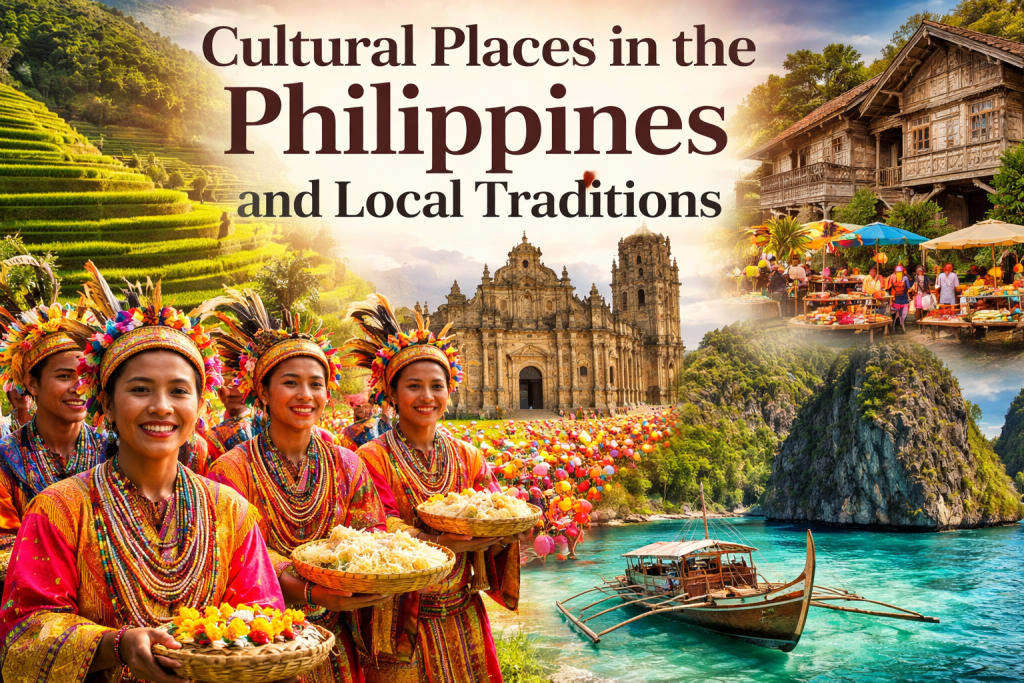
The Philippines is a country where culture lives in everyday spaces. From centuries old churches and ancestral houses to vibrant town plazas and sacred landscapes cultural identity is deeply embedded in place.
Cultural Places in the Philippines and Local Traditions are closely connected shaping how communities preserve heritage express beliefs and pass values across generations. Understanding these places offers a deeper view of Filipino identity beyond modern cities and beaches.
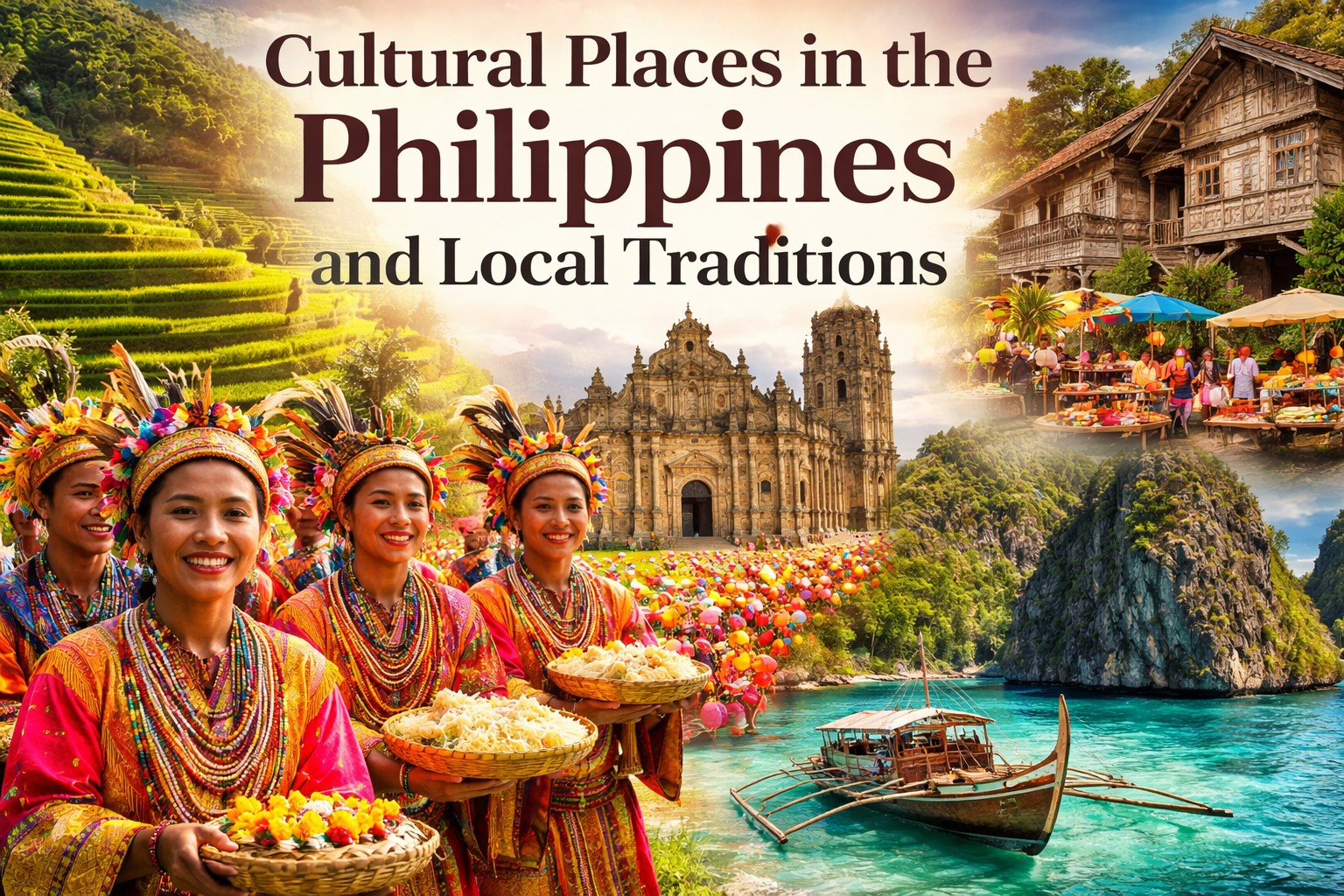
Understanding Cultural Places in the Philippines
Cultural places in the Philippines are locations where history belief customs and daily practices converge. These places may be religious architectural social or symbolic. Cultural Places in the Philippines and Local Traditions often coexist in the same environment creating a living heritage rather than static monuments.
These cultural sites reflect indigenous roots colonial influences and post independence identity. Spanish American and Asian elements blend with local traditions producing a unique cultural landscape that continues to evolve.
See More: Historical Places in the Philippines That Shaped the Nation
Indigenous Cultural Landscapes
Before colonization the Philippines was home to diverse indigenous groups each with distinct traditions and sacred spaces. Cultural Places in the Philippines and Local Traditions among indigenous communities remain vital in preserving identity.
Sacred mountains forests rivers and rice terraces are not just physical locations but spiritual centers. These landscapes serve as places for rituals seasonal ceremonies and ancestral worship.
Examples of indigenous cultural spaces
Mountain villages preserving oral traditions
Sacred burial caves and rock shelters
Agricultural terraces shaped by traditional knowledge
These places represent harmony between people nature and belief systems.
Historic Town Centers and Heritage Cities
Many Philippine towns were developed around a central plaza during the colonial period. Churches government buildings markets and schools formed the heart of community life. Cultural Places in the Philippines and Local Traditions are strongly visible in these heritage towns.
Walking through these areas reveals centuries of social structure where festivals religious processions and public gatherings continue to take place.
Cultural value of heritage towns
Centers of local traditions and celebrations
Preservation of colonial architecture
Ongoing community use rather than museum display
Heritage cities serve as cultural classrooms where tradition is practiced daily.
Religious Sites and Spiritual Traditions
Religion plays a central role in Filipino culture. Churches chapels shrines and pilgrimage sites are among the most significant Cultural Places in the Philippines and Local Traditions.
Catholicism blended with indigenous beliefs created unique forms of worship. Processions novenas and feast days transform religious spaces into cultural events involving entire communities.
Religious cultural elements
Annual town fiestas
Devotional practices passed through generations
Sacred images and rituals unique to each region
These sites are active cultural centers rather than passive religious structures.
Ancestral Houses and Living Heritage
Ancestral homes represent family history social status and regional identity. Many of these houses remain occupied maintaining traditional layouts materials and customs. Cultural Places in the Philippines and Local Traditions are preserved within these private spaces.
Architecture reflects climate adaptation cultural values and historical periods. Wooden floors wide windows and elevated structures reveal practical and cultural design principles.
Cultural significance of ancestral houses
Preservation of family traditions
Reflection of social customs and hierarchy
Continuity of craftsmanship and materials
These homes are living records of Filipino domestic culture.
Festivals and Cultural Spaces
Festivals bring cultural places to life. Streets plazas and town centers become stages for traditional dances music and costumes. Cultural Places in the Philippines and Local Traditions are inseparable from festivals that mark religious historical and agricultural events.
Each region celebrates distinct traditions using public spaces as communal grounds for expression.
Cultural functions of festivals
Strengthening community bonds
Transmission of traditions to younger generations
Celebration of local identity and pride
Festivals transform everyday places into vibrant cultural environments.
Markets and Traditional Trade Centers
Public markets are often overlooked as cultural places yet they play a crucial role in daily life. Cultural Places in the Philippines and Local Traditions include marketplaces where food crafts language and social interaction converge.
Traditional markets preserve local culinary practices indigenous ingredients and regional products. They also reflect social structures and communication styles.
Cultural aspects of markets
Exchange of local knowledge
Preservation of regional food traditions
Daily social interaction and community rhythm
Markets function as cultural hubs beyond economic exchange.
Performing Arts Venues and Cultural Expression
Cultural centers theaters and open performance spaces support traditional and contemporary Filipino arts. Dance music and theater are essential expressions of identity within Cultural Places in the Philippines and Local Traditions.
Folk dances indigenous music and ritual performances are often tied to specific locations where they originated.
Role of performance spaces
Preservation of intangible cultural heritage
Education through artistic expression
Cultural continuity through practice
These venues allow tradition to evolve while maintaining its roots.
Museums and Cultural Institutions
Museums cultural centers and heritage halls play a supportive role in documenting and interpreting culture. While some traditions live outside institutions museums help contextualize Cultural Places in the Philippines and Local Traditions.
They provide educational access research support and conservation awareness without replacing living traditions.
Contribution of cultural institutions
Documentation of history and artifacts
Public education and awareness
Support for preservation initiatives
Museums complement rather than replace cultural spaces.
Coastal and Maritime Cultural Places
Fishing villages ports and coastal settlements represent maritime traditions central to Philippine culture. Cultural Places in the Philippines and Local Traditions include boat making sites coastal shrines and fishing grounds.
These places reflect sustainable practices navigation knowledge and sea based rituals.
Cultural elements of coastal places
Traditional boat craftsmanship
Sea related ceremonies and beliefs
Community cooperation and resource sharing
Maritime culture remains vital to many Filipino communities.
Rural Villages and Agricultural Traditions
Rural landscapes reflect agricultural traditions shaping Filipino life. Fields irrigation systems and communal farming areas are key Cultural Places in the Philippines and Local Traditions.
Farming cycles influence rituals festivals and social organization.
Cultural role of rural spaces
Seasonal celebrations tied to harvest
Traditional farming techniques
Community cooperation and mutual aid
These landscapes preserve knowledge accumulated over generations.
Cultural Preservation and Modern Challenges
Urbanization modernization and tourism present challenges to cultural preservation. Cultural Places in the Philippines and Local Traditions face pressure from development changing lifestyles and generational shifts.
Balancing preservation and progress requires community involvement and cultural education.
Key preservation considerations
Community led conservation
Respect for living traditions
Sustainable cultural tourism
Protecting cultural places means supporting the people who sustain them.
Cultural Identity and National Heritage
Cultural places shape national identity by anchoring memory and values in physical space. Cultural Places in the Philippines and Local Traditions contribute to collective understanding of history diversity and unity.
These places foster respect for cultural differences while reinforcing shared heritage.
Importance to national identity
Cultural continuity across regions
Recognition of indigenous and local heritage
Strengthening social cohesion
Cultural places serve as foundations of Filipino identity.
The Role of Local Communities
Local communities are the true guardians of culture. Without active participation cultural places lose meaning. Cultural Places in the Philippines and Local Traditions thrive when communities continue to practice rituals teach customs and value heritage.
Community involvement ensures authenticity and sustainability.
Community driven cultural preservation
Transmission of knowledge
Daily practice of traditions
Cultural pride and ownership
Culture survives through people not structures.
Cultural Tourism and Responsible Engagement
Cultural tourism introduces global audiences to heritage but must be approached responsibly. Cultural Places in the Philippines and Local Traditions should be experienced with respect understanding and awareness.
Responsible engagement prioritizes cultural integrity over commercialization.
Principles of responsible cultural tourism
Respect for local customs
Support for community initiatives
Cultural education over consumption
Tourism should strengthen not dilute culture.
Conclusion
The Philippines is rich in cultural diversity expressed through places that remain active meaningful and deeply connected to tradition. Cultural Places in the Philippines and Local Traditions form a living network of history belief and daily practice.
From indigenous landscapes and heritage towns to markets festivals and sacred spaces these places reveal how culture continues to shape Filipino life. Preserving them requires respect community participation and recognition that culture is not static but lived every day.
Understanding cultural places is understanding the Filipino people their values resilience and identity rooted in tradition while moving forward into the future.
