
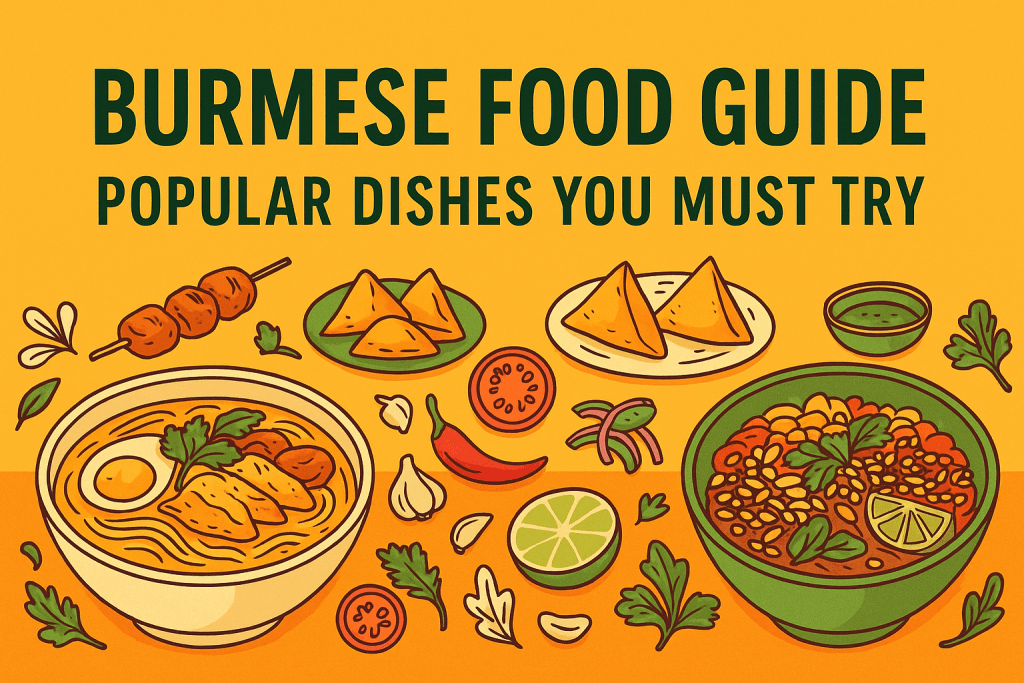
Myanmar cuisine is one of Southeast Asia’s most underrated culinary traditions. Rich in history, shaped by geography, and influenced by neighboring cultures, Burmese food delivers layers of flavor that are earthy, aromatic, and deeply satisfying. This Burmese Food Guide: Popular Dishes You Must Try is designed to give a complete and in depth look at the most iconic foods across Myanmar, helping readers understand what makes Burmese cuisine unique and why it deserves global recognition.
In this Burmese Food Guide: Popular Dishes You Must Try, you will explore traditional ingredients, regional specialties, everyday meals, street food favorites, and ceremonial dishes. Burmese cuisine is not defined by extremes but by balance. Sour, salty, bitter, spicy, and umami elements are combined with great care. Rice remains the foundation of most meals, while fermented foods, fresh herbs, and slow cooked curries create unforgettable depth.
This guide also highlights semantic and related culinary concepts such as Myanmar traditional food, Burmese street food, authentic Burmese dishes, Myanmar cuisine culture, and Southeast Asian food heritage. By the end of this Burmese Food Guide: Popular Dishes You Must Try, readers will have a strong understanding of what to eat, how dishes are prepared, and why Burmese food reflects the soul of Myanmar.
Contents
- 1. Core Characteristics of Burmese Cuisine
- 2. Mohinga: The National Dish of Myanmar
- 3. Laphet Thoke: Fermented Tea Leaf Salad
- 4. Shan Noodles: A Regional Favorite
- 5. Burmese Curries: Slow Cooked and Flavorful
- 6. Ohn No Khao Swe: Coconut Chicken Noodles
- 7. Burmese Street Food Culture
- 8. Ngapi: The Soul of Burmese Flavor
- 9. Traditional Burmese Snacks and Desserts
- 10. Regional Diversity in Burmese Cuisine
- 11. Burmese Food and Cultural Identity
- 12. Why Burmese Cuisine Deserves Global Recognition
- 13. Conclusion of Burmese Food Guide: Popular Dishes You Must Try
Core Characteristics of Burmese Cuisine
To fully appreciate this Burmese Food Guide: Popular Dishes You Must Try, it is important to understand the defining traits of Burmese cuisine.
Burmese food emphasizes fermentation as a primary flavor builder. Ingredients such as fermented tea leaves, fermented fish paste, and fermented shrimp paste are widely used. These components create a deep umami profile that distinguishes Myanmar cuisine from other Southeast Asian food cultures.
Another defining element is the use of fresh herbs and aromatics. Garlic, ginger, turmeric, shallots, lemongrass, and dried chilies appear in countless dishes. These ingredients are often pounded into pastes rather than blended, preserving texture and intensity.
Meals are typically served family style. Several dishes are placed on the table at once, allowing diners to combine flavors freely. This communal approach reinforces the cultural importance of sharing and balance, a concept central to this Burmese Food Guide: Popular Dishes You Must Try.
See More: Myanmar Cuisine: A Complete Guide to Traditional Burmese Food
Mohinga: The National Dish of Myanmar
No Burmese Food Guide: Popular Dishes You Must Try would be complete without Mohinga. Widely regarded as the national dish of Myanmar, Mohinga is a comforting fish noodle soup enjoyed throughout the country.
Mohinga features rice noodles served in a thick broth made from freshwater fish, banana stem, garlic, onion, ginger, and toasted rice powder. The broth is fragrant, savory, and slightly earthy. Garnishes may include boiled eggs, crispy fritters, cilantro, and lime.
This dish is commonly eaten for breakfast, but it can be enjoyed at any time of day. Mohinga represents the heart of Burmese food culture, combining affordability, nourishment, and deep flavor. Within this Burmese Food Guide: Popular Dishes You Must Try, Mohinga stands as a symbol of national identity.
Laphet Thoke: Fermented Tea Leaf Salad
Laphet Thoke is one of the most distinctive dishes in Myanmar cuisine. This Burmese Food Guide: Popular Dishes You Must Try highlights Laphet Thoke as both a culinary and cultural icon.
The main ingredient is fermented tea leaves, which are mixed with roasted peanuts, fried garlic, sesame seeds, tomatoes, cabbage, and chili. The result is a complex salad that is bitter, sour, crunchy, and savory at the same time.
Laphet Thoke is traditionally served at social gatherings and ceremonies, symbolizing hospitality and respect. The dish reflects the Burmese appreciation for fermentation and texture, making it an essential entry in any Burmese Food Guide: Popular Dishes You Must Try.
Shan Noodles: A Regional Favorite
Shan Noodles originate from the Shan State in eastern Myanmar. This Burmese Food Guide: Popular Dishes You Must Try recognizes Shan Noodles as one of the most popular regional dishes.
These rice noodles are served with a lightly seasoned tomato based meat sauce, often accompanied by pickled vegetables and peanuts. The flavors are mild yet comforting, making the dish widely loved across Myanmar.
Shan Noodles showcase how Burmese cuisine adapts regional ingredients while maintaining simplicity. In this Burmese Food Guide: Popular Dishes You Must Try, Shan Noodles represent the diversity of Myanmar food traditions.
Burmese Curries: Slow Cooked and Flavorful
Curries are a cornerstone of Burmese food. Unlike some neighboring cuisines, Burmese curries are typically oil rich and slow cooked, allowing spices to bloom fully. This Burmese Food Guide: Popular Dishes You Must Try explores the uniqueness of these curries.
Common curry ingredients include pork, chicken, fish, goat, and vegetables. Turmeric, garlic, ginger, and chili form the base, while fish sauce and shrimp paste enhance depth. Curries are usually served with rice, soup, fresh vegetables, and dipping sauces.
Burmese curries emphasize richness and balance rather than intense heat. Their slow preparation reflects patience and culinary tradition, key themes within this Burmese Food Guide: Popular Dishes You Must Try.
Ohn No Khao Swe: Coconut Chicken Noodles
Ohn No Khao Swe is a creamy noodle dish loved throughout Myanmar. This Burmese Food Guide: Popular Dishes You Must Try includes it as a must eat comfort food.
The dish features wheat noodles in a coconut milk based chicken broth, flavored with turmeric, garlic, and onion. Toppings include boiled eggs, fried onions, and lime.
Ohn No Khao Swe delivers a rich yet balanced flavor, blending Indian and Burmese culinary influences. It highlights how coconut milk is used subtly in Myanmar cuisine, a key insight from this Burmese Food Guide: Popular Dishes You Must Try.
Burmese Street Food Culture
Street food plays a major role in everyday dining. This Burmese Food Guide: Popular Dishes You Must Try emphasizes the importance of street food in Myanmar’s culinary landscape.
Popular street snacks include samosas, fried tofu, stuffed pancakes, and skewered meats. Vendors often specialize in one or two items, ensuring consistency and mastery.
Street food in Myanmar reflects accessibility and creativity. These dishes offer quick insight into local flavors and social life, reinforcing the value of this Burmese Food Guide: Popular Dishes You Must Try for culinary exploration.
Ngapi: The Soul of Burmese Flavor
Ngapi is a fermented fish or shrimp paste used throughout Myanmar. This Burmese Food Guide: Popular Dishes You Must Try identifies Ngapi as a foundational ingredient.
Ngapi appears in dipping sauces, soups, curries, and salads. Its strong aroma mellows during cooking, leaving behind deep umami richness.
Understanding Ngapi is essential to understanding Burmese food. It represents tradition, preservation, and regional identity, making it central to this Burmese Food Guide: Popular Dishes You Must Try.
Traditional Burmese Snacks and Desserts
While savory dishes dominate, Burmese snacks and desserts offer subtle sweetness. This Burmese Food Guide: Popular Dishes You Must Try explores common treats.
Desserts often feature sticky rice, coconut, palm sugar, and beans. The sweetness is gentle rather than overpowering, aligning with the overall balance of Burmese cuisine.
These snacks are enjoyed with tea and during social gatherings, reinforcing the cultural role of food highlighted throughout this Burmese Food Guide: Popular Dishes You Must Try.
Regional Diversity in Burmese Cuisine
Myanmar’s geography contributes to culinary diversity. This Burmese Food Guide: Popular Dishes You Must Try highlights how coastal, central, and mountainous regions influence food styles.
Coastal areas rely heavily on seafood, while central regions focus on rice and oil rich curries. Mountain regions incorporate herbs, roots, and fermented ingredients.
This regional variation ensures that Burmese cuisine remains dynamic and diverse, reinforcing the depth presented in this Burmese Food Guide: Popular Dishes You Must Try.
Burmese Food and Cultural Identity
Food in Myanmar is deeply connected to religion, tradition, and community. This Burmese Food Guide: Popular Dishes You Must Try emphasizes the role of food in daily life.
Meals often reflect Buddhist values of moderation and sharing. Seasonal ingredients are respected, and waste is minimized.
Understanding Burmese food means understanding Myanmar culture itself, a key takeaway from this Burmese Food Guide: Popular Dishes You Must Try.
Why Burmese Cuisine Deserves Global Recognition
Despite its richness, Burmese food remains underrepresented internationally. This Burmese Food Guide: Popular Dishes You Must Try argues for greater recognition.
The cuisine offers complexity, balance, and authenticity. Its reliance on fermentation and slow cooking aligns with global culinary trends.
By exploring this Burmese Food Guide: Popular Dishes You Must Try, readers gain insight into a culinary tradition that is both ancient and relevant.
Conclusion of Burmese Food Guide: Popular Dishes You Must Try
This Burmese Food Guide: Popular Dishes You Must Try provides a comprehensive look at Myanmar’s culinary landscape. From iconic noodle soups to fermented salads and slow cooked curries, Burmese cuisine reflects history, geography, and cultural values.
Through this guide, readers are encouraged to explore authentic Burmese dishes with curiosity and respect. Myanmar food is not just about flavor but about balance, community, and tradition.
As global interest in Southeast Asian cuisine continues to grow, this Burmese Food Guide: Popular Dishes You Must Try serves as a valuable resource for understanding and appreciating one of the region’s most distinctive food cultures.
