
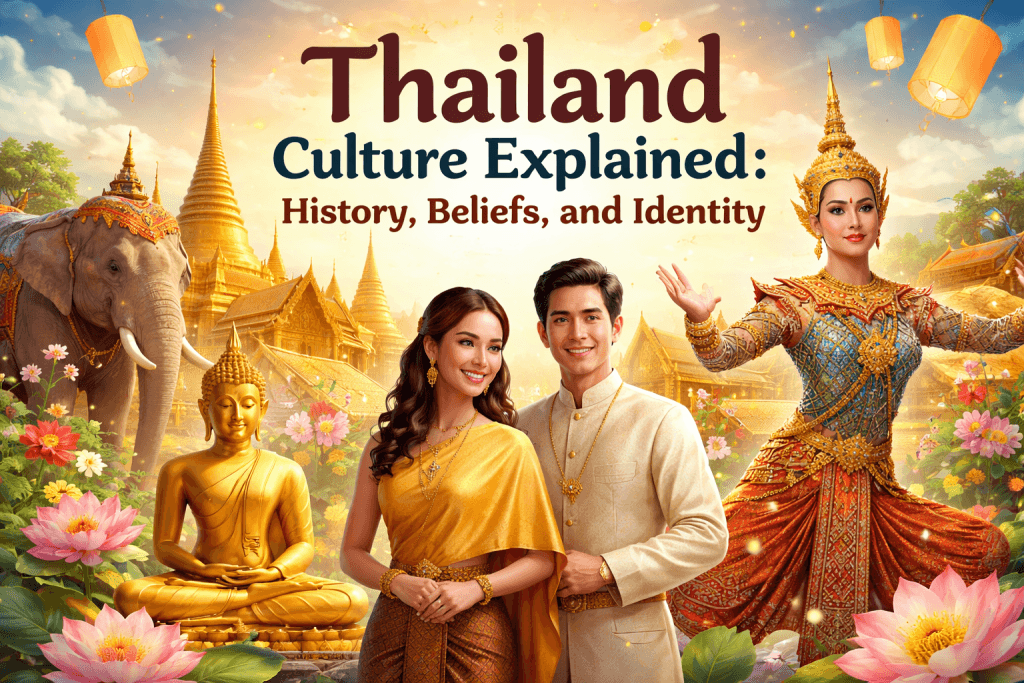
Thailand Culture Explained: History, Beliefs, and Identity is a comprehensive exploration of how history, spirituality, social values, and collective memory shape the cultural fabric of Thailand. Thai culture is not a static concept. It is a living system that reflects centuries of interaction between religion, monarchy, community traditions, and regional diversity. Understanding Thai culture means understanding how the past continues to influence daily life, behavior, and national identity in the present.
Historical Foundations of Thai Culture
The roots of Thai culture can be traced back thousands of years. Early civilizations in the region laid the groundwork for agricultural life, social hierarchy, and belief systems. As kingdoms rose and fell, cultural values were preserved and adapted rather than erased. This historical continuity is one of the most defining elements of Thai identity.
See more: Thailand Culture: Traditions, Values, and Way of Life
Early Kingdoms and Cultural Formation
Ancient Thai society developed around river basins, particularly those connected to rice cultivation. Community cooperation was essential for survival, which shaped values such as mutual support, respect for elders, and harmony within society. These early practices still influence modern Thai culture today.
Influence of Religion and Philosophy
Buddhism became deeply embedded in Thai culture over centuries. It provided moral guidance, artistic inspiration, and social structure. Temples became centers of learning, art, and community life. Through Buddhist teachings, values such as compassion, mindfulness, patience, and moderation became core principles of Thai culture.
Monarchy and National Identity
The monarchy has long played a central role in shaping Thai culture. It symbolizes continuity, unity, and moral leadership. Respect for the monarchy is intertwined with respect for tradition and national heritage. Ceremonies, rituals, and cultural expressions often reflect this historical connection.
Core Beliefs in Thai Culture
Beliefs in Thai society extend beyond religion. They encompass worldviews, ethics, and social expectations that guide behavior and interactions. Thailand Culture Explained: History, Beliefs, and Identity emphasizes how belief systems shape everyday life in subtle yet powerful ways.
Buddhism as a Cultural Framework
Theravada Buddhism influences Thai attitudes toward life, suffering, and happiness. Concepts such as karma and merit making shape personal responsibility and social behavior. Many cultural practices such as festivals, rites of passage, and daily rituals are rooted in Buddhist belief.
Spirituality and Folk Traditions
Alongside Buddhism, Thai culture includes spiritual practices derived from animism and ancestral worship. Spirits are believed to inhabit natural spaces, homes, and communities. Respecting these beliefs reinforces harmony between humans and their environment.
Moral Values and Social Conduct
Thai culture places high importance on politeness, emotional control, and respect. Avoiding confrontation and maintaining social harmony are deeply valued. These norms influence communication styles, workplace behavior, and family relationships.
Social Structure and Family Life
Family is the foundation of Thai culture. Social roles, responsibilities, and expectations are shaped by family relationships. Thailand Culture Explained: History, Beliefs, and Identity highlights how family values extend into broader society.
Respect for Elders
Age is associated with wisdom and experience in Thai culture. Elders are respected and consulted in family decisions. This respect extends to teachers, community leaders, and senior colleagues, reinforcing social stability.
Community and Collective Identity
Thai society values collective well being over individual ambition. Community events, shared responsibilities, and social cooperation reflect this mindset. Festivals and ceremonies strengthen bonds and reinforce shared identity.
Gender Roles and Cultural Evolution
Traditional gender roles have shaped Thai culture for generations. While modernization has influenced social expectations, respect, responsibility, and balance remain central themes within family and society.
Language and Cultural Expression
Language plays a critical role in expressing Thai culture. The Thai language reflects hierarchy, respect, and social awareness. Speech levels, honorifics, and polite expressions are integral to communication.
Communication Style
Thai communication emphasizes indirectness and courtesy. Tone, body language, and context often carry as much meaning as words. This cultural approach helps maintain harmony and avoid conflict.
Art, Literature, and Storytelling
Traditional Thai art forms such as dance, music, and literature reflect spiritual beliefs and historical narratives. These artistic expressions preserve cultural memory and convey moral lessons across generations.
Festivals and Cultural Celebrations
Festivals are vibrant expressions of Thai culture. They combine religious beliefs, historical traditions, and community participation. Thailand Culture Explained: History, Beliefs, and Identity recognizes festivals as living symbols of national identity.
Religious Festivals
Buddhist festivals mark important moments in the spiritual calendar. They involve merit making, temple visits, and communal activities that reinforce shared values and beliefs.
Seasonal and Agricultural Celebrations
Agriculture has shaped Thai culture for centuries. Seasonal festivals celebrate harvests, rainfall, and fertility, reflecting gratitude toward nature and spiritual forces.
Cultural Performances and Rituals
Traditional dances, costumes, and ceremonies are performed during festivals to honor history and preserve cultural heritage. These performances connect modern society with ancient traditions.
Thai Values in Daily Life
Thai culture is expressed not only through grand ceremonies but also through everyday actions. Courtesy, patience, and generosity define social interactions.
The Concept of Harmony
Harmony is central to Thai culture. People strive to maintain peaceful relationships and avoid actions that disrupt social balance. This value influences decision making and conflict resolution.
Attitudes Toward Work and Life
Work is approached with a sense of responsibility and balance. Thai culture values enjoyment and emotional well being alongside productivity. This philosophy shapes attitudes toward time, success, and personal fulfillment.
Hospitality and Social Warmth
Hospitality is a defining feature of Thai culture. Kindness, friendliness, and openness toward others reflect cultural values rooted in empathy and respect.
Regional Diversity Within Thai Culture
While Thai culture has shared national characteristics, regional diversity adds richness and complexity. Each region contributes unique traditions, dialects, and customs to the broader cultural identity.
Northern Cultural Traditions
Northern Thailand preserves distinct artistic styles, rituals, and community structures influenced by historical kingdoms and geographic isolation.
Central Thai Cultural Influence
The central region has historically shaped national culture through political power, language, and religious institutions.
Southern and Northeastern Identities
Southern and northeastern regions reflect influences from neighboring cultures and local histories. These regional identities contribute to the diversity of Thai culture while remaining connected to national values.
Cultural Continuity and Modern Identity
Modernization has introduced new influences, yet Thai culture remains resilient. Thailand Culture Explained: History, Beliefs, and Identity shows how tradition and modern life coexist.
Education and Cultural Preservation
Education plays a key role in preserving cultural values. History, language, and moral education reinforce national identity from an early age.
Media and Cultural Representation
Modern media reflects and reshapes Thai culture. Films, music, and digital platforms reinterpret traditional values for contemporary audiences.
Globalization and Cultural Adaptation
Global influences interact with Thai culture, leading to adaptation rather than loss. Thai identity evolves while maintaining core principles rooted in history and belief.
The Essence of Thai Cultural Identity
Thai cultural identity is shaped by history, beliefs, and shared values. It emphasizes harmony, respect, and spiritual awareness. Thailand Culture Explained: History, Beliefs, and Identity captures how these elements form a cohesive cultural system that guides social life.
Shared Memory and National Pride
Collective memory strengthens cultural continuity. Historical narratives, symbols, and rituals foster a sense of belonging and pride.
Ethics and Social Responsibility
Thai culture promotes ethical behavior and social responsibility. Individuals are encouraged to act with compassion and awareness of their impact on others.
Cultural Resilience
Despite change, Thai culture remains resilient. Its ability to integrate new influences while preserving core values defines its strength and relevance.
Conclusion
Thailand Culture Explained: History, Beliefs, and Identity offers a deep understanding of how Thai culture has been shaped by centuries of history, spiritual belief, and social values. Thai culture is a dynamic system that balances tradition and change, individuality and community, spirituality and everyday life. By exploring its historical roots, belief systems, and cultural expressions, one gains a clearer appreciation of Thailand cultural identity and its enduring significance in the modern world.
