

Indonesian art and culture represent one of the most diverse and influential cultural systems in the world. With more than seventeen thousand islands and hundreds of ethnic groups, Indonesia has built a complex cultural identity shaped by indigenous traditions, migration patterns, religious influences and global exchanges. The richness of Indonesian art and culture can be seen in every aspect of life including architecture, performing arts, crafts, rituals, visual design, culinary expression, festivals and social values.
This article offers a deep and structured introduction to Indonesian art and culture, exploring its foundations, evolution, symbolism and contemporary relevance in both local and global contexts.
The Cultural Foundations of Indonesian Society
The roots of Indonesian art and culture are embedded in ancient traditions that date back thousands of years. Indigenous communities developed cultural systems that celebrated nature, spirituality and community belonging. Animistic beliefs and ancestral worship contributed to the formation of early artistic expressions, including carvings, textiles and ceremonial objects. These foundations became essential to the development of aesthetic values that continue to influence Indonesian art and culture today.
Indonesia later experienced the influence of major world civilizations. Hindu and Buddhist cultural elements entered the archipelago through trade routes, creating monumental achievements such as temple architecture, classical sculpture and narrative relief carvings. The arrival of Islam introduced new forms of art including calligraphy, decorative motifs and architectural styles that expanded the aesthetic vocabulary of Indonesian art and culture. Through centuries of interaction, Indonesia blended multiple influences into an integrated cultural system unique to the archipelago.
See more: Culture of Indonesia
Traditional Architecture and Symbolism
Traditional architecture plays a significant role in Indonesian art and culture, reflecting environmental adaptation, religious values and social hierarchy. Each region has developed distinctive architectural forms such as the Minangkabau rumah gadang with dramatic curved roofs, the Javanese joglo house that symbolizes cosmic balance and the Toraja tongkonan with intricate carvings representing lineage and ancestral power.
These structures are not merely functional buildings but cultural expressions encoded with symbolic meanings. Many architectural designs in Indonesian art and culture represent the connection between humans and the universe. Spatial arrangements illustrate harmony, respect for nature and community cohesion. The craftsmanship involved in creating these forms also demonstrates the importance of skill transmission across generations.
Performing Arts and Cultural Identity
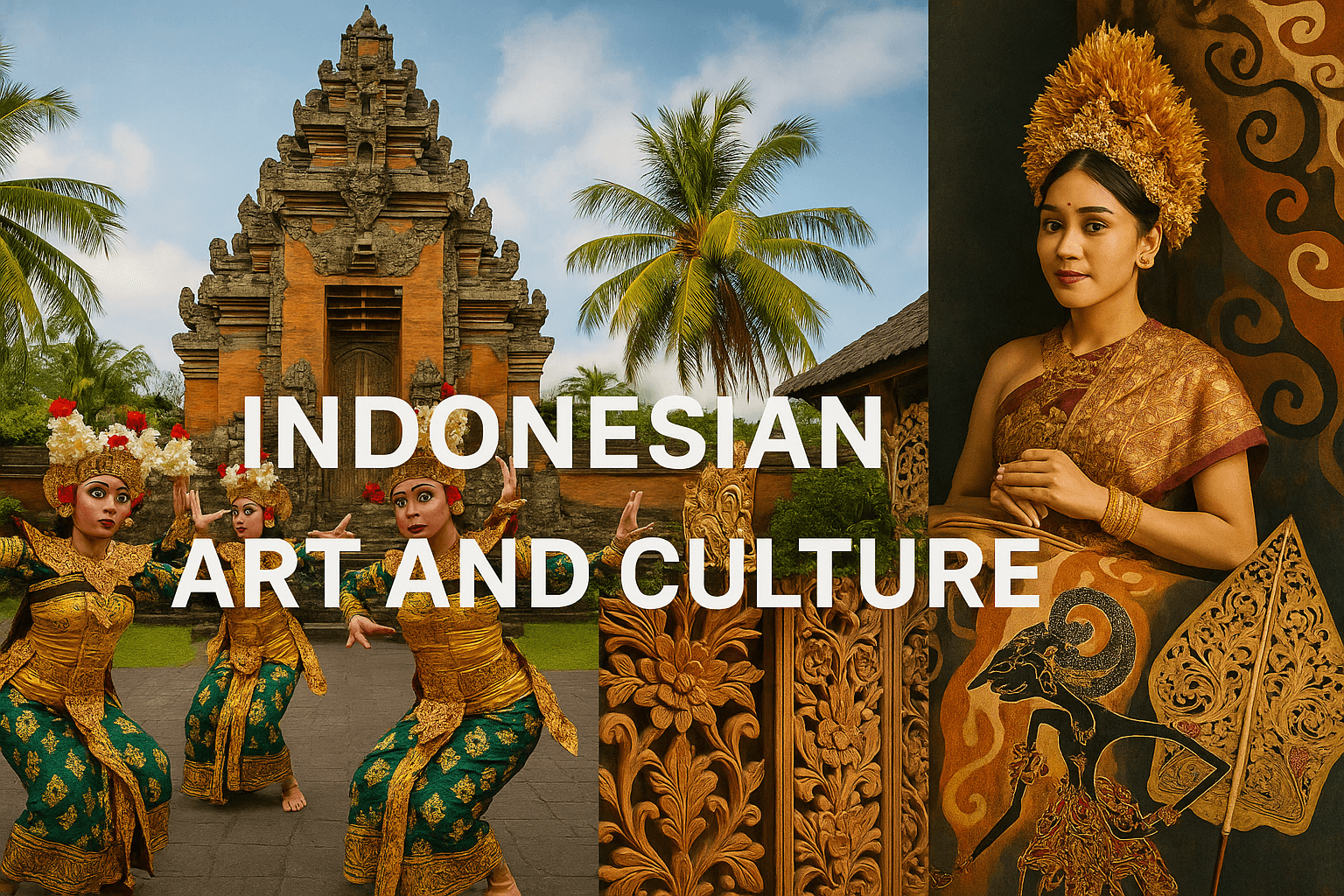
Performing arts stand at the heart of Indonesian art and culture. Dance, music, theatre and ceremonial performances reflect the heritage of diverse ethnic groups while also acting as dynamic channels for contemporary innovation. Indonesian dance traditions such as Bali dances, Javanese court dances and Saman dance from Aceh illustrate refined movements, symbolic gestures and spiritual meaning.
Music is equally essential to Indonesian art and culture, especially the gamelan ensemble. This sophisticated musical system uses bronze instruments, gongs and metallophones tuned to unique scales, creating textures that define the soundscape of the archipelago. Gamelan music accompanies rituals, theatre, dances and community events, highlighting its integral role in cultural life.
Indonesian theatre traditions such as wayang kulit shadow puppetry, wayang golek wooden puppetry and classical dance drama further enrich the cultural ecosystem. Wayang performances blend storytelling, music, philosophy and moral education, making them cornerstones of Indonesian art and culture.
Textile Heritage and Craftsmanship
Textiles represent some of the most iconic elements of Indonesian art and culture. Batik, ikat and songket are renowned globally for their craftsmanship, patterns and cultural symbolism. Batik has been recognized as a cultural treasure representing Indonesian identity. The process includes wax resistant dyeing techniques that allow artisans to create intricate designs inspired by nature, mythology and daily life.
Ikat traditions flourish in eastern Indonesia where threads are dyed before weaving to produce abstract patterns and vibrant color combinations. Songket weaving found in regions such as Sumatra and Lombok incorporates metallic threads to create shimmering textiles used in ceremonial settings. These textiles hold profound cultural meaning within Indonesian art and culture, symbolizing social status, regional identity and spiritual beliefs.
The creation of textiles requires high levels of technique and creative expression, demonstrating the deep connection between craftsmanship and cultural preservation. Through textiles, Indonesia maintains artistic continuity that supports both cultural heritage and modern adaptation.
Visual Arts and Traditional Aesthetics
Visual arts form another essential dimension of Indonesian art and culture. Sculpture, carving, painting and decorative art have long been part of community expression. Ancient stone carvings from temples, wooden masks, ceremonial statues, contemporary paintings and modern installations represent a wide spectrum of Indonesian creativity.
Traditional aesthetics emphasize harmony, balance, symbolism and spiritual connection. Sculptures from Bali and Java often depict deities, guardians or mythological creatures. Decorative motifs include floral patterns, geometric forms and religious symbols that communicate cultural narratives. Many Indonesian artists continue to draw inspiration from these traditions while exploring new techniques and media.
Rituals, Festivals and Collective Expression
Rituals and festivals play vital roles in Indonesian art and culture, shaping collective identity and social belonging. Every region hosts unique cultural events celebrating religious beliefs, agricultural cycles, historical events or ancestral spirits. Celebrations such as Galungan, Nyepi, Sekaten, Tabuik and Jember Fashion Carnival demonstrate how rituals become artistic platforms that include music, dance, costume design and ceremonial practices.
These festivals not only strengthen cultural continuity but also provide immersive expressions of Indonesian art and culture. Costumes involve elaborate craftsmanship, performances follow traditional etiquette and rituals maintain symbolic importance to community life.
Culinary Arts and Cultural Expression
Cuisine forms an important layer of Indonesian art and culture, illustrating how food communicates identity, tradition and regional diversity. Indonesian culinary arts consist of thousands of dishes influenced by spices, agricultural abundance and regional customs. Each ingredient, preparation method and serving style reflects cultural values such as hospitality, respect for nature and family cohesion.
Culinary traditions also play a role in religious and social ceremonies, showing the close relationship between food and cultural identity. The richness of Indonesian cuisine contributes significantly to the international recognition of Indonesian art and culture.
Literature, Language and Oral Traditions
Indonesia has a long history of literary and oral traditions that contribute to the development of Indonesian art and culture. Early texts include inscriptions, palm leaf manuscripts and epic literature influenced by Hindu and Buddhist traditions. Oral traditions such as pantun, folklore, proverbs and epic chants preserve cultural knowledge and transmit moral values.
Modern Indonesian literature includes novels, poetry, essays and short stories that explore social themes and contemporary identity. The diversity of languages spoken throughout the archipelago enriches the literary landscape, reinforcing the cultural complexity of Indonesian art and culture.
Contemporary Developments and Creative Innovation
As the world changes, Indonesian art and culture continually adapt to global trends, technological advancements and multicultural influences. Contemporary artists experiment with new media including digital art, photography, film, fashion design and installation art. These creative approaches maintain cultural continuity while pushing boundaries and redefining aesthetic possibilities.
Urban cultural scenes in Jakarta, Bandung, Bali and Yogyakarta have become influential centers for creative industries. Designers, musicians and visual artists are integrating traditional elements into modern expressions, creating a fusion that strengthens the relevance of Indonesian art and culture in the global arena.
Cultural Preservation and Future Prospects
Preservation is essential to sustaining Indonesian art and culture. Local communities, cultural institutions, museums and education programs work together to document traditions, train young artists and safeguard cultural properties. Preservation initiatives ensure that cultural identity remains strong while allowing space for creative innovation.
The future of Indonesian art and culture lies in how society balances heritage and modernization. By valuing cultural diversity, promoting artistic expression and supporting cultural education, Indonesia can continue to develop as a global cultural leader.
The Global Significance of Indonesian Cultural Identity
Indonesian art and culture hold global importance because of their complexity, symbolism and historical depth. Indonesia contributes to the global cultural landscape through artistic exchange, international exhibitions, collaborative projects and cultural diplomacy. The influence of Indonesian creativity can be seen in international music, fashion, architecture, literature and contemporary arts.
As globalization increases cultural interaction, Indonesian art and culture offer a unique perspective on community values, spiritual meaning and aesthetic balance. This heritage encourages intercultural understanding and strengthens the connection between Indonesia and the world.
Conclusion
Indonesian art and culture form a vast cultural ecosystem that reflects the diversity and creativity of the archipelago. From architecture and textiles to performing arts and literature, Indonesia expresses its identity through countless artistic forms. This article highlights how Indonesian art and culture evolve, adapt and flourish while preserving deep historical roots.
With its unmatched cultural richness and worldwide influence, Indonesian art and culture stand as a powerful symbol of identity, unity and artistic innovation.
