
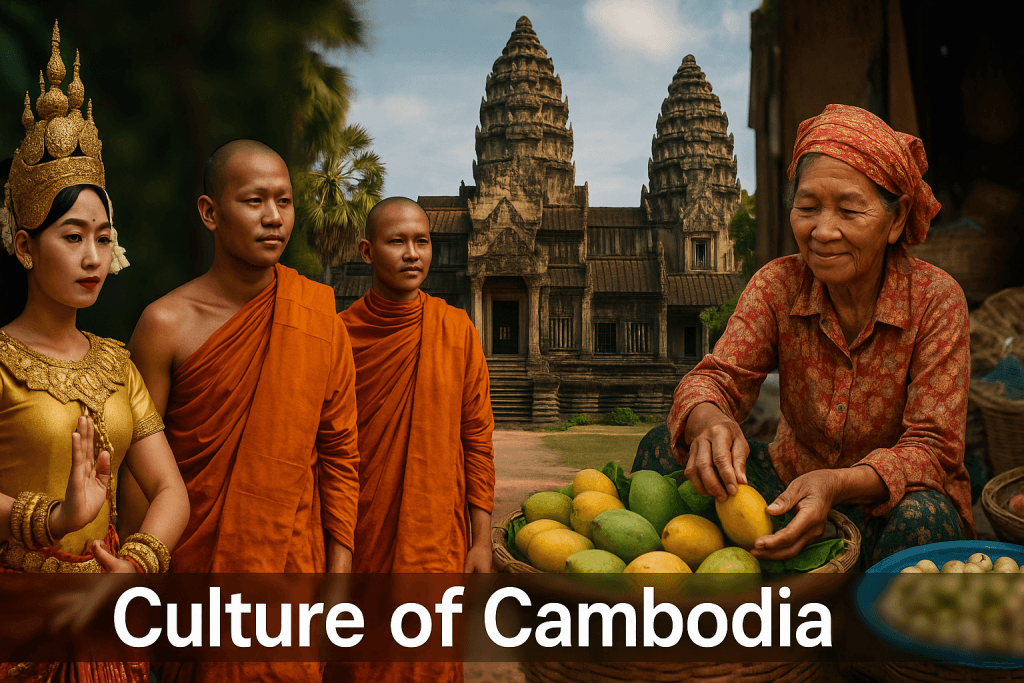
The Culture of Cambodia represents one of the most distinctive cultural identities in Southeast Asia, shaped by centuries of artistic development, religious evolution, royal tradition, and community values. This cultural landscape has grown through the influence of ancient kingdoms, regional interactions, and enduring spiritual practices. The Culture of Cambodia stands as a comprehensive expression of the Khmer worldview, connecting everyday life with symbolic systems rooted deeply in history.
Through traditional arts, social norms, religious philosophy, culinary heritage, festivals, architecture, and rural customs, the Culture of Cambodia demonstrates a complex yet harmonious structure that continues to influence national development. The sustained preservation of the Culture of Cambodia is considered essential for maintaining cultural continuity and national pride, especially as modern elements reshape contemporary Cambodian society.
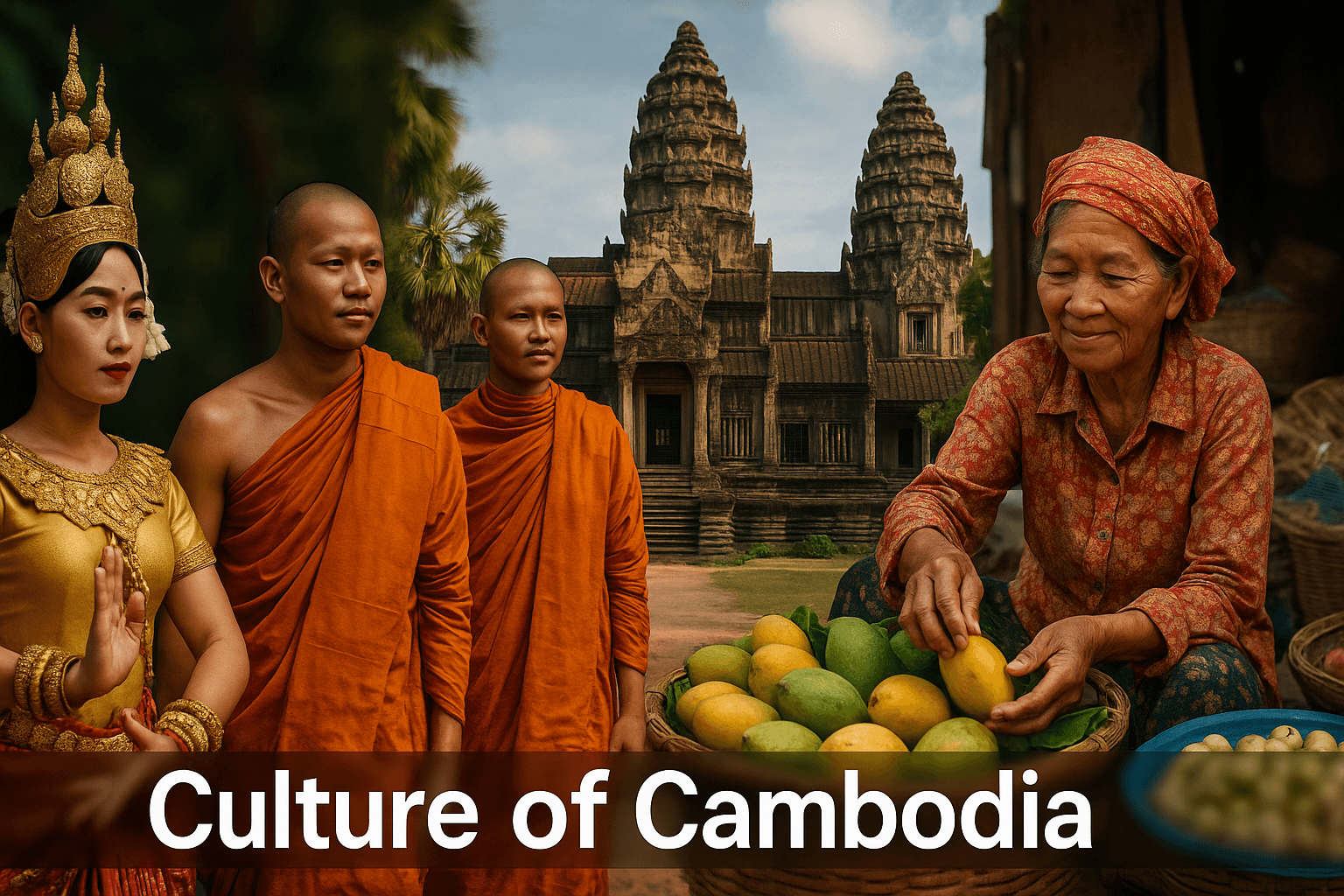
Origins and Historical Foundations of the Culture of Cambodia
The Culture of Cambodia is grounded in the legacy of the Khmer Empire, which flourished from the ninth to the fifteenth century and established a powerful cultural framework that still defines the nation. Rooted in Indian cultural influence yet uniquely localized, the Culture of Cambodia incorporates Brahmanism, Buddhism, Sanskrit symbolism, and indigenous animist traditions. This rich fusion allowed the Khmer civilization to develop distinctive artistic and architectural expressions that shaped the entire region.
Stone inscriptions, temple murals, sculpture, and ancient manuscripts reveal the sophistication of the early Khmer worldview. These materials illustrate how the Culture of Cambodia emerged from a system of cosmology, kingship principles, spirituality, and agricultural knowledge. The Khmer Empire’s monumental architecture, including Angkor Wat, Bayon, Ta Prohm, and Banteay Srei, displays how the Culture of Cambodia valued balance, devotion, cosmological alignment, and artistic mastery.
Over time, Theravada Buddhism replaced earlier religious systems and became the primary foundation of national identity. This transformation profoundly shaped the Culture of Cambodia, influencing behavioral norms, moral foundations, educational structures, and community relationships. Theravada values such as compassion, moderation, mindfulness, and respect for elders remain central pillars of the Culture of Cambodia today.
See more: Khmer cultural identity
Religious and Spiritual Dimensions of the Culture of Cambodia
Religion plays a defining role in the Culture of Cambodia. Theravada Buddhism functions not only as a belief system but also as a cultural institution that connects people through ritual, tradition, and moral guidance. Monasteries serve as community centers where teaching, meditation, ceremonies, and cultural preservation take place. The Culture of Cambodia integrates Buddhist principles into daily life, influencing decisions, social interactions, and festival structures.
Despite the predominance of Buddhism, the Culture of Cambodia retains syncretic layers, including ancient Hindu symbols and animist practices. Spiritual rituals dedicated to local spirits, guardian deities, and ancestral forces remain prevalent in rural areas. This dynamic blend reinforces the idea that the Culture of Cambodia is deeply interconnected with both the physical world and the spiritual realm.
Ceremonial traditions such as blessings, ordinations, merit making, and temple offerings are essential expressions within the Culture of Cambodia. These rituals support community cohesion and emphasize gratitude, harmony, and reverence. The symbolic language of lotus flowers, sacred threads, incense, chants, and temple sculptures highlights how spiritual symbolism permeates every dimension of the Culture of Cambodia.
Social Structures and Community Values in the Culture of Cambodia
The Culture of Cambodia emphasizes social harmony, family unity, collective responsibility, and adherence to customary norms. Cambodian society operates through a structure that values respect toward elders, hospitality, humility, and emotional restraint. These cultural values reinforce the stability of the Culture of Cambodia, guiding individuals in their personal behavior and interactions.
Family is the central social unit, and multigenerational households remain common. This structure reflects the long tradition of familial responsibility embedded within the Culture of Cambodia. Community gatherings, collaborative farming, religious celebrations, and mutual support systems contribute to a sense of belonging and continuity.
Hierarchy and respect are deeply embedded in the Culture of Cambodia. Social relationships follow structured patterns of politeness, influenced by Buddhist teachings. Nonverbal communication, such as gentle gestures, modest posture, and avoidance of confrontation, demonstrates the subtlety and refinement characteristic of the Culture of Cambodia.
Traditional Arts and Performing Heritage within the Culture of Cambodia
The Culture of Cambodia is renowned for its extraordinary artistic achievements. Traditional performing arts, visual arts, and craftsmanship represent centuries of refinement and cultural symbolism.
Classical Dance
Cambodian classical dance, often associated with royal courts, is one of the crown jewels of the Culture of Cambodia. With fluid movements, elaborate costumes, and symbolic gestures, dancers depict mythological stories that trace back to ancient spiritual narratives. This art form supports cultural continuity and demonstrates the intricacy of the Culture of Cambodia.
Folk Dance
Folk dances express agricultural themes, local legends, and community rituals. They play an important role in festivals and rural gatherings, reflecting how the Culture of Cambodia honors everyday life as an artistic expression.
Music
Pinpeat music, a classical ensemble combining wind, percussion, and string instruments, holds ceremonial significance. Its rhythmic patterns and spiritual atmosphere highlight the depth of the Culture of Cambodia.
Craftsmanship
The Culture of Cambodia preserves traditions of silk weaving, stone carving, lacquerware, silverwork, and basketry. Each craft carries both practical and symbolic meaning, illustrating traditional knowledge passed down through generations.
Architectural Identity as a Pillar of the Culture of Cambodia
Architecture plays a major role in expressing the Culture of Cambodia. Ancient temples, traditional wooden houses, pagodas, and contemporary structures reflect the evolution of Khmer aesthetics.
Angkorian Architecture
The architectural masterpieces of Angkor remain central icons of the Culture of Cambodia. Symbolic mountain temples, intricate carvings, bas reliefs, and symmetrical layouts reinforce cosmological principles that define Khmer identity.
Traditional Khmer Houses
Raised wooden structures, often built near rice fields, reveal the agricultural foundation of the Culture of Cambodia. They emphasize environmental adaptation, family life, and practical design.
Pagodas
Buddhist pagodas serve as hubs for education, ceremony, and community engagement. Their layout and ornamentation highlight the spiritual depth within the Culture of Cambodia.
Culinary Traditions as Expressions of the Culture of Cambodia
Cambodian cuisine contributes significantly to the Culture of Cambodia, offering a rich blend of traditional flavors, seasonal ingredients, and regional diversity. The national culinary identity is shaped by rice cultivation, freshwater ecosystems, and ancient cooking techniques.
Herbs, fermented ingredients, tropical fruits, and aromatic spices create a culinary profile that reflects the agricultural roots of the Culture of Cambodia. Dishes vary across provinces but maintain shared characteristics of balance, freshness, and harmony.
Culinary traditions are closely linked to festivals, religious offerings, and social gatherings. This connection demonstrates how the Culture of Cambodia integrates food with spirituality, hospitality, and community life.
Festivals and Ritual Celebrations in the Culture of Cambodia
Cambodian festivals illustrate the rhythm of rural life, religious devotion, and seasonal change. Each celebration contributes to the Culture of Cambodia by reinforcing continuity between past and present.
Khmer New Year
This is one of the most important national celebrations. It honors the agricultural cycle and expresses gratitude for spiritual guidance, demonstrating the unity embedded within the Culture of Cambodia.
Pchum Ben
This ancestor festival reflects deep spiritual values and familial devotion. Ceremonies, offerings, and temple visits reinforce the intergenerational connection that sustains the Culture of Cambodia.
Water Festival
Celebrated with boat races and riverside gatherings, this festival highlights the central role of water in the Culture of Cambodia. It symbolizes renewal, gratitude, and traditional beliefs about natural cycles.
Rural Traditions and Agricultural Foundations of the Culture of Cambodia
Agriculture, especially rice farming, is central to the Culture of Cambodia. Rural communities preserve centuries old techniques, seasonal rituals, and cooperative farming systems. The planting calendar, water management, community labor, and ancestral practices all reflect the agricultural depth of the Culture of Cambodia.
Rural customs such as harvest rituals, traditional tools, and community gatherings illustrate the connection between environment and cultural identity. These practices remain essential components of the Culture of Cambodia, serving as foundations for stability and shared purpose.
Modern Transformations and the Evolving Culture of Cambodia
Contemporary society is transforming rapidly due to urbanization, economic development, technology, and global cultural exchange. Despite these shifts, the Culture of Cambodia maintains a strong foundation through continued emphasis on tradition, community, and spirituality.
New generations engage with global media, modern art, contemporary fashion, and digital communication. These influences create a dynamic blend where the Culture of Cambodia adapts while preserving its original values.
Cultural education, museum preservation, heritage tourism, and artistic revival programs contribute to the strengthening of the Culture of Cambodia. Such efforts ensure that traditional knowledge remains relevant within modern life.
Language and Literary Traditions as Cultural Pillars
The Khmer language is a powerful element of the Culture of Cambodia. With ancient roots connected to Sanskrit and Pali, the written and spoken language serves as a vessel for historical knowledge and cultural memory.
Literary traditions include epic poems, religious manuscripts, folktales, and royal chronicles. These texts illustrate the intellectual depth of the Culture of Cambodia and provide insight into worldview, morality, spirituality, and social structure.
Clothing and Traditional Attire in the Culture of Cambodia
Traditional clothing, especially the sampot, symbolizes identity, social status, and historical continuity. Textile patterns, weaving methods, and color symbolism contribute to the aesthetic richness of the Culture of Cambodia.
Cultural attire is used in festivals, ceremonies, performances, and daily life in rural areas. Its enduring presence reinforces the importance of tradition within the Culture of Cambodia.
Ethical Values and Behavioral Norms in the Culture of Cambodia
Ethical values rooted in Buddhism shape the moral foundation of the Culture of Cambodia. Humility, patience, generosity, and respect guide personal behavior and contribute to community harmony. These values support social cohesion and reinforce long standing cultural expectations.
Behavioral norms such as soft speech, calm demeanor, and avoidance of conflict reflect the gentle character associated with the Culture of Cambodia. These traditions are maintained across generations and celebrated as key elements of national identity.
Educational Heritage and Cultural Knowledge Transmission
Education and cultural transmission are essential to sustaining the Culture of Cambodia. Monasteries historically served as primary centers of learning, teaching literacy, philosophy, ritual practice, and moral conduct.
Modern educational institutions continue to integrate cultural studies, language preservation, artistic training, and heritage conservation. Through these efforts, the Culture of Cambodia remains a living tradition accessible to future generations.
Conclusion
The Culture of Cambodia represents a multidimensional system of values, artistic heritage, social customs, spiritual beliefs, and historical traditions. Its roots stretch back thousands of years, yet its structure continues to evolve in response to contemporary influences.
Through architecture, religion, cuisine, festivals, language, social norms, and artistic practices, the Culture of Cambodia reflects the resilience and creativity of the Khmer people. The preservation of the Culture of Cambodia ensures that its symbolic meaning, communal identity, and national pride remain vibrant for generations to come.
