
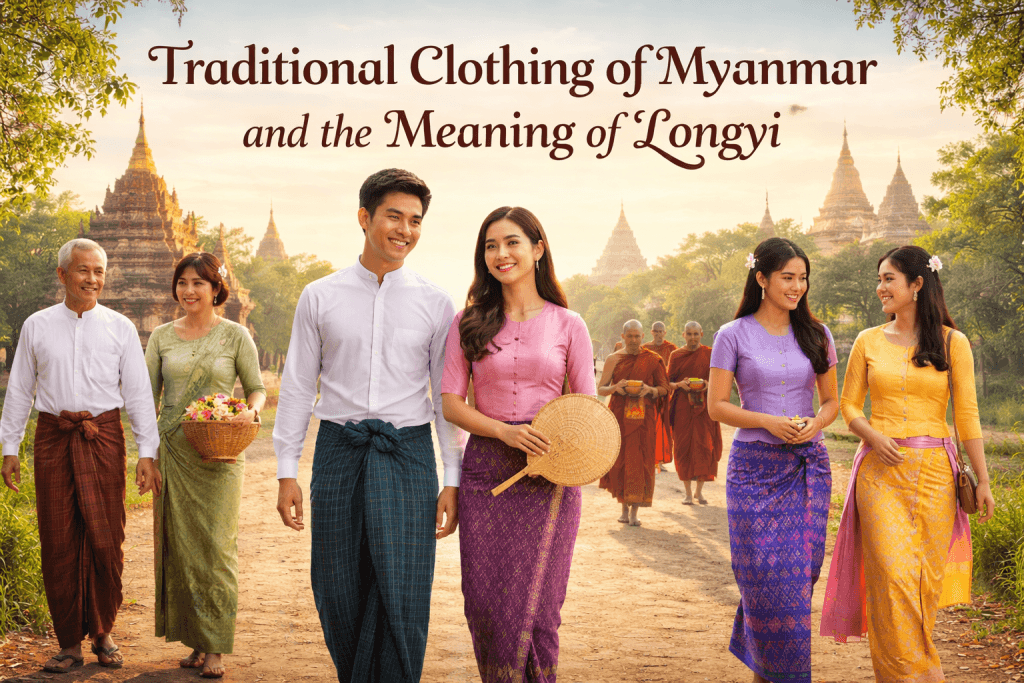
Traditional Clothing of Myanmar and the Meaning of Longyi is an essential part of understanding Burmese culture, social values, and everyday life. Clothing in Myanmar is not merely a way to cover the body but a reflection of history, identity, spirituality, climate, and community. Across cities, villages, temples, schools, and homes, traditional garments remain deeply rooted in daily routines and ceremonial practices. Among all traditional garments, the longyi stands out as the most iconic symbol of Burmese attire and cultural continuity.
Overview of Traditional Clothing in Myanmar
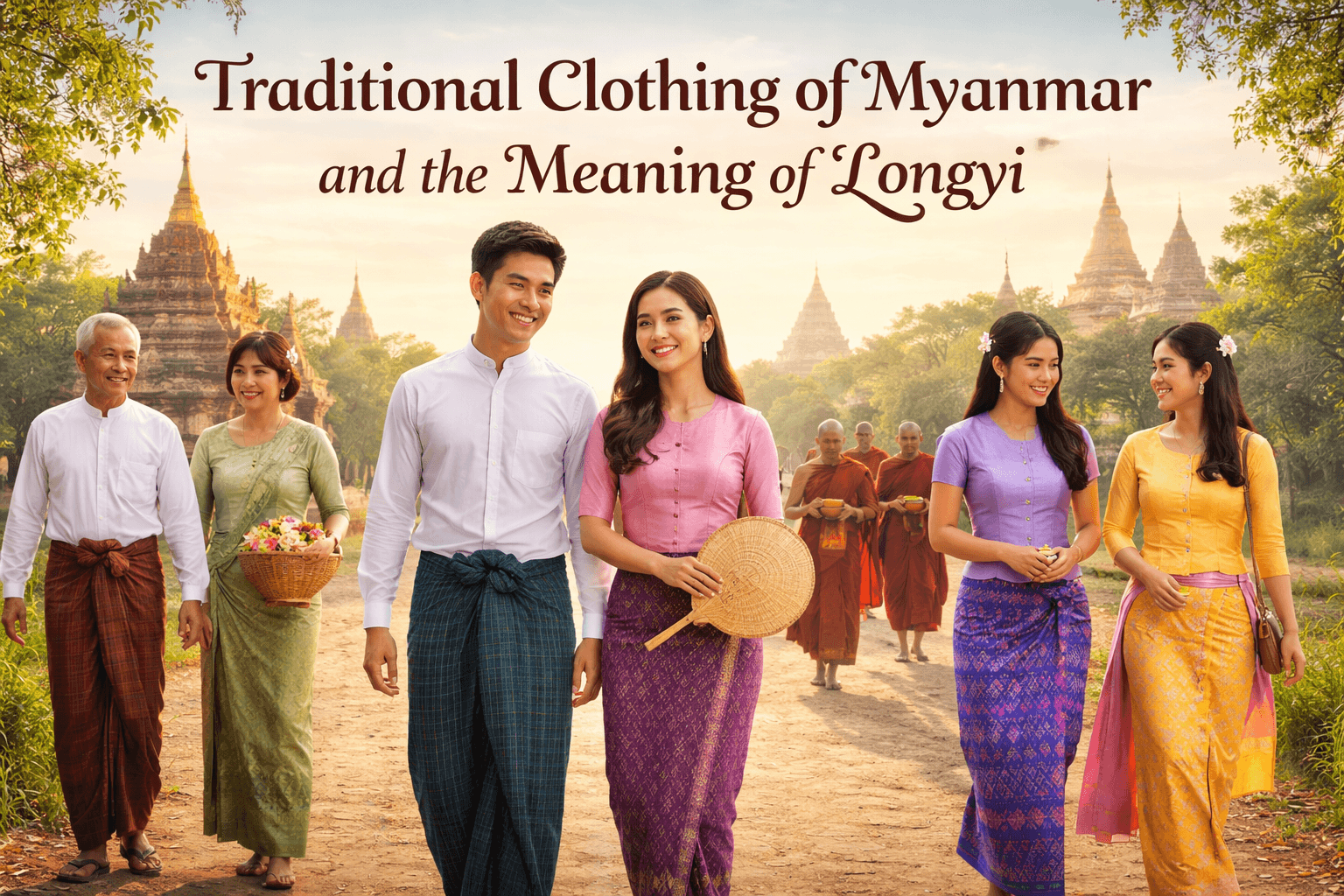
Traditional Clothing of Myanmar and the Meaning of Longyi reflects centuries of cultural evolution shaped by geography, religion, monarchy, and ethnic diversity. Myanmar is home to many ethnic groups, each with unique clothing styles, weaving techniques, patterns, and symbolic colors. Despite regional differences, traditional clothing across Myanmar shares common values such as modesty, elegance, comfort, and harmony with nature.
Traditional clothing is worn by men, women, monks, and children. It appears in daily life, religious rituals, national celebrations, weddings, festivals, and official ceremonies. Unlike many countries where traditional attire is reserved for special occasions, in Myanmar it remains an everyday choice for millions of people.
See More: Daily Life in Myanmar: Inside the Burmese Way of Living
The Longyi as the Core of Burmese Attire
At the heart of Traditional Clothing of Myanmar and the Meaning of Longyi lies the longyi, a cylindrical cloth worn around the waist. The longyi is both practical and symbolic. It is suitable for the tropical climate, easy to wear, adaptable to different settings, and culturally meaningful.
The longyi is worn by both men and women, although styles, patterns, and tying methods differ. It represents equality, tradition, and cultural pride. The longyi is worn in homes, markets, offices, temples, and schools, making it one of the most versatile garments in Southeast Asia.
Historical Origins of the Longyi
The roots of Traditional Clothing of Myanmar and the Meaning of Longyi can be traced back to ancient Burmese kingdoms. Early Burmese clothing evolved from simple wrapped fabrics influenced by Indian and Mon traditions. Over time, weaving techniques improved, patterns became more intricate, and regional identities emerged.
During royal eras, textiles symbolized social status and authority. Royal families and nobility wore finely woven fabrics with elaborate designs, while common people wore simpler versions. Despite these distinctions, the basic form of the longyi remained consistent, allowing it to survive political changes, colonial influence, and modernization.
Materials and Fabrics Used in Longyi
In Traditional Clothing of Myanmar and the Meaning of Longyi, fabric choice plays a crucial role. Traditional longyi are made from cotton, silk, or blended fibers depending on purpose and region. Cotton longyi are commonly worn for daily activities due to their comfort and breathability. Silk longyi are reserved for formal occasions, religious ceremonies, and weddings.
Handwoven textiles remain highly valued. Many communities continue traditional weaving practices using wooden looms. These fabrics often feature symbolic patterns representing nature, spirituality, or local heritage. The tactile quality of the fabric enhances the cultural significance of the longyi.
Differences Between Men’s and Women’s Longyi
A key element of Traditional Clothing of Myanmar and the Meaning of Longyi is the distinction between male and female styles. Men typically wear a longyi known as paso, while women wear a htamein. The paso often features checks, stripes, or geometric designs in muted colors. It is tied at the front in a knot.
The htamein, worn by women, is more decorative. It may include floral motifs, vibrant colors, and intricate borders. The tying method differs as well, usually wrapped and tucked at the side. These differences reflect cultural norms related to gender expression and aesthetics.
Cultural Meaning of Longyi in Daily Life
Traditional Clothing of Myanmar and the Meaning of Longyi highlights how clothing reflects daily values. The longyi symbolizes modesty, respect, and simplicity. It allows ease of movement while maintaining cultural decorum. In homes, people wear casual longyi, while in public or formal settings, they choose more refined versions.
The longyi is also associated with mindfulness and discipline. Wearing it properly is considered a sign of good manners. Children are taught from a young age how to wear and adjust their longyi correctly, reinforcing cultural continuity.
Longyi in Religious and Spiritual Contexts
Religion deeply influences Traditional Clothing of Myanmar and the Meaning of Longyi. In Buddhist culture, appropriate attire is essential when visiting temples or participating in religious rituals. Longyi are considered respectful and appropriate clothing for sacred spaces.
Monks wear robes that differ from longyi but share similar principles of simplicity and modesty. Laypeople wear clean, neatly tied longyi when offering alms, attending ceremonies, or meditating. Clothing becomes a form of spiritual expression and respect.
Longyi and National Identity
Traditional Clothing of Myanmar and the Meaning of Longyi is inseparable from national identity. The longyi serves as a visual marker of Burmese culture both domestically and internationally. During national holidays, cultural performances, and official events, longyi symbolize unity and heritage.
Despite globalization and Western fashion influences, the longyi remains resilient. Many young people continue to wear it proudly, blending traditional styles with modern elements. This balance between tradition and innovation reinforces national pride.
Regional Variations in Traditional Clothing
Myanmar’s ethnic diversity enriches Traditional Clothing of Myanmar and the Meaning of Longyi. Different regions produce unique textiles with distinct patterns, colors, and weaving techniques. Shan, Chin, Kachin, Karen, and Mon communities all contribute to the country’s textile heritage.
These regional garments may differ from the standard longyi in structure or decoration, yet they share similar cultural values. Traditional clothing becomes a way to express ethnic identity while maintaining national unity.
Symbolism of Colors and Patterns
Colors and patterns play a significant role in Traditional Clothing of Myanmar and the Meaning of Longyi. Certain colors are associated with religious beliefs, astrological days, or social meanings. Patterns may represent natural elements such as flowers, rivers, or animals.
Wearing specific designs can reflect personal taste, regional origin, or ceremonial significance. Textiles thus become visual narratives carrying cultural knowledge across generations.
Longyi in Modern Burmese Society
In contemporary Myanmar, Traditional Clothing of Myanmar and the Meaning of Longyi continues to evolve. Longyi are worn in offices, schools, and formal workplaces, often paired with shirts, blouses, or jackets. This adaptability allows traditional attire to coexist with modern lifestyles.
Fashion designers incorporate traditional textiles into contemporary designs, ensuring cultural relevance while appealing to younger generations. The longyi remains a living tradition rather than a static relic.
Gender Roles and Social Expression Through Clothing
Traditional Clothing of Myanmar and the Meaning of Longyi also reflects social structure and gender roles. While both men and women wear longyi, the way it is styled and accessorized communicates social expectations. Clothing choices can indicate marital status, age, or occasion.
Despite these conventions, modern Burmese society increasingly embraces individuality. People experiment with patterns, colors, and combinations, showing how tradition can adapt without losing its essence.
The Role of Longyi in Education and Childhood
Children grow up learning Traditional Clothing of Myanmar and the Meaning of Longyi from their families. School uniforms often include longyi, reinforcing cultural values from an early age. Learning to wear and care for traditional clothing becomes part of social education.
This early exposure ensures that traditional attire remains familiar and meaningful across generations. It also strengthens cultural confidence in a rapidly changing world.
Preservation of Traditional Weaving Practices
The survival of Traditional Clothing of Myanmar and the Meaning of Longyi depends on preserving traditional weaving skills. Artisans pass techniques from one generation to the next, maintaining craftsmanship and cultural memory.
Handwoven textiles support local economies and sustain cultural heritage. Wearing traditional clothing thus becomes an act of cultural preservation and respect for artisanship.
Traditional Clothing in Ceremonies and Celebrations
Ceremonial events highlight Traditional Clothing of Myanmar and the Meaning of Longyi at its most elaborate. Weddings, religious festivals, and cultural performances showcase finely crafted garments. These occasions emphasize beauty, symbolism, and tradition.
Clothing during ceremonies reinforces social bonds and shared values. It transforms fabric into a medium of celebration and collective identity.
Global Recognition of Burmese Traditional Clothing
International interest in Traditional Clothing of Myanmar and the Meaning of Longyi has grown through cultural exchanges, tourism, and media. The longyi is admired for its simplicity, elegance, and versatility.
As global audiences become more interested in sustainable and culturally meaningful fashion, traditional Burmese clothing gains new relevance. Its timeless design aligns with modern values of comfort and authenticity.
The Longyi as a Symbol of Continuity
At its core, Traditional Clothing of Myanmar and the Meaning of Longyi represents continuity. It connects past and present, rural and urban life, tradition and modernity. The longyi embodies cultural resilience in a changing world.
Wearing a longyi is a daily reminder of heritage and belonging. It reinforces shared identity while allowing personal expression.
Conclusion
Traditional Clothing of Myanmar and the Meaning of Longyi offers deep insight into Burmese culture, values, and identity. Through its simplicity, symbolism, and adaptability, the longyi remains a cornerstone of everyday life in Myanmar. Traditional clothing continues to shape social interactions, spiritual practices, and national pride.
By preserving and embracing traditional attire, Myanmar maintains a strong cultural foundation. The longyi stands not only as a garment but as a living expression of history, community, and cultural meaning that endures across generations.
