
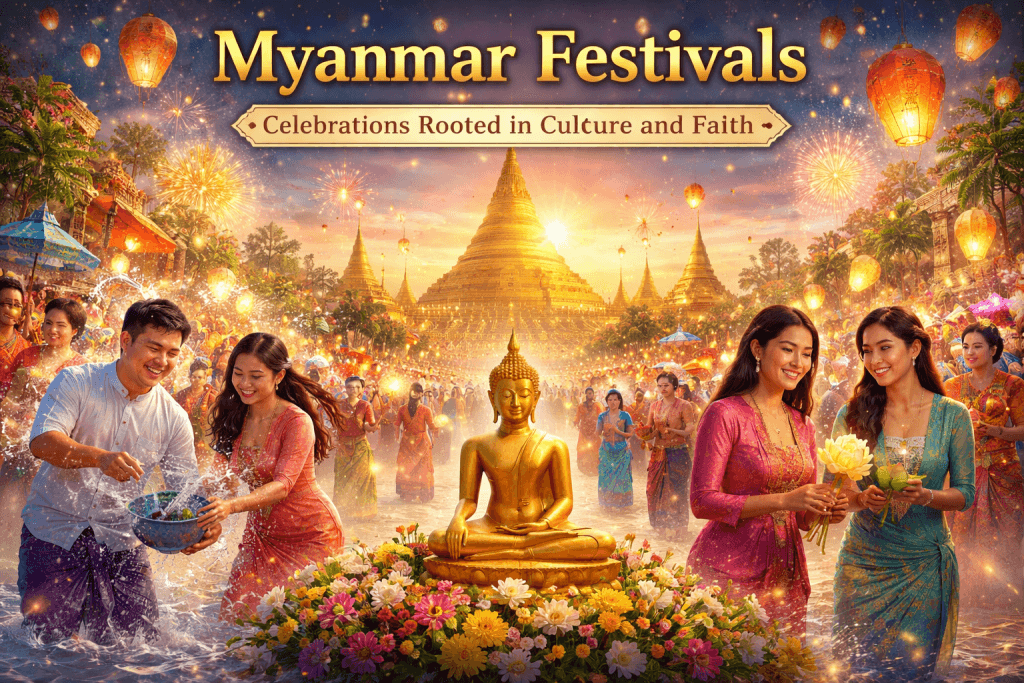
Myanmar Festivals: Celebrations Rooted in Culture and Faith reflect the deep spiritual foundations, historical traditions, and community values of Myanmar. Across the country, festivals are not only moments of joy and gathering but also powerful expressions of belief, gratitude, and cultural identity. Rooted in Buddhism, influenced by ancient customs, and shaped by regional diversity, these celebrations form a living cultural calendar that connects past and present, faith and daily life.
The Cultural Importance of Festivals in Myanmar
Myanmar Festivals: Celebrations Rooted in Culture and Faith play a central role in preserving national identity. In Myanmar society, festivals are not simply entertainment. They are communal rituals where spiritual devotion, family bonds, and cultural continuity come together. Every festival carries symbolic meaning tied to Buddhist teachings, seasonal cycles, or historical events that shape collective memory.
Festivals in Myanmar often follow the traditional Burmese lunar calendar. Each month is associated with specific observances that reflect the rhythm of agricultural life and religious practice. This cyclical pattern reinforces harmony between people, nature, and spiritual beliefs.
See More: Myanmar Culture: Traditions, Values, and National Identity
Buddhism as the Foundation of Myanmar Festivals
Buddhism deeply influences Myanmar Festivals: Celebrations Rooted in Culture and Faith. Theravada Buddhism shapes most rituals, ceremonies, and values reflected in these celebrations. Acts of merit making, generosity, meditation, and respect for monks are central themes.
During festivals, people visit pagodas, offer alms, release animals, and engage in communal prayers. These practices emphasize mindfulness, compassion, and moral conduct. Festivals serve as reminders of Buddhist teachings, encouraging individuals to reflect on impermanence, gratitude, and harmony.
Thingyan Water Festival and Spiritual Renewal
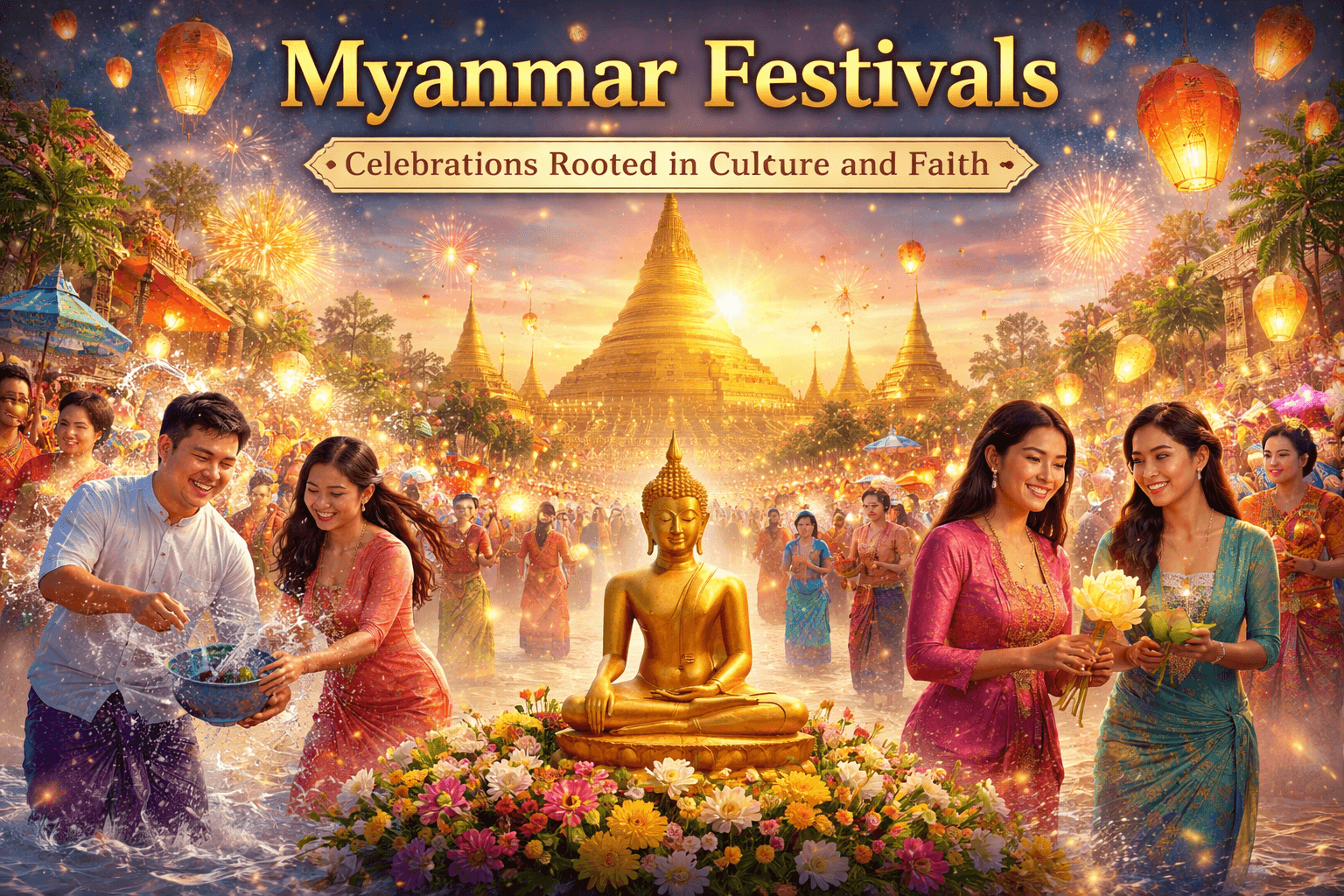
Thingyan is one of the most iconic examples of Myanmar Festivals: Celebrations Rooted in Culture and Faith. Celebrated as the Burmese New Year, Thingyan symbolizes cleansing and renewal. Water splashing represents washing away past misfortunes and negative deeds.
Beyond joyful water celebrations, Thingyan carries spiritual meaning. Many people observe precepts, perform charitable acts, and spend time at monasteries. The festival highlights balance between joyful expression and spiritual reflection, reinforcing values of forgiveness and fresh beginnings.
Thadingyut Festival of Lights
The Thadingyut Festival marks the end of Buddhist Lent and stands as a luminous expression of Myanmar Festivals: Celebrations Rooted in Culture and Faith. Homes, streets, and pagodas glow with lanterns and candles, symbolizing enlightenment and gratitude.
This festival honors the Buddha’s return from the celestial realm after teaching his mother. Respect for elders is central, as younger generations seek forgiveness and blessings. Thadingyut strengthens family ties while emphasizing humility and respect.
Tazaungdaing Festival and Acts of Merit
Tazaungdaing is another important chapter in Myanmar Festivals: Celebrations Rooted in Culture and Faith. Celebrated at the end of the rainy season, this festival focuses on robe offering ceremonies for monks. Communities come together to prepare offerings, reinforcing collective generosity.
Hot air balloons are also associated with Tazaungdaing in some regions. These symbolic displays represent prayers and wishes rising toward the heavens. The festival blends creativity, devotion, and communal participation.
Waso Festival and the Beginning of Buddhist Lent
The Waso Festival marks the start of Buddhist Lent and highlights restraint and discipline within Myanmar Festivals: Celebrations Rooted in Culture and Faith. During this period, monks remain in monasteries to deepen study and meditation.
Laypeople support the monastic community through offerings and moral observance. Waso reflects commitment to spiritual growth, reminding individuals of patience, self control, and dedication to ethical living.
Kason Festival and Reverence for the Bodhi Tree
Kason Festival commemorates the Buddha’s birth, enlightenment, and passing. It is a deeply symbolic part of Myanmar Festivals: Celebrations Rooted in Culture and Faith. One of the key rituals involves watering Bodhi trees, representing respect for enlightenment and life.
This festival emphasizes mindfulness and reverence. Acts performed during Kason reinforce awareness of impermanence and gratitude for spiritual guidance.
Regional Diversity in Myanmar Festivals
Myanmar Festivals: Celebrations Rooted in Culture and Faith vary across regions, reflecting ethnic diversity. While Buddhist traditions dominate, local customs enrich celebrations with unique music, dance, attire, and rituals.
In ethnic communities, festivals may incorporate ancestral worship, seasonal rites, and traditional storytelling. This diversity strengthens cultural richness while maintaining shared values of respect and unity.
Traditional Music and Dance in Festival Celebrations
Music and dance are essential elements of Myanmar Festivals: Celebrations Rooted in Culture and Faith. Traditional instruments and performances convey stories of history, spirituality, and community life.
Dance movements often symbolize moral teachings or historical legends. Through these artistic expressions, festivals become living classrooms where cultural knowledge passes from generation to generation.
Food and Communal Sharing During Festivals
Food plays a significant role in Myanmar Festivals: Celebrations Rooted in Culture and Faith. Festival foods are prepared communally, symbolizing generosity and togetherness. Sharing meals strengthens social bonds and reinforces values of compassion and hospitality.
Offering food to monks and guests reflects the Buddhist principle of dana, or giving. These acts of generosity are believed to bring merit and positive spiritual outcomes.
Festivals as a Reflection of Seasonal Cycles
Many Myanmar Festivals: Celebrations Rooted in Culture and Faith align with agricultural seasons. Festivals celebrate planting, harvest, and monsoon transitions, emphasizing harmony with nature.
These celebrations acknowledge dependence on natural cycles and encourage gratitude for abundance. Seasonal festivals connect spiritual life with environmental awareness and respect for the land.
Community involvement is at the heart of Myanmar Festivals: Celebrations Rooted in Culture and Faith. Villages and neighborhoods collaborate in organizing ceremonies, decorations, and performances.
This collective effort fosters unity and shared responsibility. Festivals serve as platforms for social connection, reducing divisions and reinforcing mutual support within communities.
Symbolism and Ritual Practices
Ritual symbolism defines Myanmar Festivals: Celebrations Rooted in Culture and Faith. Water symbolizes purification, light represents wisdom, and offerings express gratitude. Each gesture carries layered meaning rooted in centuries of belief.
Understanding these symbols deepens appreciation of festivals and their spiritual messages. Rituals guide participants toward reflection and moral awareness.
The Role of Monasteries and Pagodas
Monasteries and pagodas are central to Myanmar Festivals: Celebrations Rooted in Culture and Faith. These sacred spaces host ceremonies, prayers, and communal gatherings.
They act as cultural anchors, preserving traditions and teachings. Festivals strengthen the bond between laypeople and monastic communities, reinforcing spiritual continuity.
Festivals and Moral Education
Myanmar Festivals: Celebrations Rooted in Culture and Faith function as moral education. Through participation, individuals learn values such as respect, generosity, patience, and humility.
Children observe and engage in rituals, gaining cultural knowledge and ethical guidance. Festivals thus serve as informal yet powerful educational frameworks.
Modern Influences and Continuity of Tradition
While modern life influences festival expressions, Myanmar Festivals: Celebrations Rooted in Culture and Faith remain deeply traditional. Contemporary elements may appear in performances or organization, yet core values endure.
This balance between tradition and adaptation ensures cultural continuity while allowing festivals to remain relevant in changing times.
Festivals as Cultural Heritage
Myanmar Festivals: Celebrations Rooted in Culture and Faith are an essential part of Myanmar’s intangible cultural heritage. They preserve collective memory, spiritual practice, and artistic expression.
These celebrations embody historical narratives and belief systems that define national identity. Protecting and celebrating festivals ensures cultural resilience for future generations.
Spiritual Reflection Through Celebration
At their core, Myanmar Festivals: Celebrations Rooted in Culture and Faith offer moments for spiritual reflection. Beyond joy and color, festivals invite mindfulness and gratitude.
Participants reconnect with moral values and spiritual teachings, finding balance between celebration and contemplation. This duality gives Myanmar festivals their profound depth.
The Enduring Significance of Myanmar Festivals
Myanmar Festivals: Celebrations Rooted in Culture and Faith continue to shape social and spiritual life in Myanmar. They unite communities, preserve traditions, and reinforce values rooted in faith and culture.
Through rituals, art, and collective participation, festivals remain living expressions of identity and belief. They remind people of shared heritage, spiritual purpose, and the enduring connection between culture and faith.
