
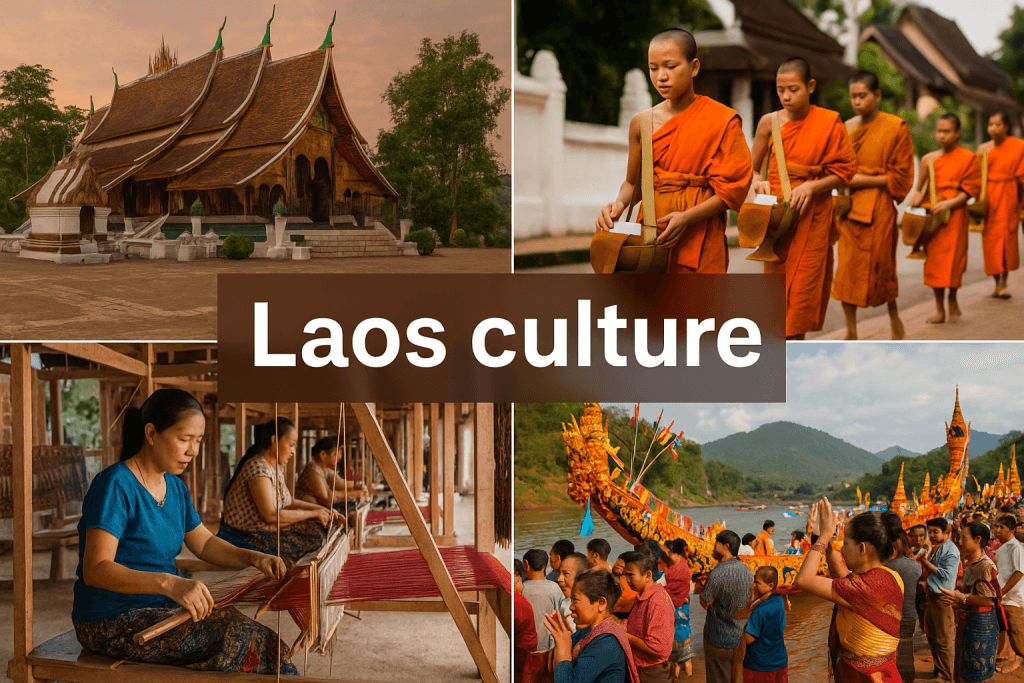
Laos culture embodies a distinctive blend of spirituality, tradition, artistry, and community values that shape the daily life, social behavior, and national identity of the Lao people. As one of the most culturally preserved nations in Southeast Asia, Laos maintains a deep connection to its Buddhist heritage, indigenous customs, and rural lifestyle.
Exploring Laos culture reveals a multilayered tapestry filled with symbolic rituals, ancestral beliefs, sacred practices, and diverse ethnic expressions. This cultural richness forms a powerful foundation for understanding the social fabric and worldview of Lao society.

1. Foundations of Laos culture
The foundations of Laos culture stem from several intertwined elements that have influenced the country for centuries. Buddhism plays a central role, guiding moral values, artistic styles, and community rituals. Along with Buddhism, Laos is shaped by ancestral worship, village traditions, local craftsmanship, and a communal mindset that emphasizes harmony. These roots reveal how Laos culture has evolved while still preserving its authenticity amid global change.
The core of Laos culture rests upon its spiritual worldview. Buddhist teachings influence celebrations, architecture, clothing, and behavior. Monks continue to hold respected roles, and merit making remains a central practice. The symbolism embedded in temples, sculptures, textiles, and festivals reflects a desire to balance human life with spiritual purity. This philosophical foundation reinforces the calm, gentle, and humble demeanor often associated with Lao people.
See More: Laos culinary heritage
2. Ethnic diversity within Laos culture
Although often described as unified, Laos culture is actually highly diverse. With over 50 ethnic groups, the country presents a mosaic of languages, traditions, and customs. Three broad groups are commonly referenced: Lao Lum, Lao Theung, and Lao Soung. Each contributes unique elements to Laos culture, enriching national identity.
Ethnic diversity influences clothing styles, ceremonial practices, musical forms, and culinary techniques. Hill tribes preserve animist traditions, while lowland groups maintain Buddhist rituals. This coexistence highlights the flexibility and inclusiveness of Laos culture, which accommodates different belief systems and ways of life. Understanding these ethnic layers provides deeper insight into how Lao society functions across geographical regions.
3. Laos culture and the role of Buddhism
Buddhism is the moral and spiritual compass of Laos culture. Temples serve as essential social centers, teaching respect, meditation, kindness, and discipline. Offerings to monks, chanting rituals, and religious festivals provide cultural continuity. The presence of golden stupas, murals, and sacred sculptures demonstrates how religious devotion shapes daily experiences.
Within Laos culture, Buddhist values emphasize compassion, balance, reflection, and gratitude. Many festivals follow the lunar calendar, linking spiritual beliefs with seasonal cycles. This connection between the human world and natural rhythms reinforces the peaceful atmosphere that characterizes many Lao communities. The integration of spiritual practice into everyday activities reflects the depth of Buddhist influence in Laos culture.
4. Traditional arts as expressions of Laos culture
Traditional arts are among the most distinctive elements of Laos culture. Weaving holds special importance, especially silk weaving with symbolic motifs. Each pattern represents ancestral stories, natural forces, or spiritual symbols. Textiles serve ceremonial, social, and symbolic functions. Musical traditions, such as the iconic khene, contribute to communal celebrations and reflect emotional storytelling.
Performing arts within Laos culture include folk dances, ritual performances, and classical music forms preserved from royal courts. These performances highlight themes of harmony, respect, and spiritual connection. Handicrafts such as wood carving, pottery, silverwork, and bamboo weaving also reveal the creativity and skill embedded in Laos culture. Each art form expresses cultural identity through technique, symbolism, and collective memory.
5. Laos culture reflected through festivals
Festivals provide vibrant opportunities to observe Laos culture in action. Traditional celebrations emphasize gratitude, purification, renewal, and unity. The most famous festival is Pi Mai Lao, marking the Lao New Year. Communities engage in water blessings, temple visits, floral decorations, and purification rituals. This celebration demonstrates the joyful and spiritual aspects of Laos culture.
Other festivals, such as Boun Khao Padap Din, Boun Ok Phansa, and That Luang Festival, express deep-rooted respect for ancestors, natural cycles, and Buddhist teachings. Each event offers symbolic activities that reinforce cultural values. These celebrations illustrate the ways Laos culture blends spirituality, community participation, and artistic expression into meaningful traditions.
6. Laos culture in everyday life
Everyday life in Laos reflects the simplicity and harmony central to Laos culture. Social interactions emphasize respect, humility, and politeness. The concept of jai yen, meaning a calm heart, guides emotional behavior and conflict resolution. People value community ties, cooperation, and peaceful coexistence.
Family structures remain strong, with multigenerational households common throughout the country. Elders receive particular respect, and family roles are clearly defined. Hospitality is another characteristic of Laos culture, with visitors welcomed warmly and meals shared generously. Daily routines often reflect a blend of agricultural tradition, spiritual mindfulness, and communal living.
7. Architectural heritage within Laos culture
Architecture is another integral expression of Laos culture. Temples feature tiered roofs, intricate wood carvings, and ornamental details inspired by spiritual symbolism. Royal palaces echo historical influences from neighboring regions, while rural villages feature stilt houses constructed from wood and bamboo.
Urban architectural styles reflect colonial influences blended with Lao tradition. This layering of styles represents the adaptability of Laos culture, which evolves while maintaining its essence. Sacred sites such as Wat Xieng Thong illustrate refined craftsmanship and spiritual devotion. These structures represent more than aesthetics; they symbolize philosophical values and historical continuity.
8. Laos culture and culinary identity
Lao cuisine plays a meaningful role in illustrating Laos culture. Dishes emphasize fresh herbs, fermented ingredients, and balanced flavors. Sticky rice is a defining staple, symbolizing community bonding and regional identity. Traditional dishes such as larb, mok pa, and tam mak hoong represent the creativity and agricultural roots of Lao society.
Food customs within Laos culture emphasize sharing, hospitality, and ritual significance. Meals are commonly served family style, reinforcing togetherness. Traditional techniques such as grilling, steaming, and fermenting highlight resourcefulness and respect for natural ingredients. Culinary traditions show how Laos culture values harmony, simplicity, and the connection between people and land.
9. Spiritual symbolism in Laos culture
Symbolism holds deep importance within Laos culture. Mythical creatures like the naga represent protection and prosperity. Floral motifs symbolize purity, renewal, and harmony with nature. These symbols appear in textiles, architecture, ceramics, and rituals, reinforcing cultural values through visual language.
Spiritual symbolism also guides ethical behavior and collective ceremonies. Offerings, candles, and incense convey gratitude and connection to spiritual realms. Symbolic gestures during rituals emphasize respect and purity. This connection between symbolism and daily practice reveals the depth of belief within Laos culture.
10. Laos culture and environmental connection
The natural environment plays a significant role in shaping Laos culture. Rivers, forests, and mountains influence agricultural cycles, spiritual beliefs, and community structures. Nature is not merely a resource; it is integrated into cultural narratives and ritual practices. Many festivals honor seasonal transitions, reflecting gratitude for the environment.
Traditional farming techniques and village layouts demonstrate sustainable principles. These practices highlight the balance between human life and nature, an essential value within Laos culture. Respect for the environment continues to guide community decisions and cultural identity.
11. Clothing traditions in Laos culture
Traditional clothing showcases the refinement and symbolism embedded in Laos culture. The sinh, a handwoven skirt worn by women, features patterns that indicate social status, regional identity, and spiritual symbolism. Men often wear salong or similar garments during ceremonies.
Clothing styles vary between ethnic groups, each expressing identity through patterns, colors, and weaving techniques. These garments are not merely decorative; they carry cultural memory and ancestral meaning. The craftsmanship behind textile production reflects the artistic integrity central to Laos culture.
Social values are essential to understanding Laos culture. Humility, kindness, respect, and emotional restraint guide interpersonal behavior. Speaking softly, avoiding confrontation, and maintaining harmony reflect deeply held moral beliefs. These values are rooted in Buddhist teachings and long standing village customs.
Community responsibilities and social cooperation strengthen collective identity. Individuals are encouraged to contribute to group well being, reinforcing unity. These social values highlight how Laos culture prioritizes human connection, respect, and balance.
13. Language and oral traditions in Laos culture
Language serves as a vital carrier of Laos culture. The Lao language expresses poetic rhythm and reflects cultural emotions. Oral traditions such as folktales, proverbs, and ceremonial chants preserve ancestral wisdom. Storytelling remains an important method of transmitting cultural knowledge across generations.
These oral traditions enrich Laos culture by embedding ethical lessons, spiritual meaning, and communal identity. They form a bridge between past and present, ensuring cultural continuity.
14. Cross cultural influences within Laos culture
Although unique, Laos culture also reflects influences from neighboring countries due to historical connections, trade routes, and migration. Elements from Khmer, Thai, Chinese, and Vietnamese cultures appear in architecture, cuisine, textiles, and rituals. Yet Laos maintains its distinct identity, blending external influences into its own cultural framework.
This ability to integrate without losing authenticity demonstrates the resilience and adaptability of Laos culture. Cultural exchange enriches national identity while preserving core values.
15. Modern transformation and preservation of Laos culture
Modernization introduces new dynamics to Laos culture. Urban centers experience rapid change through education, technology, and tourism. Despite this, cultural preservation efforts continue to protect heritage sites, traditional arts, and spiritual practices. Communities actively maintain rituals and craftsmanship to safeguard identity for future generations.
The balance between progress and preservation defines contemporary Laos culture. Efforts to promote cultural awareness, support artisans, and protect sacred traditions ensure cultural continuity. This commitment highlights the enduring strength and significance of Laos culture in a changing world.
