
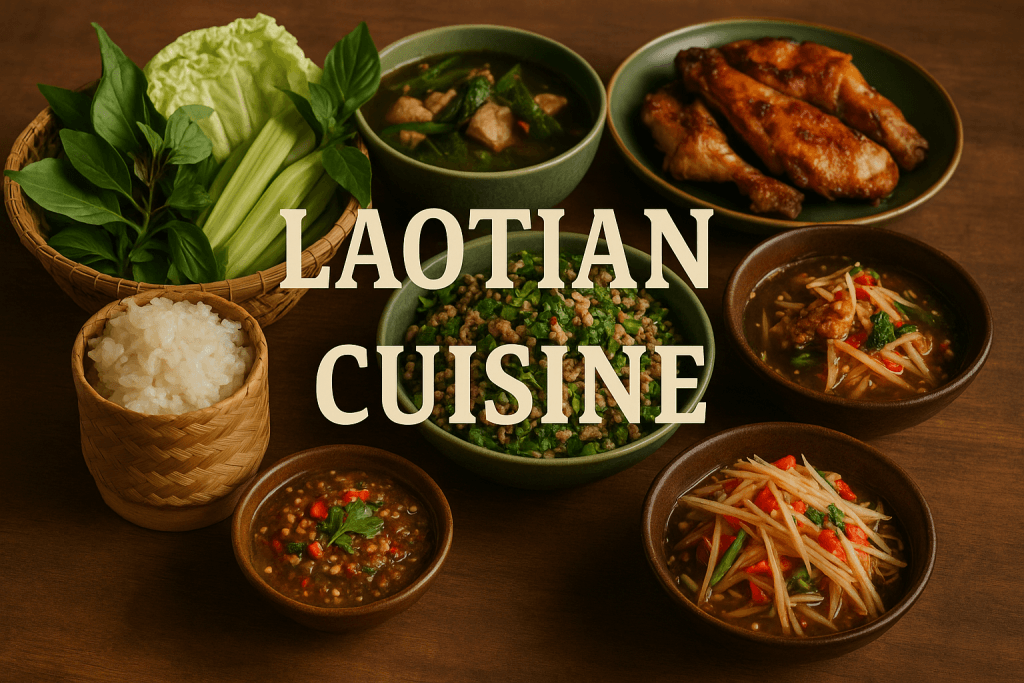
Laotian cuisine represents one of the most distinctive culinary traditions in Southeast Asia, shaped by the natural abundance of rivers, fertile valleys, mountain regions, and centuries of cultural influence. The food of Laos carries deep connections to community values, regional identity, and everyday life.
With a balance of fresh herbs, fermented elements, grilled dishes, aromatic spices, and sticky rice based meals, Laotian cuisine stands as a flavorful expression of simplicity and authenticity. This complete guide explores core characteristics, traditional ingredients, iconic specialties, regional variations, preparation techniques, and modern culinary trends associated with Laotian cuisine.

1. The Cultural Identity of Laotian Cuisine
Laotian cuisine is fundamentally connected to the landscapes of Laos. Rivers provide fish, forests offer herbs, mountains support wild vegetables, and farmlands produce rice as the foundation of daily meals. The cuisine is guided by freshness rather than heavy processing. Sticky rice, aromatic greens, fermented pastes, grilled meats, and herb loaded salads create a distinctive culinary framework.
Meals in Laotian cuisine typically consist of rice served with dipping sauces, vegetable platters, soups with fragrant herbs, grilled dishes, and fermented fish based condiments. The emphasis on sharing food reflects strong communal values. The dining style is informal yet harmonious, focusing on balance rather than strict rules.
As neighboring cultures such as Thai, Vietnamese, Chinese, and Cambodian influenced Laos through trade and migration, these interactions shaped the evolution of Laotian cuisine while allowing Lao food to retain a clearly recognizable character. The result is a cuisine that feels both rooted in tradition and open to adaptation.
See More: Laos local food
2. The Importance of Sticky Rice in Laotian Cuisine
Sticky rice, known as khao niao, is the heart of Laotian cuisine. It symbolizes identity, nourishment, and continuity. Laotians consume sticky rice more than any other type of rice, making it a cultural marker across the country. The rice is steamed in bamboo baskets and eaten by hand, rolled into small portions to pair with dips, salads, soups, or grilled dishes.
The texture and flavor of sticky rice create a unique eating experience since it absorbs the taste of accompanying dishes. In Laotian cuisine, sticky rice functions as both a staple and a conductor of overall flavor. It fosters shared meals since diners often eat from communal baskets.
Rice farming also plays a major role in shaping the rhythm of Lao life. Festivals, rituals, and seasonal traditions are closely connected to rice harvesting and rice preparation. Without sticky rice, Laotian cuisine would lose its defining foundation.
3. Key Ingredients Defining Laotian Cuisine
Multiple fresh and aromatic elements contribute to the uniqueness of Laotian cuisine. These ingredients influence textures, fragrances, and the signature savory profile of Lao dishes.
Fresh Herbs
Laos is known for abundant herbs including mint, cilantro, dill, lemongrass, scallions, and basil. These herbs uplift dishes with aromatic brightness, contributing depth and freshness.
Fermented Elements
Fermentation is central to Laotian cuisine. The most iconic ingredient is padaek, a fermented fish paste known for its robust character. It is used in dips, salads, soups, and sauces, enhancing complexity.
Chilies and Spices
Fresh and dried chilies, galangal, ginger, peppercorns, turmeric, and shallots provide heat and warm undertones, helping create the layered flavors associated with Laotian cuisine.
Vegetables and Wild Greens
Foraged greens and cultivated vegetables reflect the connection between food and nature. Bamboo shoots, eggplants, morning glory, gourds, and wild leaves appear in soups, stews, and salads.
Fish and River Ingredients
Rivers supply freshwater fish used in soups, fermented pastes, steamed preparations, and grilled specialties. Aquatic plants and river herbs deepen the culinary diversity.
Together, these ingredients maintain the authenticity and identity of Laotian cuisine, offering a harmony of freshness, aroma, and natural richness.
4. Signature Dishes of Laotian Cuisine
The best way to understand Laotian cuisine is through its iconic dishes. Each reflects the balance of herbs, spices, fermentation, and traditional cooking techniques.
Larb
Larb is one of the most recognizable dishes in Laotian cuisine. This herb filled minced meat salad combines roasted rice powder, lime juice, chilies, and aromatic greens. It represents purity, balance, and freshness.
Tam Mak Hoong
Often compared to papaya salad variations in neighboring countries, Tam Mak Hoong holds its own identity in Laotian cuisine. The mix of shredded papaya, fermented fish paste, chilies, garlic, and tomatoes creates a bold profile.
Khao Soi Lao
This is a comforting noodle dish made with hand pulled noodles, aromatic broth, and flavorful toppings. It emphasizes depth without heavy fats.
Or Lam
Or Lam showcases the rustic northern character of Laotian cuisine. It is a thick stew prepared with vegetables, wood ear mushrooms, herbs, and meat, finished with a slightly peppery, aromatic ingredient known as sakhan.
Grilled Meats and Fish
Grilling is one of the main cooking methods in Laotian cuisine. Grilled chicken, fish, and beef are served with dipping sauces like jeow mak len or jeow bong.
Jeow Dips
Jeow dipping sauces are essential to daily meals. They range from tomato based to chili based and provide the savory spark that enhances sticky rice and vegetables.
5. Regional Variations in Laotian Cuisine
Regions across Laos reflect diverse approaches to cooking. These variations highlight the geographic and cultural differences of Laotian cuisine.
Northern Laos
Mountain areas lead to dishes using wild greens, mushrooms, bamboo, and hearty stews. The northern style of Laotian cuisine is known for earthy tones and slower cooked preparations.
Central Laos
This region balances fresh herbs, grilled foods, and fermented pastes. Sticky rice remains the dominant staple. Soups and salads in central Laos highlight the clean aromas of Laotian cuisine.
Southern Laos
Southern dishes incorporate more tropical ingredients including river fish and exotic herbs. The culinary style favors bold flavors and rich herbal layering.
These variations showcase the adaptability and local expression of Laotian cuisine.
6. Cooking Methods in Laotian Cuisine
Traditional cooking in Laos uses simple tools and natural fuel sources, emphasizing authenticity.
Steaming
Steaming sticky rice in bamboo baskets is a hallmark of Laotian cuisine. Vegetables and fish are often steamed as well to maintain tenderness and aroma.
Grilling
A major technique in rural and urban settings alike. The smoke from charcoal enhances flavor and gives dishes a rustic quality.
Pounding and Grinding
Mortar and pestle tools are central to Laotian cuisine, used to prepare dips, pastes, spice blends, and salads.
Slow Simmering
Stews like Or Lam rely on slow simmering to concentrate flavors without artificial enhancements.
The simplicity of these methods reflects the purity and natural orientation of Laotian cuisine.
7. The Balance of Flavors in Laotian Cuisine
The sensory identity of Laotian cuisine does not rely on heavy sweetness or strong sourness. Instead, it balances salty notes from fermented ingredients, herbal aromas from fresh greens, heat from chilies, and subtle brightness from citrus.
Dishes rarely overwhelm the palate. Instead, they create a smooth and grounded harmony. Sticky rice enhances this balance by serving as a neutral companion. Through moderate seasoning and careful herb usage, Laotian cuisine maintains a refreshing and earthy flavor structure that differentiates it from neighboring food traditions.
8. The Role of Freshness and Nature in Laotian Cuisine
Fresh produce and natural ingredients form the foundation of Laotian cuisine. The country’s landscape supports diverse crops, wild herbs, and aquatic plants. Foraging remains common in rural communities, ensuring access to seasonal greens throughout the year.
The concept of freshness means minimal processing. Vegetables are eaten raw, lightly steamed, or briefly blanched. Meat and fish are grilled or simmered gently. This enhances both nutritional quality and natural flavors.
Nature also shapes the rituals of gathering, preparing, and sharing ingredients. Through these practices, Laotian cuisine celebrates harmony with the environment.
9. The Influence of Neighboring Cultures on Laotian Cuisine
Geographical proximity to Thailand, Vietnam, Cambodia, and China brought culinary interactions, yet Laotian cuisine preserved distinct characteristics. While similarities exist, the Lao emphasis on sticky rice, herb density, and fermented fish paste creates a clear distinction.
Trade routes introduced noodles, spice blends, and cooking equipment. Migration patterns enriched the food landscape with additional techniques. Despite these influences, the core identity of Laotian cuisine remains anchored in authenticity, simplicity, and local ingredients.
10. Modern Developments in Laotian Cuisine
As global travel and cultural exchange increase, Laotian cuisine gains international attention. Modern restaurants incorporate regional dishes while presenting them through contemporary styles. Chefs highlight traditional herbs and fermentations in innovative ways.
Urban centers in Laos also experiment with new interpretations of classic dishes, adapting flavor profiles for diverse audiences. While modernization brings creativity, the essence of Laotian cuisine remains rooted in respect for tradition.
Culinary education programs, travel content creators, and food enthusiasts help promote Lao food culture abroad. This growing awareness supports cultural preservation and tourism development.
11. Nutritional Qualities of Laotian Cuisine
The structure of Laotian cuisine naturally emphasizes balance. Sticky rice provides sustained energy. Herbs contain antioxidants, while vegetables contribute fiber and micronutrients. Grilled dishes reduce excess oil, and fermented ingredients support digestive diversity.
The use of natural seasonings instead of heavy sauces creates a cleaner, more grounded nutritional profile. The emphasis on moderation ensures that dishes remain satisfying without relying on excessive richness.
12. The Future of Laotian Cuisine
The global interest in authenticity, clean ingredients, and cultural food experiences positions Laotian cuisine as a rising star. Food tourism grows as travelers explore regional specialties in Vientiane, Luang Prabang, Pakse, and rural provinces.
Preserving traditional recipes while embracing creative culinary approaches will support the future evolution of Laotian cuisine. Farmers, chefs, educators, and communities contribute to sustaining the cultural legacy of Lao food.
As the world searches for diverse culinary identities, Laotian cuisine offers purity, simplicity, and a deep connection to nature.
Conclusion
Laotian cuisine stands out as one of the most authentic and naturally balanced food traditions in Southeast Asia. With its foundation in sticky rice, fresh herbs, fermented elements, grilled dishes, and nature inspired techniques, the cuisine reflects the values and lifestyle of Laos. From herbal salads to rustic stews, every dish in Laotian cuisine carries cultural meaning, regional character, and sensory harmony. As global interest continues to grow, Laotian cuisine holds immense potential to become a celebrated culinary identity worldwide.
