
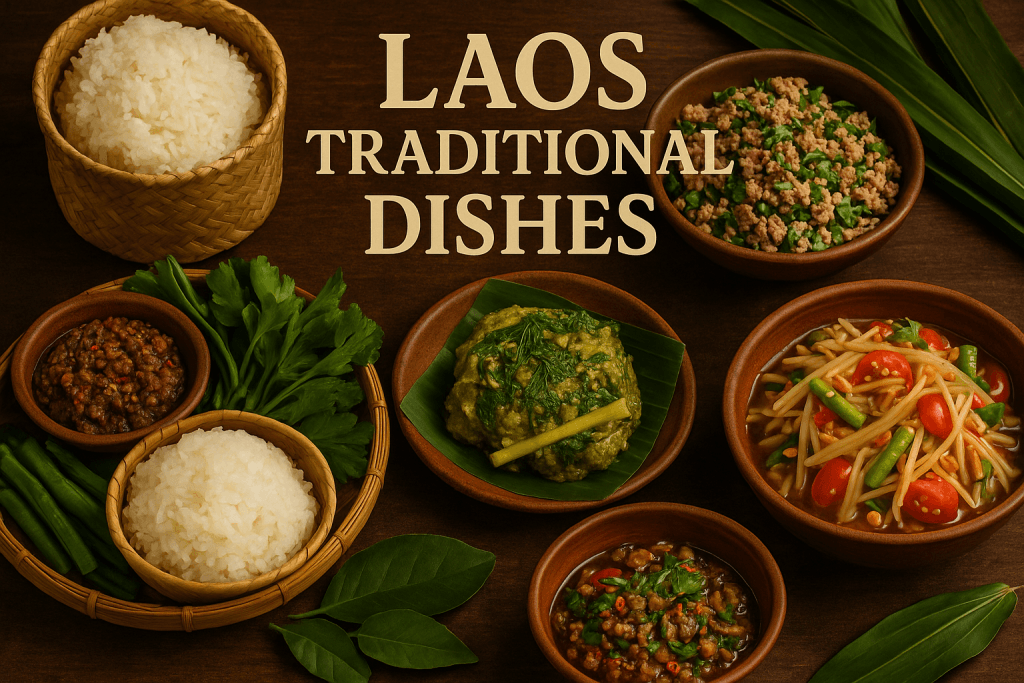
Laos traditional dishes represent one of the most distinctive culinary identities in Southeast Asia. The cuisine stands out for its emphasis on fresh ingredients, local herbs, fermented elements, and a balanced interplay between textures and aromas. Many travelers who explore Southeast Asia often overlook the depth of Laos traditional dishes because the cuisine is less commercialized globally compared to neighboring countries.
However, the food culture of Laos offers a comprehensive journey into heritage, regional diversity, and ingredient craftsmanship. Understanding Laos traditional dishes helps reveal how geography, climate, and culture shape the daily meals of the Lao people, providing a foundation to appreciate cooking methods, preserved traditions, and the evolving identity of Lao gastronomy.
The essence of Laos traditional dishes is linked closely to the concept of communal dining. Most meals are shared, and dishes are placed in the center for everyone to enjoy. Sticky rice, fresh greens, dipping sauces, and aromatic broths create a cohesive table that connects families and communities. Many culinary researchers describe Laos traditional dishes as a balance between herbal brightness and fermented richness.
This balance makes Lao cuisine recognizable yet unique compared to regional counterparts. The use of sticky rice as the primary carbohydrate is one of the strong cultural identifiers found in Laos traditional dishes, setting it apart from cuisines that rely more on jasmine rice or noodles.
A critical observation about Laos traditional dishes is the minimal use of oil. Food preparation often depends on grilling, steaming, pounding, and boiling techniques. This showcases natural flavors while preserving nutritional value and aroma. Another key feature is the generous use of local herbs such as dill, cilantro, galangal, lemongrass, mint, basil, sawtooth herb, and wild vegetables gathered from forests and riversides. These components bring depth to Laos traditional dishes, offering warm notes, citrus hints, and earthy tones that interact harmoniously across the meal.
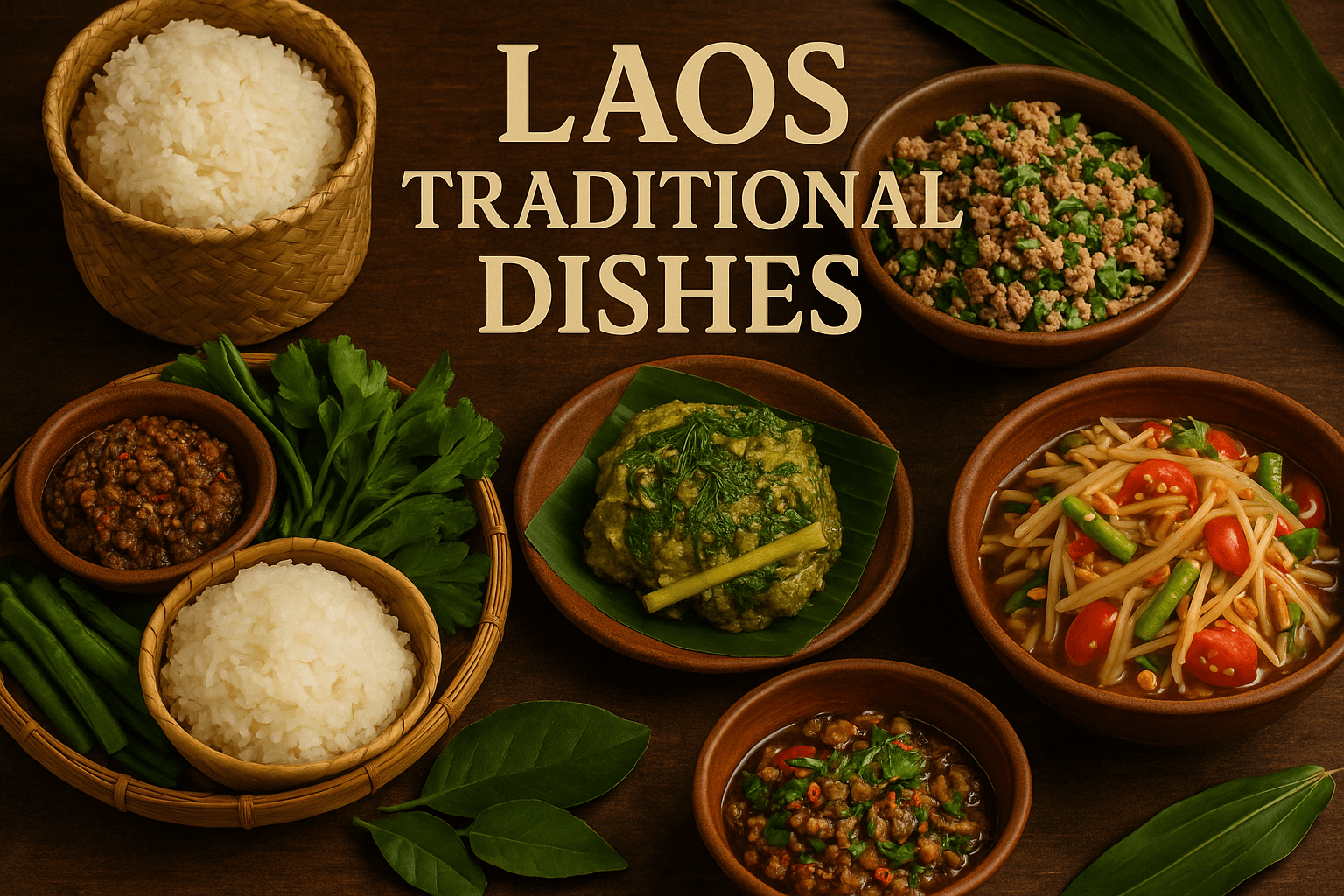
Cultural Foundations of Laos Traditional Dishes
The cultural backbone of Laos traditional dishes reflects Lao history, local farming, and spiritual customs. Sticky rice holds not only culinary importance but spiritual meaning, symbolizing prosperity and unity. Families grow glutinous rice in different terrains and integrate it into meals from morning to evening. It plays a central role in how other Laos traditional dishes are conceptualized. Sticky rice pairs effortlessly with grilled food, fresh salads, soups, and fermented items.
Additionally, many Laos traditional dishes are influenced by community rituals such as Baci ceremonies, temple festivals, and new year celebrations. Each ceremony features symbolic foods presented to monks or shared among villagers. These dishes often include steamed greens, meat soups, fermented fish paste, and banana leaf preparations. Understanding these cultural roles helps illustrate why Laos traditional dishes maintain a strong sense of identity despite evolving modern tastes.
Lao people traditionally produce fermented ingredients to preserve food due to limited refrigeration in earlier centuries. This tradition gives rise to jeow dipping pastes, fermented fish (pa daek), and pickled vegetables that shape the bold profile of Laos traditional dishes. Modern households continue to apply these methods because they maintain authentic flavor and cultural value.
See More: Authentic Laos cuisine
Core Ingredients in Laos Traditional Dishes
To fully understand Laos traditional dishes, one must examine the foundational ingredients. Sticky rice is the pillar, but numerous herbs, vegetables, and proteins contribute to a recognizable Lao flavor profile.
Sticky Rice
Sticky rice defines the structure of Laos traditional dishes. It is steamed in a bamboo basket and eaten by hand. The texture encourages pairing with various flavors, from spicy jeow to earthy soups. Sticky rice binds the meal together both physically and symbolically.
Herbs and Aromatics
Herbs create the fragrance in Laos traditional dishes. Lemongrass, mint, dill, kaffir lime leaves, chili, garlic, shallots, and galangal contribute freshness and complexity. This herbal foundation enhances grilled dishes, salads, and soups.
Fermented Components
Fermented fish sauce and pastes play an important role in Laos traditional dishes. Pa daek provides an umami base that is stronger and richer than typical fish sauce. Fermented bamboo shoots and pickled vegetables also contribute tanginess to balance herbal notes.
River and Forest Ingredients
Laos traditional dishes often feature river fish, freshwater seaweed, forest mushrooms, wild vegetables, and seasonal produce. This diversity highlights how local ecosystems influence the composition of meals.
Signature Laos Traditional Dishes
Larb
Larb is one of the most iconic Laos traditional dishes, representing the national dish of Laos. It consists of minced meat mixed with herbs, roasted rice powder, chili, and lime. Larb showcases freshness and balance typical of Lao cuisine.
Khao Piak Sen
A comforting noodle soup often described as one of the most essential Laos traditional dishes. It uses thick rice noodles with herbs, broth, and aromatics to create a warming everyday meal.
Tam Mak Hoong
The Lao version of green papaya salad is deeply connected to Laos traditional dishes. This dish emphasizes fermented flavors, chili heat, and aromatic herbs.
Mok Pa
Steamed fish wrapped in banana leaves is a central feature of Laos traditional dishes. The use of dill, lemongrass, and herbs creates a rich and fragrant profile.
Or Lam
A slow cooked stew popular in northern Laos. It is one of the most distinctive Laos traditional dishes due to the use of pepperwood, herbs, and vegetables that create a smoky and earthy taste.
Jeow Dipping Sauces
Jeow sauces are essential elements in Laos traditional dishes. They pair with sticky rice and grilled meats and include variations such as jeow bong and jeow som.
Sai Oua
Lao sausage features herbs and spices that characterize Laos traditional dishes. It is grilled and served with sticky rice and fresh vegetables.
Khao Jee
The Lao style baguette is an example of how modern influences integrate with Laos traditional dishes without replacing traditional flavors.
Regional Variations of Laos Traditional Dishes
The regional diversity across Laos contributes significantly to the range of Laos traditional dishes.
Northern Laos
Northern areas feature earthier flavors with indigenous vegetables and smoked ingredients. Or lam and bamboo shoots are especially prominent.
Central Laos
Central regions blend herbal freshness with fermented notes. Many signature Laos traditional dishes such as larb and mok preparations originate from these areas.
Southern Laos
Southern cuisine introduces tropical vegetables, river fish, and a slightly sweeter herbal profile. Sticky rice and dipping pastes remain core elements.
Cooking Techniques in Laos Traditional Dishes
One of the defining features of Laos traditional dishes lies in the cooking techniques used to highlight natural ingredients.
Grilling
Grilling showcases the simplicity and depth of flavor found in Laos traditional dishes. Meats and fish are often seasoned lightly to allow herbs to shine.
Steaming
Steaming in banana leaves preserves moisture and aroma. Many essential Laos traditional dishes rely on this method to highlight fresh herbs.
Pounding
Pounding ingredients in a mortar creates texture and blends flavors thoroughly. This method is crucial in salads and dipping sauces.
Simmering
Simmering slowly allows ingredients to release flavor gradually. It is a signature method used in stews such as or lam.
The Role of Herbs and Spices in Laos Traditional Dishes
Herbs and spices give Laos traditional dishes their recognizable character. Dill, unusual in Southeast Asian cuisine, is used frequently in Lao recipes. The gentle aroma contributes a refreshing depth. Lemongrass provides citrus vibrance. Mint adds cooling freshness. Sawtooth herb intensifies flavor. The harmonious interaction of these herbs shapes the structure of Laos traditional dishes.
Chili holds a central place as well. Many Laos traditional dishes incorporate chili to enhance aroma rather than to overwhelm. The result is a balanced heat profile that complements other ingredients.
Influence of Neighboring Cultures on Laos Traditional Dishes
Despite maintaining a strong identity, Laos traditional dishes share historical ties with neighboring cuisines such as Thai, Vietnamese, and Cambodian. These similarities stem from shared geography and long standing cultural exchange. However, several distinctions remain clear. Sticky rice is more dominant in Laos traditional dishes, herbs differ in combinations, and fermented ingredients play a larger role. These differences highlight the unique culinary pathway Laos developed independently.
Modern Evolution of Laos Traditional Dishes
Globalization introduces new cooking trends, ingredients, and methods. Yet Laos traditional dishes continue to hold strong cultural importance. Chefs integrate modern plating and fusion concepts, but the essence stays rooted in heritage. Restaurants around the world are gradually introducing Lao cuisine to international diners. This evolution increases awareness about Laos traditional dishes, encouraging preservation and exploration simultaneously.
Health Characteristics of Laos Traditional Dishes
Many nutrition experts highlight the natural alignment between healthy eating principles and Laos traditional dishes. The cuisine emphasizes steamed food, fresh vegetables, lean proteins, and herbs. Minimal oil usage and abundant fiber rich ingredients contribute to a balanced meal structure. Fermented items support digestive wellness, while herbs offer antioxidants. Sticky rice provides sustainable energy without overwhelming the palate.
Dining Etiquette in Laos Traditional Dishes
Dining customs reflect the respectful and communal nature of Lao culture. Sticky rice is eaten by hand, and dishes are shared among family members. Understanding etiquette enhances the experience of enjoying Laos traditional dishes, reinforcing the social significance behind each meal.
The Future of Laos Traditional Dishes
The future of Laos traditional dishes rests on cultural preservation, culinary education, and global exposure. Young chefs experiment with modern interpretations while maintaining authenticity. Food tourism increases interest in learning about Lao cuisine, and cooking schools introduce foreigners to the fundamentals of Laos traditional dishes. These developments ensure that Lao gastronomy continues to evolve while honoring tradition.
Conclusion
Laos traditional dishes represent a complex harmony of herbs, fermented components, fresh vegetables, and communal dining practices. The cuisine reflects geography, culture, and tradition while adapting to contemporary trends. Understanding Laos traditional dishes provides insight into the heritage and identity of Laos, offering a deeper appreciation of its culinary richness.
