
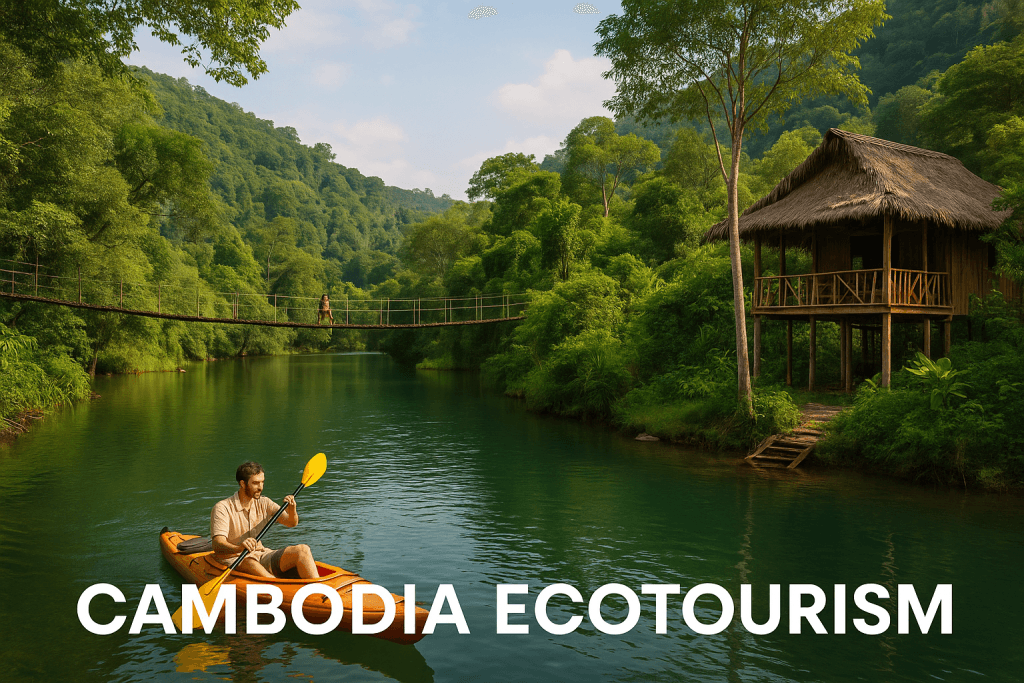
Cambodia ecotourism has become one of the most transformative travel movements in Southeast Asia. The country is shaped by tropical forests, untouched islands, wide floodplains, and traditional farming communities where sustainable travel is helping protect landscapes and cultural identity.
Modern travelers are shifting their focus from rushed sightseeing to immersive nature based experiences that restore natural environments while supporting local livelihoods. As a result the rise of Cambodia ecotourism demonstrates a national shift toward conservation driven travel.
Visitors are now exploring protected forests, wildlife sanctuaries, biodiversity corridors, floating villages, organic farms, and indigenous communities. These destinations offer meaningful encounters through nature walks, birdwatching, eco lodges, marine conservation tours, kayaking, jungle trekking, and agro tourism activities.
The heart of Cambodia ecotourism lies in its balance between conservation and cultural respect. The country nurtures rare ecosystems including mangrove forests, evergreen highlands, coastal marine habitats, river systems, and freshwater wetlands that hold rich biodiversity.
As sustainable tourism continues to grow, Cambodia ecotourism becomes a vital contributor to environmental education, community empowerment, and long term preservation of natural resources. This comprehensive guide explores the full landscape of nature based travel in Cambodia, highlighting destinations, ecosystems, wildlife, conservation programs, community led tourism projects, and future sustainability trends.
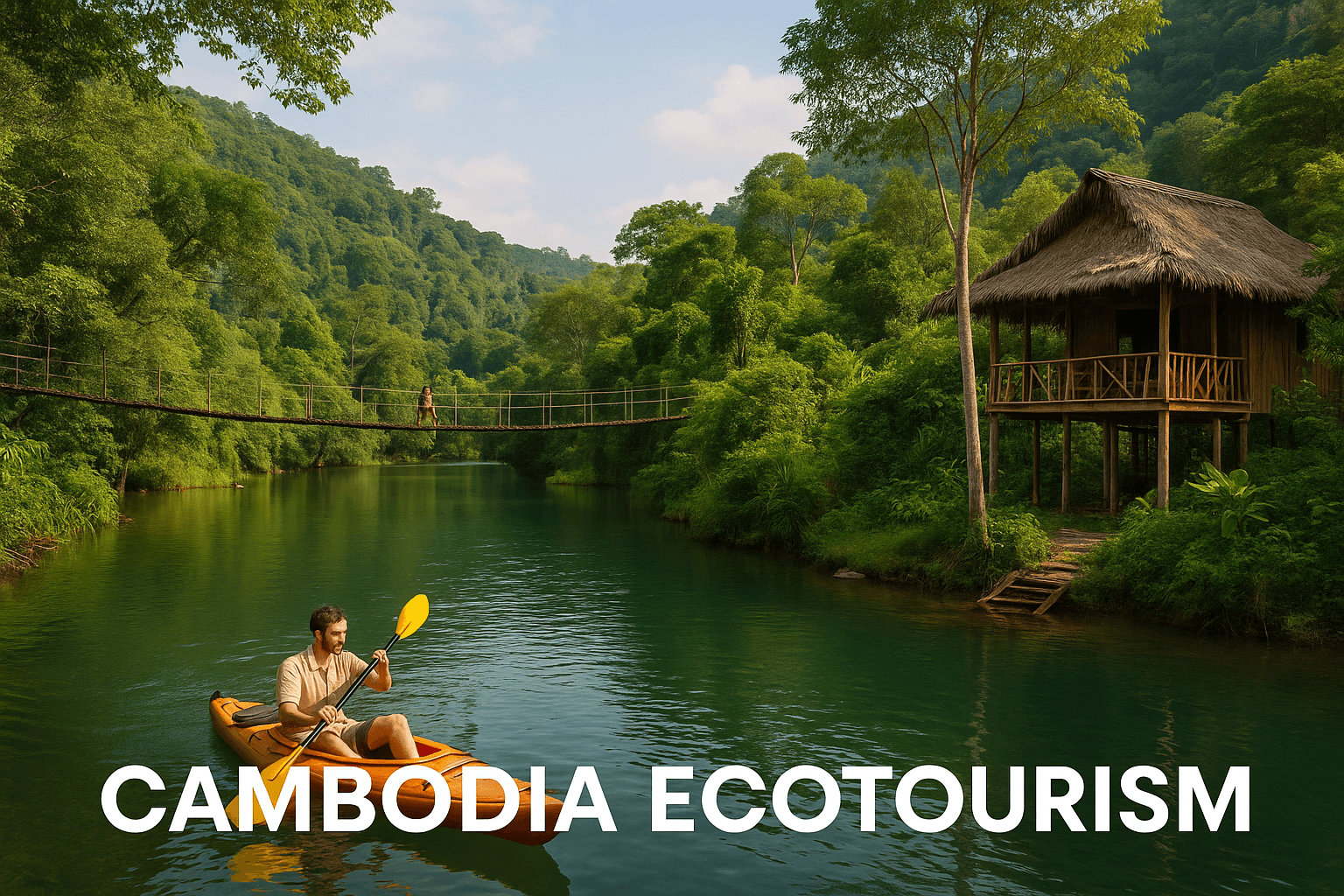
The Core Principles of Cambodia Ecotourism
The foundation of Cambodia ecotourism is built on several key principles that guide responsible travel behavior and development:
1. Environmental Protection
Nature based tourism encourages the protection of forests, coastlines, rivers, and wetlands. Many eco destinations operate within national parks, wildlife sanctuaries, and conservation zones. Through controlled visitor activity, environmental restoration and reduced ecological impact can be achieved.
See more: Cambodia travel guide
2. Community Empowerment
Local communities manage a significant number of eco projects. These include homestays, forest guides, farm tours, handicraft workshops, and river conservation programs. Cambodia ecotourism ensures that financial benefits stay within villages, strengthening the local economy.
3. Cultural Preservation
Cambodian heritage includes indigenous traditions, spiritual forest beliefs, ancient farming customs, and community rituals. Ecotourism encourages travelers to respect and learn from these unique cultural practices.
4. Education and Awareness
Nature based experiences allow travelers to learn about biodiversity, threatened species, environmental conservation, and climate change impacts. Community guides serve as educators who share knowledge about forests and ecosystems.
5. Sustainable Development
Eco destinations integrate renewable energy, waste reduction, sustainable building materials, and eco friendly travel policies. These practices reduce the footprint of tourism and encourage long term environmental responsibility.
The Ecological Landscape of Cambodia
Diverse Ecosystems Supporting Cambodia Ecotourism
Cambodia’s natural geography is ideal for sustainable travel. Its ecosystems include:
Evergreen mountain forests of the Cardamom Mountains
Mangrove forests along the southern coast
Tonle Sap Lake freshwater system with floating villages and wetlands
Lowland dry forests home to endangered species
Marine ecosystems with coral reefs and seagrass meadows
Rivers and tributaries that connect rural communities
Protected national parks and wildlife reserves
These ecosystems provide the foundation for biodiversity based travel and strengthen the relevance of Cambodia ecotourism.
Wildlife Supporting Ecotourism
Cambodia is home to iconic species such as:
Asian elephants
Irrawaddy dolphins
Clouded leopards
Sun bears
Pileated gibbons
Giant ibis
Smooth coated otters
Various migratory birds
These species attract wildlife lovers, photographers, and researchers, making Cambodia ecotourism essential in protecting habitats that support vulnerable populations.
Top Ecotourism Destinations in Cambodia
1. The Cardamom Mountains
The Cardamom region is one of the most important biodiversity hotspots in Southeast Asia, offering dense forests, waterfalls, wildlife encounters, and carbon rich landscapes. Visitors can experience:
Jungle treks
River kayaking
Wildlife watching
Forest conservation programs
Community lodges and eco camps
The region represents the heart of Cambodia ecotourism, attracting global attention for sustainability and biodiversity research.
2. Tonle Sap Lake and Its Floating Communities
Tonle Sap is the largest freshwater lake in Southeast Asia. It supports agro fisheries, wetlands, and floating villages where visitors can explore:
Water based eco tours
Bird sanctuaries
Community fisheries
Flooded forests
Wetlands conservation
This ecosystem is essential for long term Cambodia ecotourism because it reflects cultural heritage and ecological balance.
3. Mondulkiri and Indigenous Ecotourism
Mondulkiri is known for rolling hills, pine forests, and elephant conservation. Travelers experience:
Ethical elephant encounters
Indigenous Bunong village tours
Forest trekking
Waterfall exploration
Wildlife sanctuaries
Community led tourism strengthens the meaning of Cambodia ecotourism while giving indigenous people leadership roles in conservation.
4. Koh Kong Coastal Conservation Areas
Southern Cambodia is home to preserved mangrove ecosystems and coastal reserves. Travelers enjoy:
Mangrove boardwalks
Coastal kayaking
Marine wildlife observation
Eco beach stays
This region is ideal for ocean themed Cambodia ecotourism programs.
5. Preah Vihear and Forest Communities
Northern Cambodia contains spiritual forests, mountain landscapes, and remote villages. Travelers enjoy:
Forest protection activities
Agro tourism
Community heritage tours
Ancient temple landscapes
These experiences highlight cultural ecology and sustainable rural development.
Community Based Tourism in Cambodia Ecotourism
Community based tourism is one of the pillars of Cambodia ecotourism. Villages across the country manage eco activities, ensuring that tourism revenue supports education, healthcare, and environmental preservation.
Key Features of Community Based Ecotourism
Locally run homestays
Guided village walks
Traditional craft workshops
Farm to table experiences
Forest monitoring programs
Wildlife conservation activities
Benefits for Communities
Increased environmental stewardship
Cultural revitalization
Sustainable income generation
Empowered local leadership
Benefits for Travelers
Authentic cultural experiences
Insight into rural life
Access to untouched landscapes
Opportunities to support conservation
Community based tourism connects travelers to the social aspects of Cambodia ecotourism, enriching the journey with meaningful interactions.
Wildlife and Biodiversity Conservation in Cambodia Ecotourism
Travelers participate in various conservation programs that contribute to ecological sustainability.
Forest Protection Initiatives
Reforestation projects
Patrol programs with rangers
Education for local villagers
Monitoring of rare species
Marine Conservation Programs
Coral preservation activities
Coastal cleanups
Mangrove replanting
Sustainable fishing education
Wildlife Rescue and Rehabilitation
Several organizations rescue animals affected by habitat loss and support species reintroduction.
Conservation plays a central role in the mission of Cambodia ecotourism, making nature based travel a driving force behind ecological restoration.
Adventure Tourism Within the Framework of Cambodia Ecotourism
Eco friendly adventure activities include:
Jungle trekking
Mountain biking
River kayaking
Camping
Birdwatching
Photography tours
Forest canopy walks
These activities encourage travelers to explore nature responsibly while enhancing the visibility of Cambodia ecotourism.
Agro Tourism as Part of Cambodia Ecotourism
Agro tourism introduces travelers to Cambodia’s agricultural culture. Activities include:
Organic farming
Rice planting
Herbal garden tours
Local food production
Community harvesting events
Agro tourism connects travelers with Cambodia’s rural identity and strengthens the sustainable development goals of Cambodia ecotourism.
The Role of Sustainable Accommodation in Cambodia Ecotourism
Eco friendly lodges, homestays, and nature retreats focus on:
Renewable energy
Water conservation
Plastic free operations
Environmentally conscious architecture
Waste management systems
Sustainable accommodation increases the impact of Cambodia ecotourism by reducing environmental footprints.
Environmental Challenges Facing Cambodia Ecotourism
Despite its progress, several environmental issues affect the country’s sustainable tourism growth:
Deforestation
Illegal wildlife trade
Water pollution
Climate change
Overfishing
Urbanization pressure
Strengthening environmental policies and community participation is crucial to the future of Cambodia ecotourism.
The Future of Cambodia Ecotourism: Trends and Sustainable Development
Emerging Trends
Increased demand for nature based travel
Growth of community projects
Investment in protected areas
Expansion of biodiversity research
Rise in eco volunteer programs
Focus on rural tourism development
Digital Transformation in Ecotourism
Technology supports sustainable travel through:
Online eco education
Virtual conservation tours
Eco travel booking platforms
Digital mapping for wildlife monitoring
Long Term Vision
Cambodia aims to strengthen its reputation as a major destination for eco focused travel. With continued conservation efforts, community empowerment, and sustainable policy development, Cambodia ecotourism will play a significant role in preserving the country’s natural heritage.
Conclusion
Cambodia ecotourism represents a powerful connection between nature conservation and cultural heritage. It provides visitors with opportunities to explore forests, rivers, mountains, islands, wetlands, and rural communities while contributing to environmental protection. This approach to tourism emphasizes ecological responsibility, cultural respect, and sustainable development.
As global travelers seek meaningful experiences rooted in nature and community engagement, Cambodia ecotourism stands at the forefront of Southeast Asia’s sustainable travel movement. Its diverse landscapes, rich biodiversity, indigenous cultures, and conservation initiatives create an eco friendly travel experience unlike any other. The future of environmental protection in Cambodia depends on continued support for sustainable tourism, making ecotourism a vital path toward long term preservation of the Kingdom’s natural wonders.
