
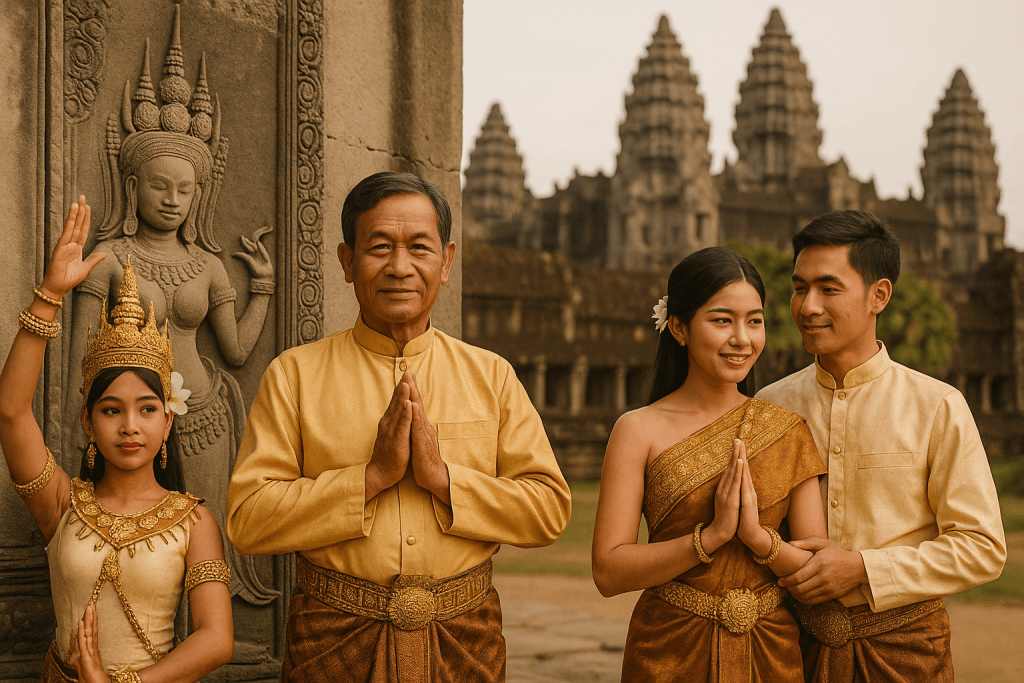
Khmer cultural identity represents one of the most distinctive and deeply layered cultural frameworks in Southeast Asia. It embodies a long history of creativity, spirituality, social harmony, and symbolic representation developed across centuries. From ancient architectural mastery and artistic achievements to spiritual worldviews and daily customs, Khmer cultural identity forms an enduring foundation for national pride, cultural resilience, and regional influence.
The richness of this cultural system is expressed through rituals, traditional arts, literary traditions, social norms, linguistic style, and collective memory. Understanding Khmer cultural identity provides meaningful insights into how the Khmer people preserve their heritage while adapting to contemporary cultural environments.
This article examines the defining elements of Khmer cultural identity through its historical origins, linguistic structure, artistic expressions, spiritual foundations, culinary practices, social values, agricultural symbolism, festivals, and the modern revitalization efforts that ensure the survival of Khmer tradition for future generations. The discussion also explores related themes, such as Khmer aesthetics, Angkor heritage, Khmer worldview, intangible cultural expressions, cultural symbolism, and regional cultural continuity.
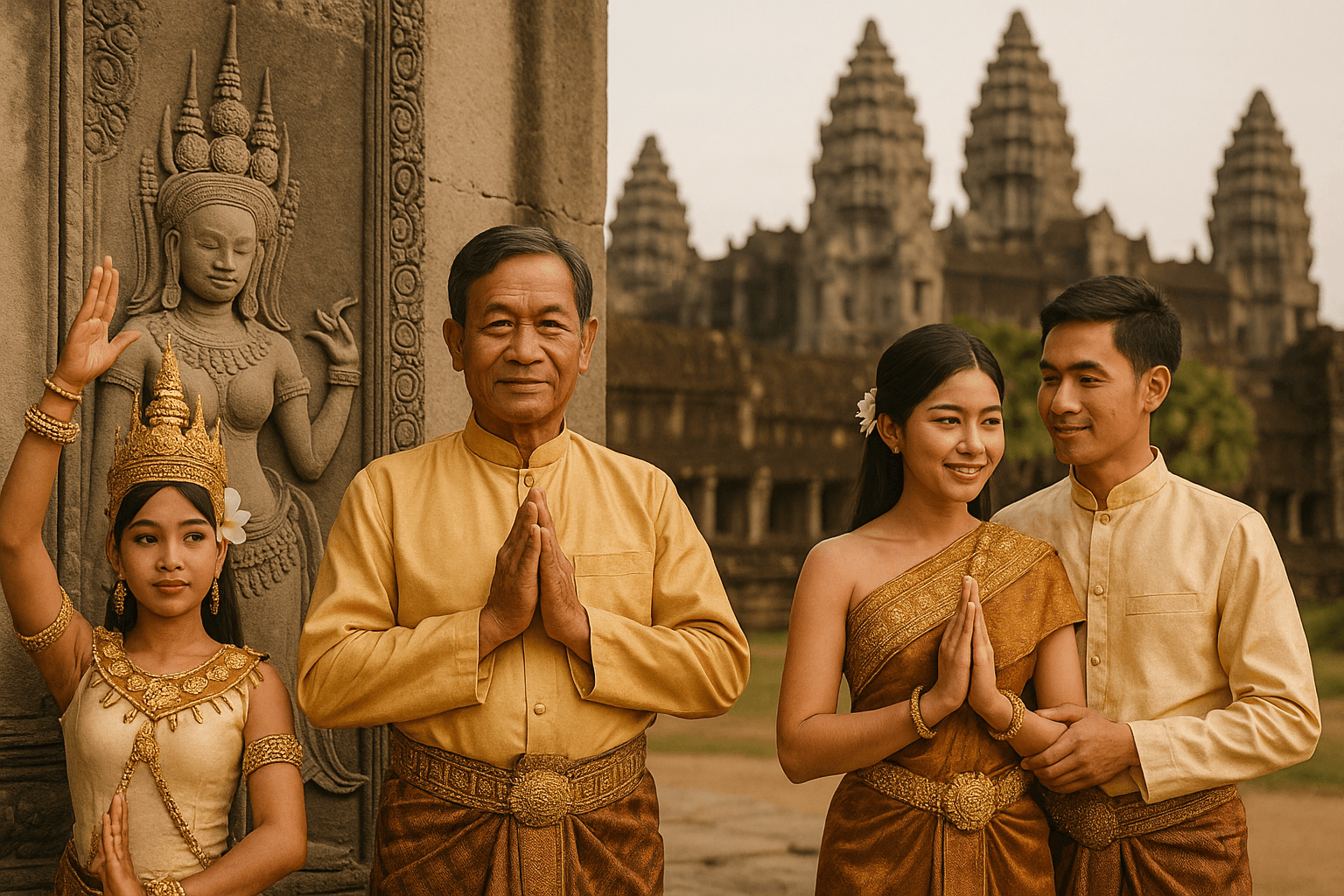
1. Historical Foundations of Khmer Cultural Identity
The formation of Khmer cultural identity is closely connected to the emergence of early Khmer kingdoms such as Funan and Chenla, followed by the Angkor Empire which became one of the most powerful civilizations in Asia. During these eras, Khmer society developed advanced irrigation systems, monumental architecture, and complex artistic traditions that still shape cultural expression today.
Key historical influences contributing to Khmer cultural identity include:
The introduction of Sanskrit and Pali into religious and literary contexts
The political structure of the Angkor Empire
Agricultural foundations centered on wet rice cultivation
The symbolic association between divine kingship and national unity
The expansion of temple complexes as centers of culture, education, and spirituality
These historical achievements remain essential to the contemporary understanding of Khmer cultural identity and continue to inspire national consciousness.
See more: Traditional Cambodian culture
2. Language and Literary Traditions as Cultural Pillars
The Khmer language is a powerful component of Khmer cultural identity. As the oldest recorded language in mainland Southeast Asia, it reflects centuries of cultural evolution. The script, derived from ancient Brahmic systems, also played an important role in shaping regional writing systems.
Elements of language that contribute to cultural identity
A unique script used for inscriptions, manuscripts, and modern literature
Vocabulary influenced by Pali and Sanskrit due to spiritual traditions
Oral literature such as folk poems, traditional songs, and moral proverbs
Epics and classical texts associated with Khmer kings and legendary heroes
Linguistic expressions emphasizing respect, social harmony, and community
Literacy in the Khmer script is not only a practical skill but also a symbolic act of preserving Khmer cultural identity. The written language serves as a vessel for transmitting history, mythology, wisdom, and traditional knowledge across generations.
3. The Artistic Expression of Khmer Cultural Identity
Art is one of the clearest embodiments of Khmer cultural identity. Khmer artistic traditions developed over centuries and demonstrate extraordinary creativity, sophistication, and cultural symbolism.
3.1 Architecture
Angkor architecture stands as a global representation of Khmer cultural identity. Notable features include:
Massive stone temples aligned with cosmological principles
Intricate bas reliefs illustrating religious narratives
Towers symbolizing Mount Meru, the spiritual center of the universe
Advanced engineering techniques for irrigation and monument construction
Angkor Wat, Bayon, Ta Prohm, and Banteay Srei remain key cultural symbols widely recognized for their mastery of form, proportion, and spirituality.
3.2 Dance and Performance Arts
Traditional dance such as the Apsara dance visually expresses Khmer cultural identity through refined gestures, symbolic costumes, and spiritual meaning. Performance arts incorporate:
Stylized hand movements representing natural and cosmic elements
Ornamental crowns, silk garments, and elaborate jewelry
Classical music played with traditional instruments
Court dance narratives inspired by ancient Khmer mythology
These performances reinforce cultural memory and maintain continuity between the past and present.
3.3 Visual Arts and Sculpture
Khmer sculpture and carving contribute to Khmer cultural identity through religious symbolism, artistic discipline, and historical storytelling. Stone carvings, wooden statues, lacquer art, and traditional painting serve as cultural records that preserve ancient beliefs and aesthetic forms.
4. Spiritual Foundations and Religious Symbolism
Spirituality is central to Khmer cultural identity. Buddhism and earlier Brahmanic traditions merged to form a unique cultural system that influences social behavior, artistic expression, and national identity.
Key spiritual elements shaping Khmer identity
Theravada Buddhist principles promoting compassion, respect, and mindfulness
Monastic life as a center for education and moral training
Rituals honoring ancestors and spiritual guardians
Traditions such as water blessings, merit making, and temple offerings
The harmonious integration of spiritual practices strengthens the coherence of Khmer cultural identity and reinforces cultural continuity.
5. Culinary Traditions and Symbolic Food Culture
Khmer cuisine provides another window into Khmer cultural identity, revealing the values of balance, harmony, and agricultural dependence. Culinary practices connect communities, reflect regional diversity, and express traditional knowledge passed down through families.
Characteristics of Khmer cuisine that support cultural identity include:
Fresh herbs, aromatic spices, and natural ingredients
Culinary influences from river systems and rice fields
Traditional dishes prepared for festivals and ceremonies
Fermentation techniques representing ancient culinary heritage
Food preparation as an expression of hospitality and cultural respect
Food is not merely nutrition but a cultural language that communicates memory, connection, and belonging.
The Khmer social structure plays a crucial role in shaping Khmer cultural identity. Community life is built around cooperation, mutual support, moral behavior, and respect for elders.
Generosity and community solidarity
Respectful communication within families and villages
Social etiquette grounded in Buddhist ethics
Shared participation in agricultural activities
Cultural emphasis on modesty, unity, and courtesy
These cultural values contribute to a stable and cohesive society, reflecting the deeper meaning of Khmer cultural identity.
7. Festivals and Traditional Celebrations
Festivals act as living expressions of Khmer cultural identity. They unite communities, preserve spiritual rituals, and strengthen cultural cohesion.
Major cultural celebrations
Bon Chol Chnam Thmey – Khmer New Year symbolizing renewal and spiritual cleansing
Pchum Ben – honoring ancestors through temple ceremonies
Water Festival – celebrating agricultural cycles and river blessings
Royal Plowing Ceremony – reflecting agricultural symbolism and seasonal transitions
Apsara cultural events – preserving dance, music, and artistic expression
Each festival carries cultural messages that nurture collective memory and strengthen the presence of Khmer cultural identity in modern society.
8. Clothing, Ornamentation, and Symbolic Aesthetics
Traditional clothing such as the Sampot remains a recognizable element of Khmer cultural identity. Design choices illustrate cultural aesthetics and social significance.
Cultural features include:
Silk weaving techniques developed over centuries
Patterns representing natural elements or religious symbols
Decorative accessories used in ceremonies and official events
Traditional attire that reinforces cultural pride and social belonging
Khmer clothing embodies identity, elegance, and historical continuity.
9. Agriculture and Symbolic Relationships with Nature
Agriculture is deeply embedded in Khmer cultural identity, shaping spiritual beliefs, rituals, and social practices. Rice cultivation is not only an economic activity but a cultural foundation that connects people to land, ancestry, and seasonal rhythms.
Cultural themes related to agriculture include:
Sacred meanings associated with rivers, rain, and soil
Mythological stories connected to agricultural cycles
Community rituals marking planting and harvesting seasons
Traditional tools and farming techniques preserved across generations
This connection to nature strengthens cultural resilience and reinforces identity.
10. Intangible Heritage and Symbolic Memory
Intangible heritage forms an essential dimension of Khmer cultural identity. Oral narratives, folk songs, spiritual chants, ritual ceremonies, and community knowledge systems ensure that cultural memory is preserved beyond physical objects.
Examples of intangible cultural expressions
Ritual music in temples
Folk storytelling and moral teachings
Ceremonial blessings and sacred chants
Traditional craftsmanship passed between generations
Indigenous knowledge of plants, healing, and navigation
These expressions enrich cultural depth and safeguard cultural authenticity.
11. Modern Revitalization and Preservation Efforts
In the contemporary era, Khmer cultural identity faces both opportunities and challenges. Urbanization, digitalization, and global cultural exchange influence how traditions are practiced and perceived. However, revitalization efforts ensure that Khmer heritage continues to thrive.
Preservation initiatives
Documentation of traditional art forms
Cultural education programs for youth
Restoration of temples and historical sites
Promotion of Khmer language literacy
Support for traditional dance, music, and craft communities
These efforts help maintain the relevance of Khmer cultural identity in modern society.
12. The Global Significance of Khmer Cultural Identity
As international interest in Khmer heritage grows, Khmer cultural identity plays an important role in global cultural dialogues. Angkor Wat is recognized as a world heritage treasure, while Khmer art, cuisine, and festivals attract global appreciation.
The global recognition of Khmer culture supports cultural pride, national identity, and international understanding.
Conclusion
Khmer cultural identity represents a vibrant and enduring cultural system shaped by history, spirituality, art, language, agriculture, and community values. Its richness lies not only in monumental architecture but also in daily practices, moral traditions, aesthetic expressions, and symbolic heritage.
By understanding the depth of Khmer cultural identity, we gain insight into how the Khmer people preserve their cultural legacy while engaging with a rapidly changing world. This identity continues to thrive through tradition, adaptation, and collective memory, ensuring that Khmer heritage remains a significant cultural force for generations to come.
